
DESS: Wherever Russia goes, freedom of belief ceases to exist


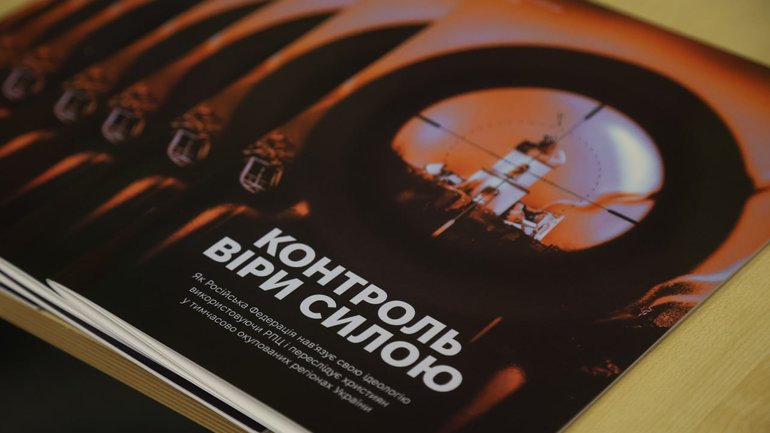
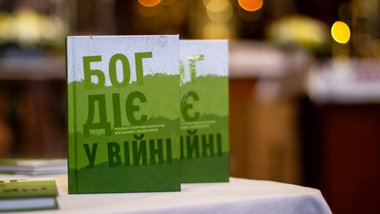
This information was reported by the State Service on Ukraine for Ethnic Policy and Freedom of Conscience (DESS).
According to the Ministry of Foreign Affairs of Ukraine, at least 67 clergymen have been killed due to the actions of the occupying authorities, and nearly 650 instances of damage or destruction of religious buildings have been documented.
Vyacheslav Gorshkov, Head of the DESS's Department for Religious Affairs, participated in the presentation of the report. He emphasized that despite the ongoing war, Ukraine is committed to protecting freedom of conscience in the territories under its control. In contrast, in the Russian model, religion is incorporated into a repressive system.
"Accusations are frequently made that the Ukrainian state oppresses various religious organizations. However, this is not accurate. The state is committed to protecting the principles of freedom of conscience in the territories it controls," he stressed.
Gorshkov also expressed gratitude to the MIHR for conducting work that the state cannot always manage on its own:
"The state often lacks the resources needed to conduct thorough research. Monitoring open sources is one thing; interviewing witnesses and gathering firsthand accounts of crimes is another level of effort. For our service, which oversees religious policy, these materials are extremely important and beneficial."
According to the DESS's representative, these reports not only illustrate the extent of pressure on the temporarily occupied territories (TOT) but also the underlying logic of Russian policy:
"Wherever Russia goes, freedom of belief ceases to exist. This policy isn't new; it has persisted since the era of the Russian Empire, not since 2014."
Gorshkov highlighted the connection between the religious sphere and the security of the country during a time of war:
"This war is existential. We have a choice: either we survive as a nation and a state, or we cease to exist. In these conditions, the realm of religion is inseparable from the realm of security."
He also addressed state policy in the religious sector and the implementation of legislation to uphold the constitutional order in the activities of religious organizations:
"This is not a ban on any specific church; it is a call to sever ties with any organization that spreads dangerous ideas and ideologies."
Gorshkov clarified that the law does not automatically apply to all religious organizations but is instead based on specific procedures and actual violations:
"The law does not automatically ban any religious group. The only organization whose activities are prohibited in Ukraine is the Russian Orthodox Church."
At the same time, he pointed out an important legal nuance: in Ukraine, a religious association is not recognized as a legal entity, complicating straightforward decisions.
"The Ukrainian Orthodox Church comprises thousands of religious organizations, each with differing views: some bishops and archbishops hold one stance, while ordinary priests and believers may have another. There are individuals who are openly pro-Ukrainian and others who embrace the ideology of the 'Russian world.'"
In conclusion, Gorshkov underlined that the concept of the "Russian world" is not merely a propaganda slogan, but an ideology that fundamentally denies Ukrainians' right to statehood and identity.
"This is not just propaganda of a doctrine; it is a denial of the Ukrainian people's right to their own state and their identity."
The presentation of the report by the MIHR further substantiates that religious persecution in the temporarily occupied territories is not a mere "side effect of the occupation," but rather a deliberate mechanism of control, intimidation, and manipulation, which Russia systematically implements through its administrations and under the guise of church structures.