
Europe is waking up to Russian Orthodox Church's role in Russia's hybrid aggression, says expert


This perspective was articulated by Paweł Wróblewski, Head of the Laboratory of Prognostic Research on Religious Changes at the University of Wrocław in Poland, during an interview with RISU.
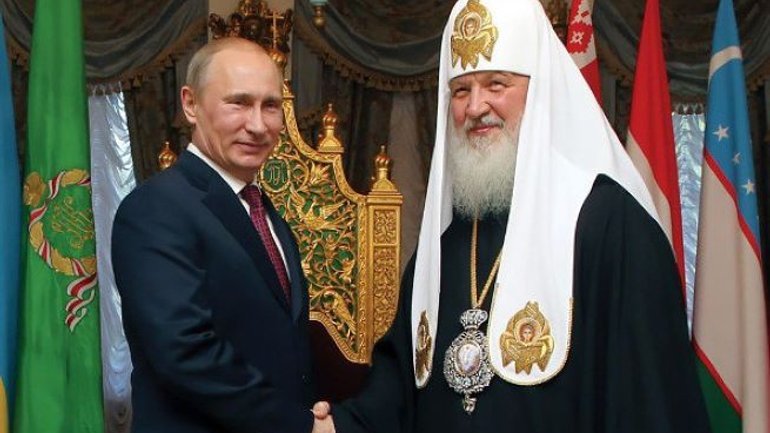
"We are witnessing a fundamental paradigm shift in the activities of European intelligence services. They are moving from reactive responses to isolated incidents to systematically dismantling Russia's hybrid infrastructure, in which the Russian Orthodox Church plays a significant role. The 'grey areas' where Russian special services can operate are diminishing," noted Wróblewski.
He explained that the common threat has not only prompted deeper cooperation among European countries but has also fostered increased coordination between the special services of EU nations and the UK. "Standardized protocols for intelligence exchange will be crucial for formulating effective responses to these threats. However, the unpredictability of current US policy is pushing Europe towards strategic independence," he added.
Before the war in Ukraine, many viewed the idea of a religious community being part of a spy network as a "conspiracy theory." Now, this subject has been analyzed more holistically, allowing governments to make decisive, albeit difficult, choices.
Wróblewski also examined a recent statement by the Russian Foreign Intelligence Service, which accused Patriarch Bartholomew and Western intelligence agencies. He remarked that the document "reveals the state of the organization that issued it."
"I assess the content and form of the Russian Foreign Intelligence Service's press release as an expression of extreme frustration and compromise. Even during Soviet times, when the Orthodox Church was completely under state control, the KGB did not issue theological statements," he stated.
"It is hard to imagine in the civilized world that a state security agency would publicly accuse the 'incarnate devil' – the 'Antichrist from Constantinople'," he remarked ironically. Therefore, he believes that "this statement signals a transformation in Russian politics, where the boundaries between the state, religion, and security agencies have become blurred."
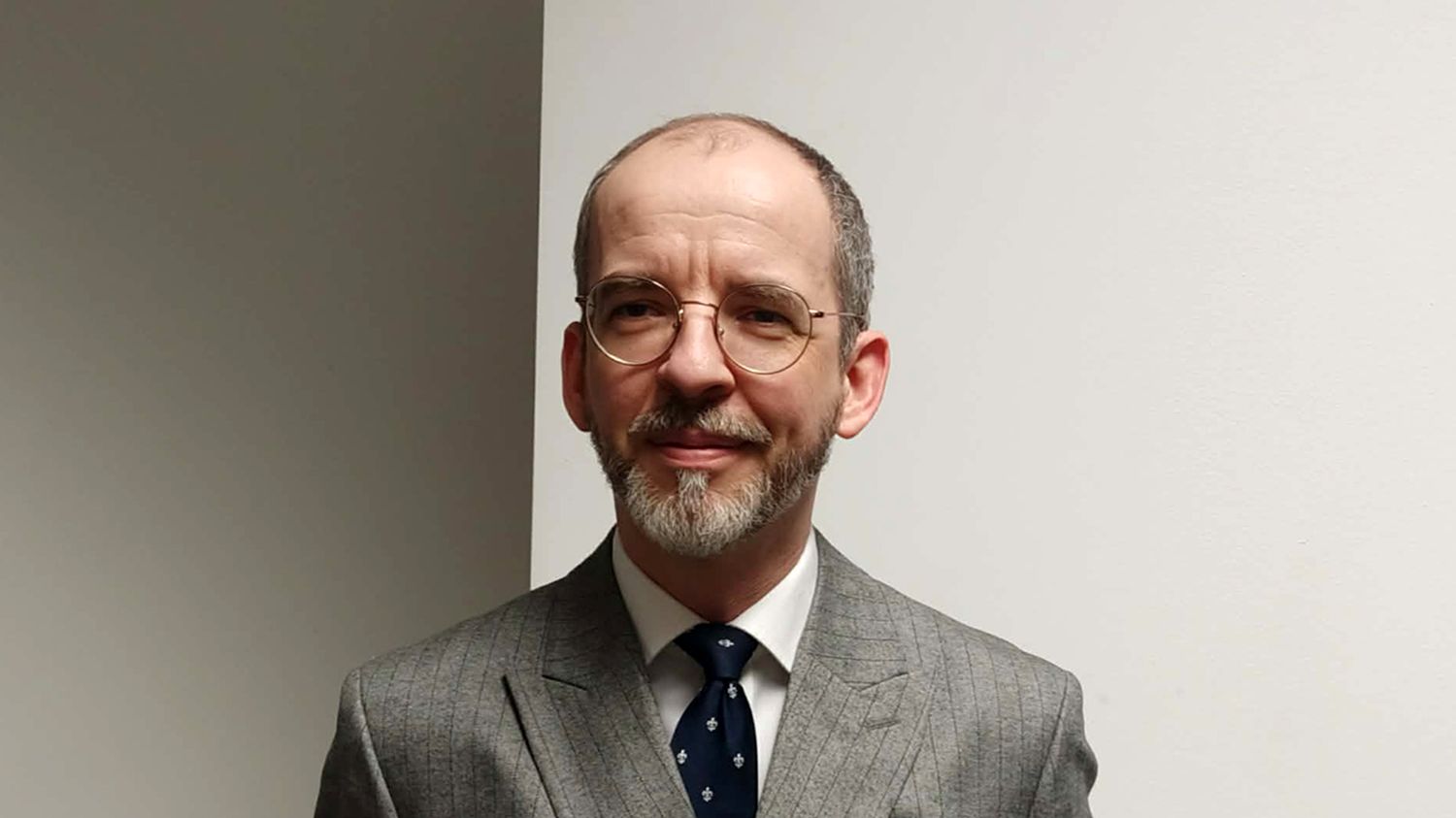
Wróblewski, a specialist in the philosophy of religion who studies cognitive security and the influence of culture and religion on state security, noted that the FSB's narrative about the so-called 'Antichrist in a cassock' relies on simplistic elements. It reflects classic Kremlin propaganda, which blames Western intelligence services for all of Russia's failures, while labeling political opponents as 'nationalists and neo-Nazis.' This creates a clear circle of allies for the 'Antichrist.'
In general, he believes that the author of the Russian intelligence service's text lacks theological education and is influenced by ideologist Alexander Dugin, known for his views on "Rashism."
"The message seems to draw on key motifs from Dugin's work: a Manichean worldview featuring a dichotomy of good (Russia) and evil (the West/Constantinople), viewing the conflict with the West as an eschatological battle, and perceiving Russia as a 'restraining force' (katechon) that delays the coming of the Antichrist and the Apocalypse. It also involves the humiliation of opponents as satanic forces, the use of theology for imperial agendas, and Moscow's geopolitical competition with Constantinople for leadership in Orthodoxy, as well as conspiracy theories about a covert coalition of British and American intelligence services aimed at destroying Russia," Wróblewski noted.
He suggested that "this published statement serves as an institutional reflection of Dugin's ideology, marking its transition from the fringes of extremism to the official discourse of special services. However, I doubt that Dugin himself authored the statement. Regardless, it represents a shift from real politics to deep mythomania at the state level."
Read the full interview: "Europe Is Waking Up: The War in Ukraine Has Revealed the Role of the Moscow Patriarchate in Russian Foreign Policy," — Paweł Wróblewski.