
The Unholy Conception in Stalin's Embrace Will Forever Weigh on the ROC and Its Branches Around the World — Archimandrite Nykanor (Mishkov)
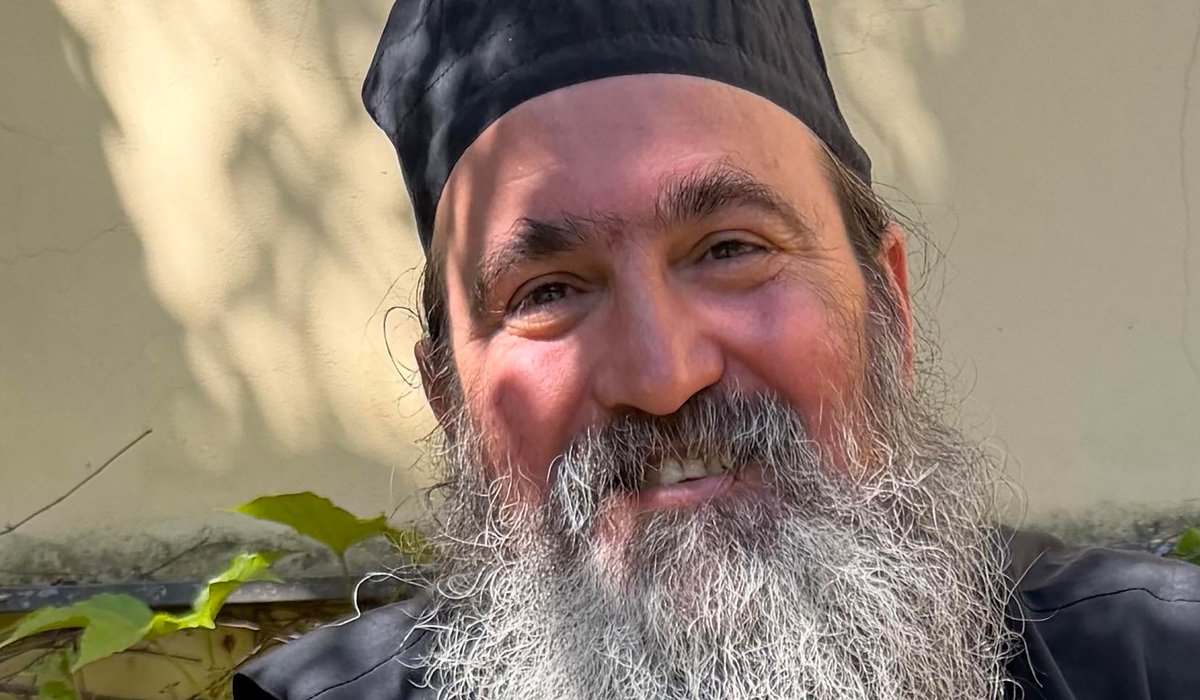


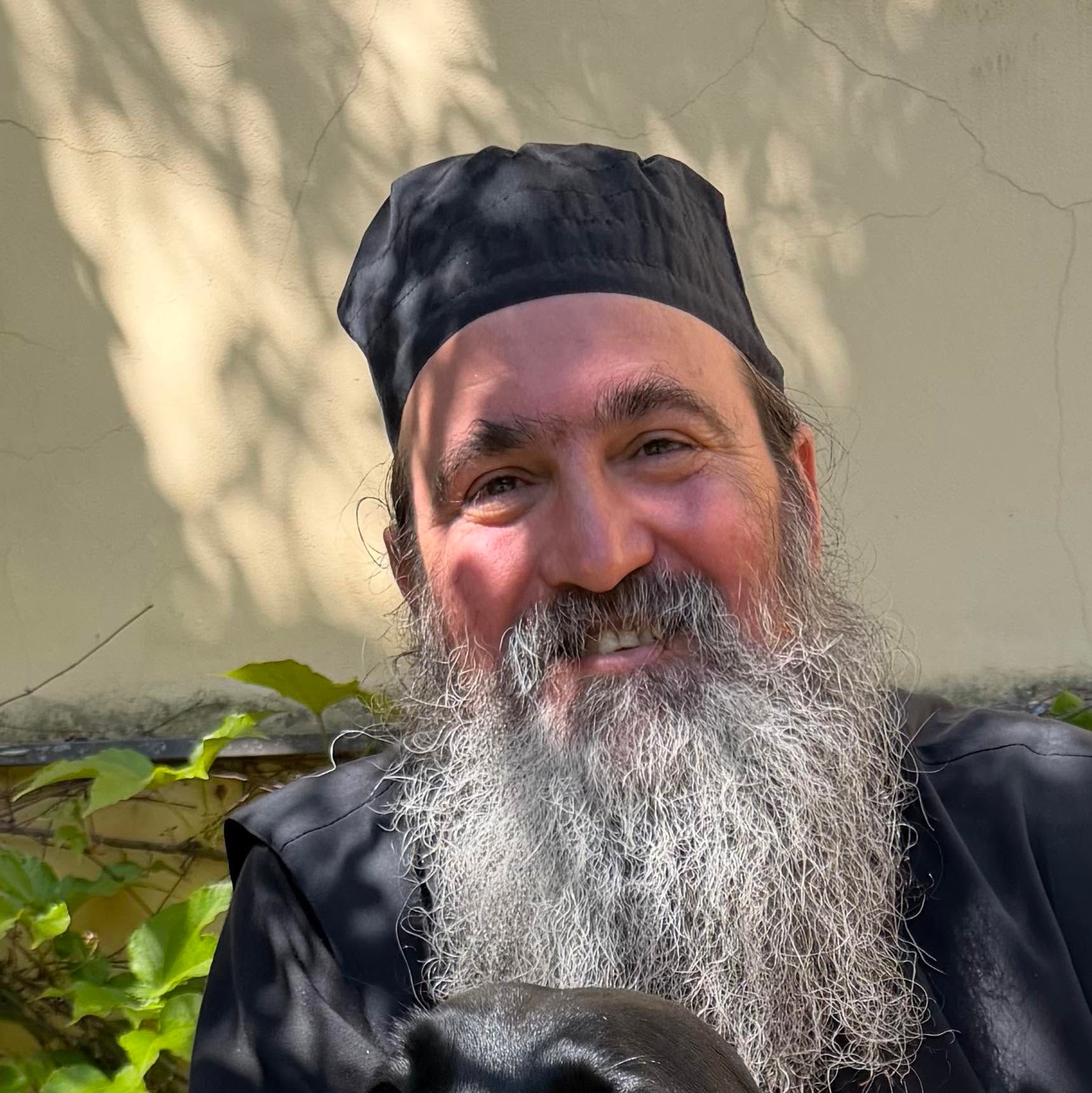
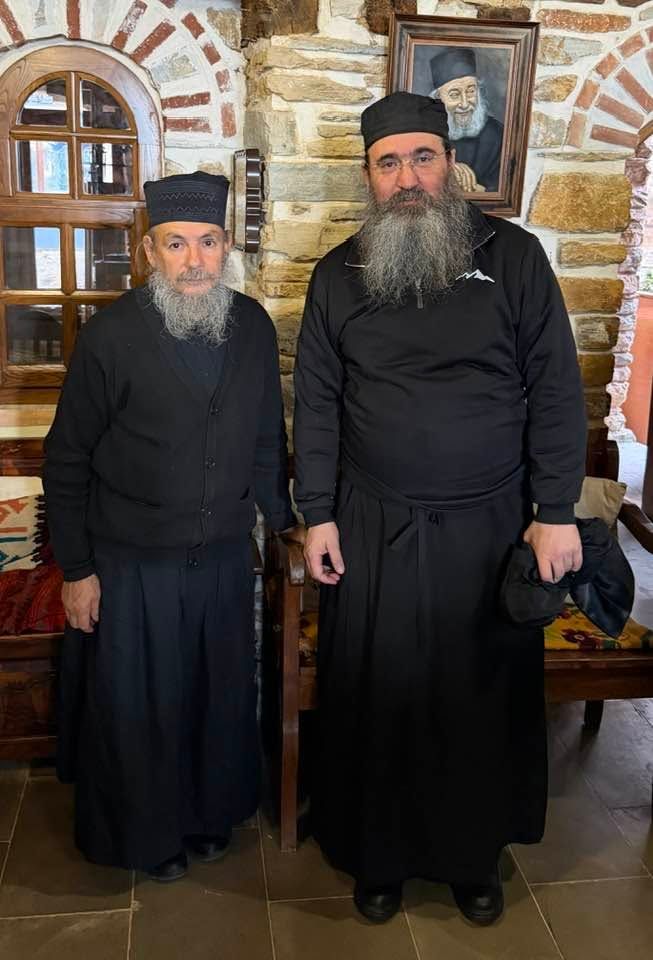
In 2003, drawn to the ideals of Athonite monastic asceticism, Hristo Mishkov left his secular career behind and became a novice at the Monastery of Saints Cosmas and Damian in Gigintsi. A year later he received, from the hands of the monastery's abbot, the elder schema-archimandrite Yevgeni Rilski, tonsure into the lesser schema, taking the name Nykanor in honor of the Apostle Nykanor, one of the Seventy. In 2008 he was ordained a hieromonk, and in 2015 he received the great schema from the Athonite elder, hieroschemamonk Vasili Zografski. In 2016, by decision of the brotherhood of the Monastery of Saints Cosmas and Damian, he was elected abbot. According to the brethren, Fr. Nykanor put in enormous effort to revive and restore the monastery: ancient Athonite traditions and customs were reestablished, and the monastery building itself was rebuilt. For this, in 2017, he received the rank of archimandrite from the hands of Patriarch Neofit himself.
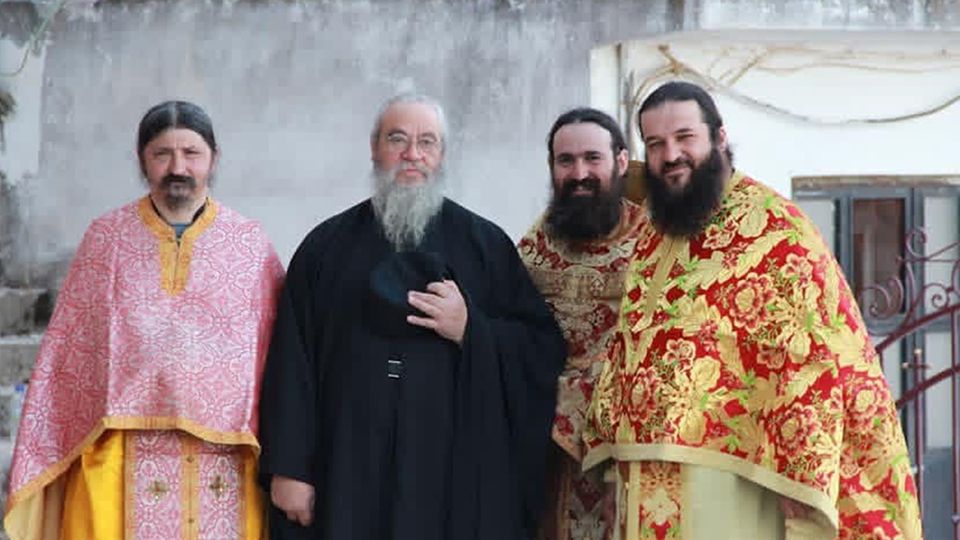
His monastery was founded back in the Middle Ages and has functioned almost continuously ever since, apart from two periods lasting several decades each — after 1739 and after 1944. It was restored as a spiritual center in 1997. Today, the Chernogorski Monastery of Saints Cosmas and Damian is one of the largest in Bulgaria by number of monks. Father Nykanor maintains close ties with the fathers of Mount Athos, from whom he receives spiritual guidance and instruction in monastic life.
Yet he admits that he did not always hold these views on Ukrainian affairs. As Fr. Nykanor notes, when it came to events in Ukraine, he, too, like most Bulgarians, was long held captive by age-old Russian narratives about a “single people” and a “nonexistent state.” The change came when Ukrainian Orthodoxy received its Tomos of autocephaly.
— In 2018–2019, when the Ecumenical Patriarchate began the process of granting autocephalous status to the Church in Ukraine, amid the heated “for and against” debate, I had the opportunity to familiarize myself with the arguments of those who supported Ukrainian church independence, and I objectively changed my views.
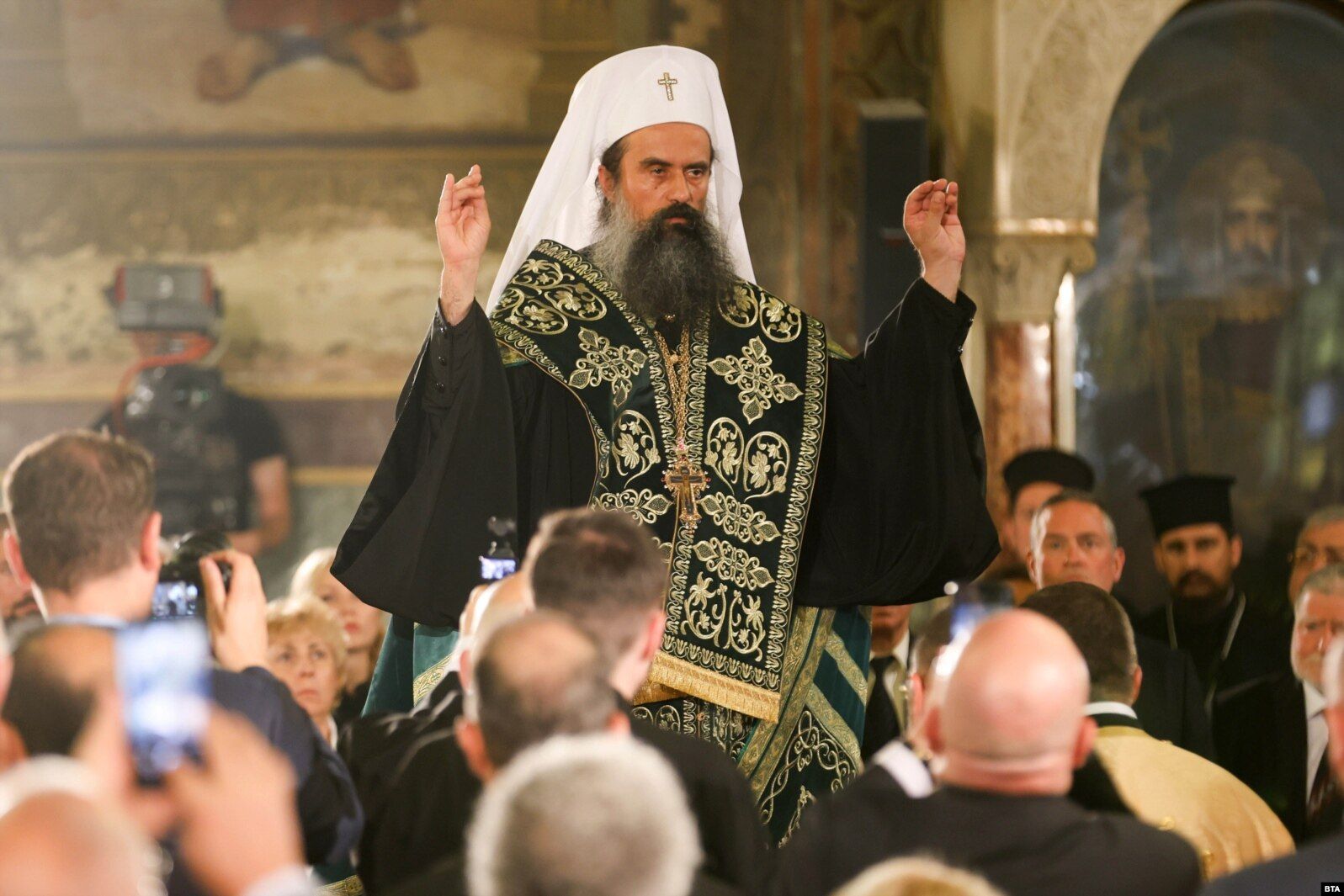
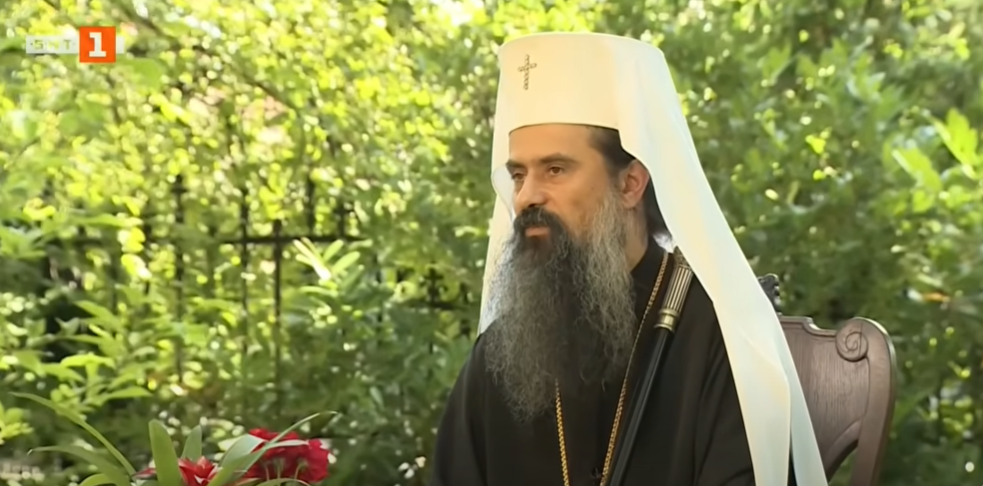
The unjust aggression carried out by the Russian state in 2022 finally confirmed my conviction that the Ukrainian cause is true and just. I was the first spiritual leader in Bulgaria to condemn the Russian invasion, and when the then-Metropolitan of Vidin, Daniil, tried to blur responsibility and distort the truth about what was happening in Ukraine, I publicly distanced myself from his positions. He was later appointed Patriarch.
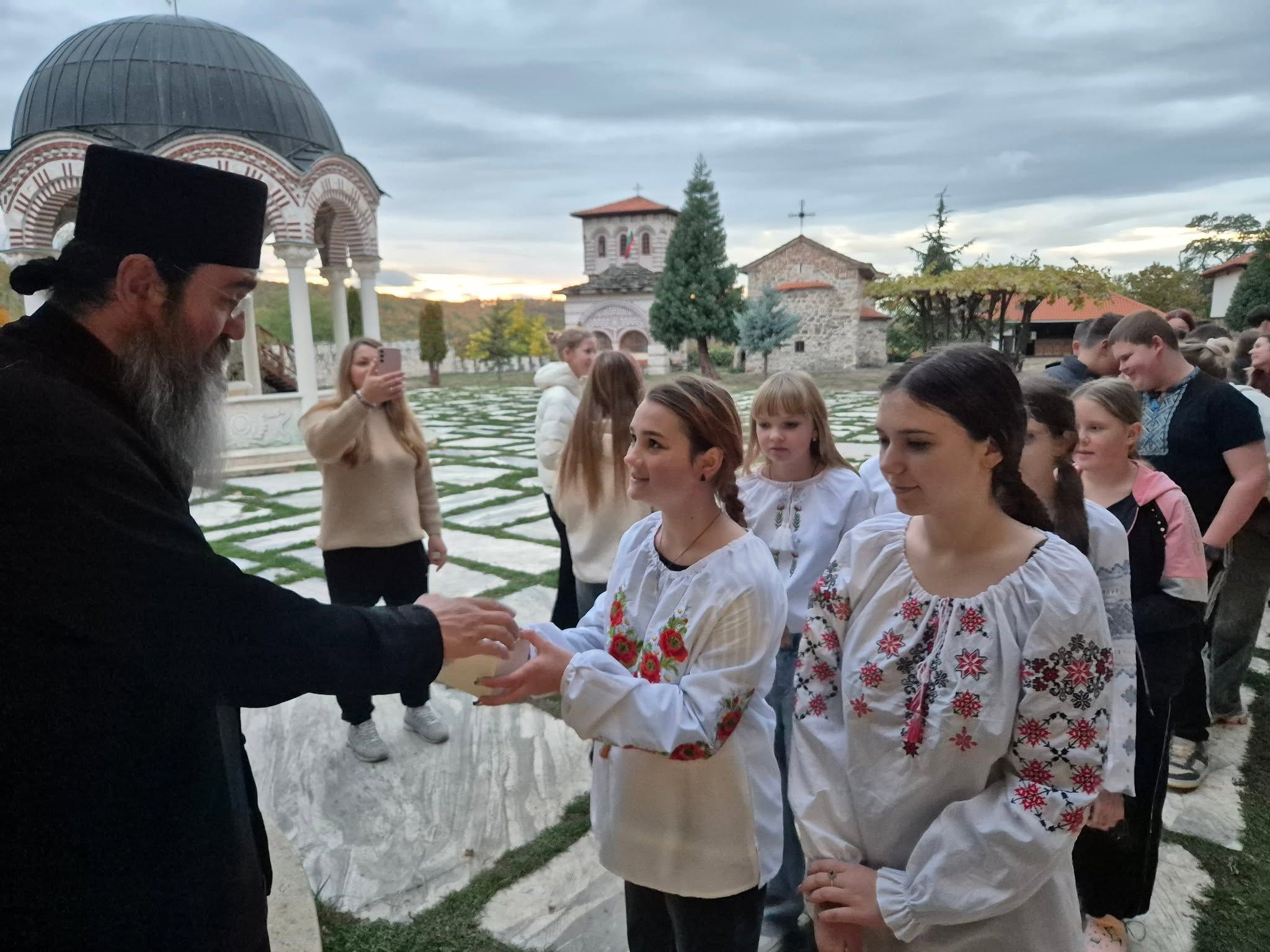
— Father, a year ago, RISU wrote about your conflict with the newly elected head of the Bulgarian Church — the occasion being that you had hosted Orthodox children from Ukraine, from Sumy specifically, at your monastery.
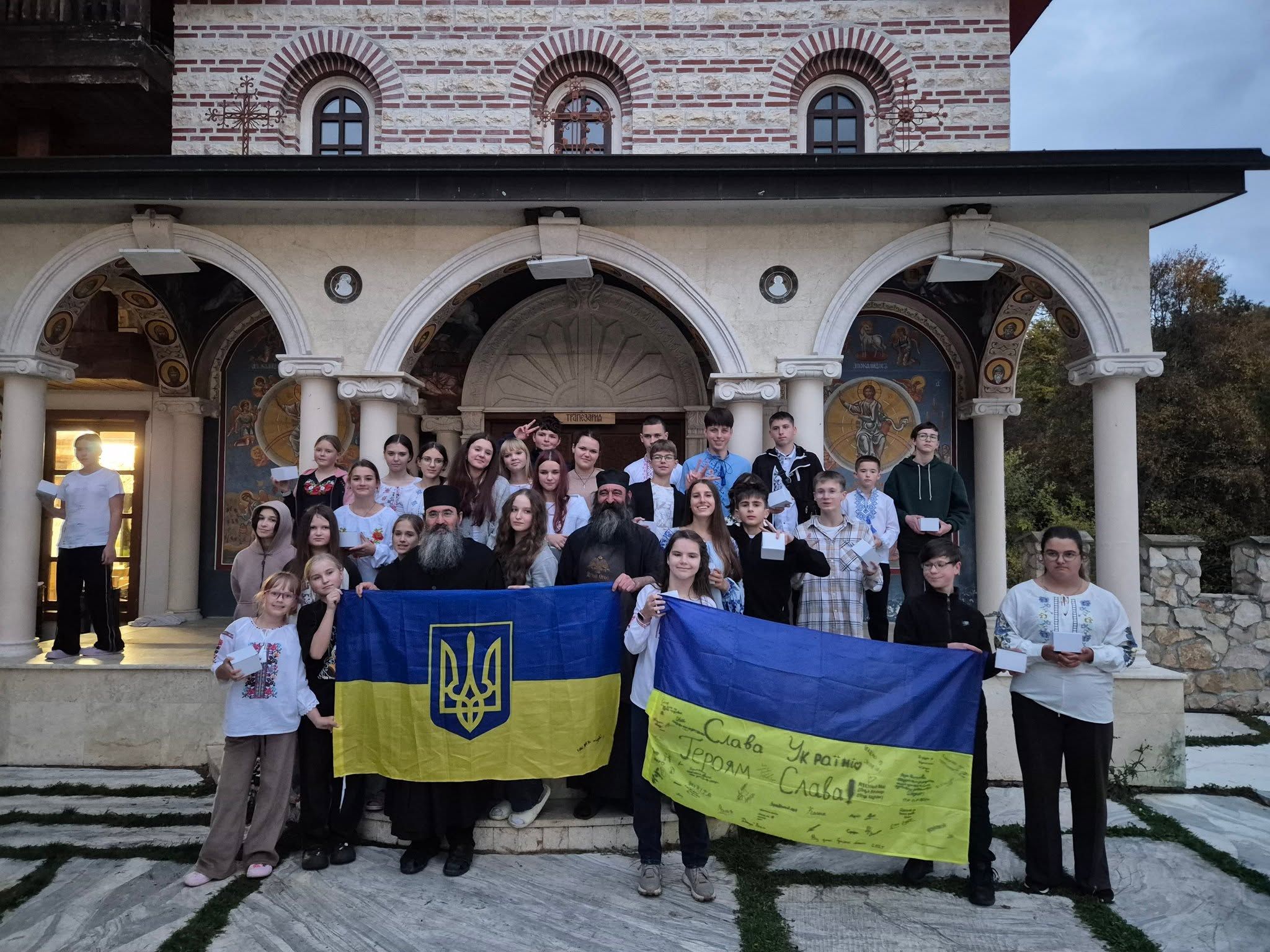
— Last year, we hosted Ukrainian children at the monastery for ten days — something we would like to do again this year. Afterward, I was punished by the Patriarch with two weeks' confinement, formally for failing to keep proper accounting records. But this practice has existed since the very founding of our monastery; I inherited it from the previous two abbots, Hieromonk Ioan-Volodymyr and Archimandrite Evgeniy, and it had the blessing of the previous Patriarchs, Maxim and Neofit. Yet I was only punished for it now. And after this incident, not a single Bulgarian monastery has dared to host Ukrainian children, despite the wonderful conditions we have to offer.
— And what exactly was the problem with your hosting Ukrainian children who live in what is essentially a front-line zone? What's wrong with that?
— Because, supposedly, our public stance as Orthodox clergy in support of Ukraine's just cause and its people is “wrong.” What's wrong, apparently, is that we expose, in writing and in speech, every underhanded attempt to justify Russian aggression, to equate victim and executioner, and every insidious, supposedly “spiritual” indifference to the suffering an entire nation endures minute by minute. We are an obstacle —both through what we stand for and through our very existence.
In the reception hall of our monastery, where every visitor can receive hot tea in winter, pancakes, or a cool summer soup, entirely free of charge, two Ukrainian flags hang on the wall — left to us as a keepsake by the suffering children of Ukraine, with their names written on them in their own hand. There are forces in Bulgaria working deliberately against Bulgarian solidarity and compassion for a bloodied Ukraine, and for these forces, initiatives like ours are deeply unwelcome.
— Wrong from Patriarch Daniil's point of view, but right from yours?
— From his point of view, perhaps what was wrong is that we have our own vision and share it with people without waiting for “the Church to decide.” After all, this is already the fifth year that innocent blood has been spilled, and yet the Bulgarian Church still cannot make up its mind, still cannot bring itself to say, even once, what the Ecumenical Patriarch constantly reiterates and what both Popes of Rome have said: that this aggression is an act of defiance against God and is a sin! It's telling that the Synod in Sofia found words for the tragedy in Gaza, yet stays silent about the far greater tragedy befalling Ukraine — a nation of the same blood and the same faith.
In our view, it is precisely the Church that should not only have categorically condemned the Russian invasion but should also have addressed Putin personally, demanding he stop the war immediately. After all, the Bulgarian Church is the elder sister of the Russian one — it was from us, the Bulgarians, that the Russians received Christianity, tradition, and the written word, while Constantinople merely oversaw these processes.
— Here I must clarify: Bulgarian clergy and scribes influenced the formation of the Church in Rus', in the Kyivan state — Muscovy did not exist yet, not even close. And later, Bulgarian metropolitans supported the Kyivan Metropolitanate, while Greek metropolitans supported the ambitions of the Muscovite princes. In other words, the Moscow Church was, from the start, formed as a subordinate of the state, whereas Kyiv, like Bulgaria, was among the Churches that built their own nations.
— Just as Kyiv received baptism and books from the hands of Bulgarian priests, so too Moscow, in turn, received the faith and the written word from Kyiv. This is exactly what I mean when I say that Moscow is the younger spiritual sister of Sofia. The Bulgarian metropolitans sent from Constantinople — Cyprian, Isidore, and Gregory — met fierce resistance in their mission from the Muscovite appanage princes, who sought to bend the Church to their own interests. History remembers how bishops who submitted to them absolved princes and boyars from their oaths sworn before Moscow's rivals, which is wholly contrary to the Gospel and to the ethos of Christianity.
Only after the fall of Constantinople and the Catholicization of Lithuanian Rus' did the Greek clergy place their bets on Moscow as a new power and a kind of political center of Orthodoxy — only to find their hopes betrayed…
— That part of the story is a separate topic, one we've already written a great deal about — in particular, how Constantinople pushed Ukrainian Orthodox believers to seek support in Moscow, and how it all ended.
And how are your relations with the leadership of the Bulgarian Orthodox Church after this incident?
— None whatsoever. Instead of supporting us, instead of coming to see the children, bringing them sweets or some kind of gift, they decided to settle scores with us — and in the most despicable way, by casting doubt on our finances, which are entirely lawful. I have blocked everyone at the diocese — from the Patriarch down to the secretary. I don't communicate with them, and I'll tell you, I feel happy and content with my life. So far, they haven't bothered us, but we're ready for the next round, because they are full of hatred and won't let it be.
The thing is that in the minds and hearts of many Bulgarians, Russia is an idol that has pushed God out of first place. They rely not on God but on Russia and Putin, for these to come and solve their personal and everyday problems. This is idolatry. And when Ukrainians not only refused to submit to and serve this idol, but simply took it and smashed it, turning it into a laughingstock before the eyes of all humanity, the idolaters' hatred toward Ukraine and everything connected with it became boundless. This is a matter of psychology.
— What changes has the Bulgarian Church undergone since the election of the new Patriarch?
— Forgive me, but so far there's nothing positive to report. This choice was not well received, either by society or by the Bulgarian Church as a whole. Patriarch Daniil won by a margin of only two votes, and that accurately reflects the mood. Disunity and fragmentation have set in; every diocese has begun living, as it were, its own isolated life, and the number of church events shared across the whole Church has dropped sharply. For over a year now, the Patriarchal Diocese of Sofia has been unable to find a protosyncellus — everyone invited has turned it down, and many worthy people simply aren't trusted, because they're not “one of ours.” It's a partisan atmosphere, not an evangelical one. The Church is being kept alive on life support, thanks to the state's financial and institutional support. But if and when — inevitably — that changes, everything will collapse, and, as it is written, great will be the fall of it — of the Church!
In our Sofia diocese, power has passed into the hands of Orthodox Red Guards — people whom the previous Patriarch, Neofit, deliberately kept away from running the diocese, and who now decide the fates of men who stand, spiritually, far above them. I think it's only fear — the fact that the front line isn't moving and the “fraternal liberation army” is still very far away — that is holding them back from carrying out a real purge of the Church, similar to the one that took place after the communists came to power in 1944. That's why I say: Glory to Ukraine!
— Glory to the heroes! In previous years, Bulgaria saw a scandal involving a Russian clergyman who openly serves Kremlin interests. Your politicians and officials were outraged by Patriarch Kirill Gundyaev's condescending treatment of the Bulgarian Church and the state. What is the current attitude toward the “Russian world,” given the recent church and political elections?
— Bulgarian society has been split into two antagonistic camps ever since the National Revival period. One camp has consistently supported the Russian Empire, the Soviet Union, and the Russian Federation; the other has always felt itself European and has recognized Russia's underhanded policy toward Bulgaria and its interests. It is precisely this second camp that has been the driving force of Bulgarian history: they created the anti-Ottoman revolutionary organization, achieved Bulgaria's unification, fought the wars for national unification, secured the country's accession to NATO and the EU, and, finally, to the eurozone. Russophile politicians have brought the country nothing but disaster — the national catastrophe of 1913, for instance, which in turn led to the collapse of the national ideal in 1919. Russia's supporters later waged war against Bulgarian society in the 1920s, took an active part in fabricating Macedonism, exterminated the nation's best people after the Red Army's occupation of Bulgaria in 1944, and later caused the economic catastrophe of 1996 and built the mafia-oligarchic model that still strangles Bulgaria today. Everyone acknowledges the country's economic and social rise in the 1930s, but few ask why. The reason is simple: at that time, Russia was too preoccupied with itself — the Holodomor, industrialization, the purges — to bother with us. And things went well for us.
Unfortunately, a considerable part of society today has traded old fables about a bright future for new myths about a bright past, and is ready to support political forces that propose folding Bulgaria into the “Russian world” narrative. This is a propaganda mirage, a parallel reality that exists only in people's imagination, because no “Russian world” actually exists in practice. There isn't a single item, appliance, or device made in Russia in a Bulgarian home today. But this illusion is dangerous, because it pushes individuals and entire societies toward decisions based on imagined facts and circumstances — decisions that can nonetheless have a fatal impact on the future of the whole state. Bulgaria, too, finds itself now in just such a difficult period, and very serious trials and upheavals still await us. May God open people's eyes and hearts, so that they come to see the truth!
— And what about the ROC's activity in Bulgaria — are there signs of attempts to rebuild the church-based agent network that was recently damaged? I mean the expulsion of Russian clergy from the country.
— The new representative of the Moscow Patriarchate in our country is a third-generation intelligence officer: his father held that very same post in Sofia back in the 1970s. He himself arrived here from the espionage capital of Europe, Vienna, and behaves with extreme caution. Unlike his predecessors, he keeps to the old proverb — quieter than water, lower than grass — staying well away from the spotlight and remaining almost invisible. His role, it seems, is for now simply to hold the line and prevent the so-called Russian church in Sofia from passing entirely into Bulgarian hands, a danger that arose at the end of 2023.
Still, to appreciate the importance of this Russian forward outpost of influence in the Balkans (and Sofia sits almost at their geographical center), one might suppose that the choice of Daniil, specifically, for the post of new Bulgarian Patriarch — over far more capable Russophile candidates — was pushed through by Russian intelligence services precisely because, as Metropolitan of Sofia, he would not encroach on the Russian compound, something that could not be said of his predecessor, Neofit. But this is a deeply unpleasant line of thought to follow, since the previous Bulgarian Patriarch's fatal illness began at exactly that time — right after the expulsion of Russian spies in cassocks and the appointment, by his own signature, of an entirely Bulgarian clergy at the Russian church. Grim thoughts indeed…
— Last year, Bulgarian journalists described the activities in the country of Russian propagandists from the network of the so-called Union of Orthodox Journalists, registered in Cyprus and run by Russian agents. Is the influence of Russian Orthodox media felt in Bulgaria?
— This so-called “Union of Journalists” — in reality the chief propaganda mouthpiece of the FSB/GRU/SVR in the religious sphere — is an extraordinarily effective tool in Putin's hands for manipulating believers and societies across the free world.
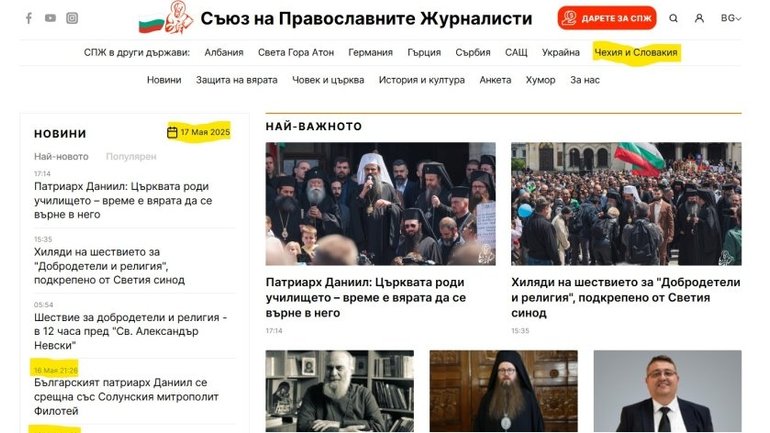
These are exactly the wolves in sheep's clothing spoken of in the Gospel, the ones we are warned about. In a demonically inventive way, these self-styled “journalists” (who remain unnamed) present themselves as defenders of a “persecuted” UOC-MP, and in doing so manage to mislead Western public opinion into believing that genuine religious persecution is taking place — a subject to which the free world is extraordinarily sensitive. Their success here is, objectively, aided by the ignorance of the Western public and its complete unfamiliarity with the mechanisms by which religion is used as a tool of denationalization, assimilation, and political indoctrination. We see the same thing in Montenegro, where local people push back yet remain misunderstood.
The reason for this is that people in the West don't understand the particular nature of Orthodoxy, which, unlike Catholicism and Protestantism, is far more statist and ethnophyletist — not to say frankly nationalist — in character. Do we really need reminding of the enthusiasm with which Orthodox clergy of the most varied jurisdictions greeted Adolf Hitler? Nikolaj Velimirović of the Serbian Church, Anastasy Gribanovsky of the Russian Church Abroad, and monks of Athos all wrote him letters of admiration, calling on him for help against “rootless cosmopolitans,” or to defend their own national interests — against the Bulgarians, in the case of the Holy Mountain fathers.
I remember what they wrote about me after Patriarch Daniil punished me over the Ukrainian children — that I was supposedly a thief, that an investigation was underway against me, and whatever else besides — all of it a complete lie. The truth is that to this day, I still haven't received the internal diocesan audit report, so I can't even respond to whatever questions it might have raised. But surely you don't doubt that if there had really been anything to it, they would have long since had my head over some canonical punishment or accusation of financial misconduct? They simply have nothing to hold on to — but they're optimists, and they keep looking. For a year and a half now, they've refused to grant me leave from the Sofia diocese, and things are heading toward me seeking protection in court for the violation of my rights. But if you read the UOJ and believe it, I'm a traitor or an exile, all but already serving a sentence for embezzlement… In reality, I hold a written commendation from the previous Patriarch, Neofit, and from the diocesan council, for good management of the monastery's property and for protecting the material interests of this holy house. That is exactly the same thing as calling black white — and the UOJ does it very well indeed.
To me, their work is satanic — not only because of the lies and slander they write, and their war against the canonical foundations of the Orthodox Church, but especially because of the hellish role they play in slandering Ukraine and undermining Western public support for Ukrainians, whose blood is being spilled every single day (something that matters decisively in democratic countries). If anything, I'm amazed that Western intelligence services are asleep and allow this manipulation of believers to go on unpunished, carried out by a structure that is banned in Ukraine itself — and not without reason.
— How actively does this and similar propaganda influence Bulgarians? Are there circles within the Church and society working to spread it?
— This propaganda is particularly effective in Bulgaria, and in general in countries that have historically been subject to Russian/Soviet information influence and where sympathy for Russia has traditionally run strong. The emphasis of the propaganda is on helping those segments of the population inclined toward emotional sympathy for Russia to find some support, some pretext, some moral justification for their pro-Russian stance in the face of the utterly unappealing facts of aggression, of open atrocities and war crimes committed by the Russian army in Ukraine. And indeed, after the initial shock and stupor caused by Russian bombing of Ukrainian civilians — far from the “line of contact” in the Donbas — Putin's supporters, who had been literally struck dumb in the first days of the war, got their footholds back, phrases like “where were you for eight years” and “the Ukrainians brought it on themselves,” and quickly recovered their nerve — I would even say their gall — enough to stand on the side of the Kremlin's outright murderers.
To my great regret, the Bulgarian Orthodox Church did not stay out of this “rehabilitation campaign” for the aggressor, and the then-Metropolitan of Vidin — now Patriarch Daniil of Bulgaria — issued a circular (sic!) defending the thesis of “shared guilt” and Russia being “forced into attacking.” This was an important signal to the pro-Russian forces within the Bulgarian Church that permission had been given, from the very highest levels, to abandon the Gospel in favor of a new heretical ideology of “holy war.” Regrettably, no one reacted adequately to this at the time, nor to the Metropolitan of Vidin's numerous subsequent media appearances — including his written dispute with the Athonite monks in an hour-long clip on YouTube, in which he repeated Kremlin talking points word for word, justifying the war and placing the entire responsibility for its outbreak and continuation on the Ukrainian side.
In fairness, it must be said that despite being informed in good time, the Ukrainian state did not take the appropriate measures — namely, adding the then-Metropolitan Daniil to its sanctions lists, a step the EU should also have adopted, and one that would logically have ended in his removal from the metropolitan see (since he would then have lacked the legitimacy to sign off on the salary records for his diocese, which are funded from the state budget). Instead, today we see him at the very top of Bulgarian Orthodoxy, for which one should congratulate the Russian services on a splendid success!
Whether anyone in Ukraine will ever be held accountable for the ignored warnings, I don't know. But I do know that if this propaganda had been responded to adequately and in time, a great deal in Bulgaria, and in Bulgarian-Ukrainian relations, would look different today. In the end, Article 419a of Bulgaria's Criminal Code — which covers the actions of nearly all pro-Russian propagandists, both secular and church-affiliated — has never once been applied.
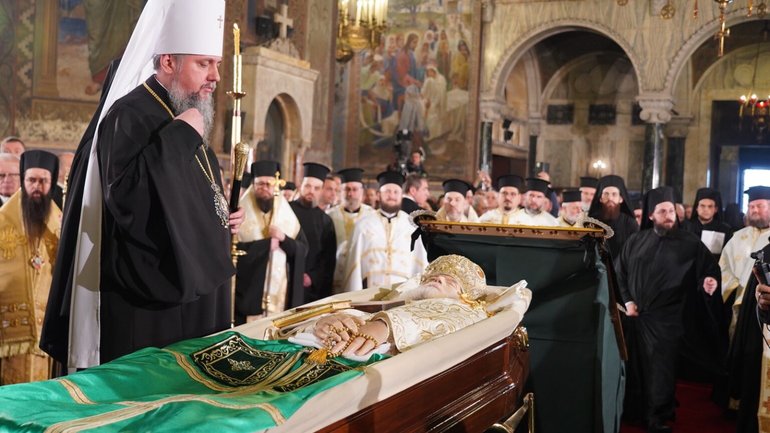
— When Patriarch Neofit passed into eternity, at the invitation of the Ecumenical Patriarch, Primate of the Orthodox Church of Ukraine, Metropolitan Epifaniy, also came to the funeral. How was his visit received within the Bulgarian Church at the time?
— I don't know what the purpose of that invitation was, or what impression it made on His All-Holiness Patriarch Bartholomew, but the arrival of the Kyivan Metropolitan Epifaniy served the cause of electing Metropolitan Daniil — the fiercest enemy of the OCU — as Bulgarian Patriarch remarkably well! As I said on the very day of his election, the whole thing played out straight out of the KGB textbook.
 In the months leading up to the patriarchal election, a psychosis was successfully whipped up that the Bulgarian Church was about to sharply change course toward rapprochement with the Phanar, recognition of the OCU, and a return to participation in ecumenical dialogue — everything that had for years been branded as “apostasy” and the “coming of the Antichrist.”
The intensification of fanatical (and simultaneously anti-Western) propaganda in Bulgaria began not long after Putin's Munich speech (2007), meeting no resistance whatsoever from senior church leadership, apart from certain measures Patriarch Neofit took within his own diocese in 2017. But already the following year, his health problems began — problems that would lead to his premature death.
In the days before the election of the new patriarch, feelings among the faithful here were almost apocalyptic. In Sliven, the entirely lawful election of a pro-Russian candidate for the new metropolitan seat was annulled; five Bulgarian bishops jointly served the Liturgy together with representatives of the OCU in Istanbul; and, to top it all off, Metropolitan Epifaniy himself appeared in the Patriarchal Cathedral in Sofia. The mobilization of the pro-Russian camp was total: first, a shortlist of three was chosen, all three of whom had varying degrees of dependence on Russia, and then, at the electoral council itself, the most radical and uncompromising of the three was elected the new patriarch by the slimmest of margins.
I can say only one thing: beware of Greeks bearing gifts! I would guess that the Bulgarian Church may well sign on to the decisions of the Council of Crete, but as for recognizing the OCU as a canonical Church — that, perhaps, only after the “Putin era” has ended.
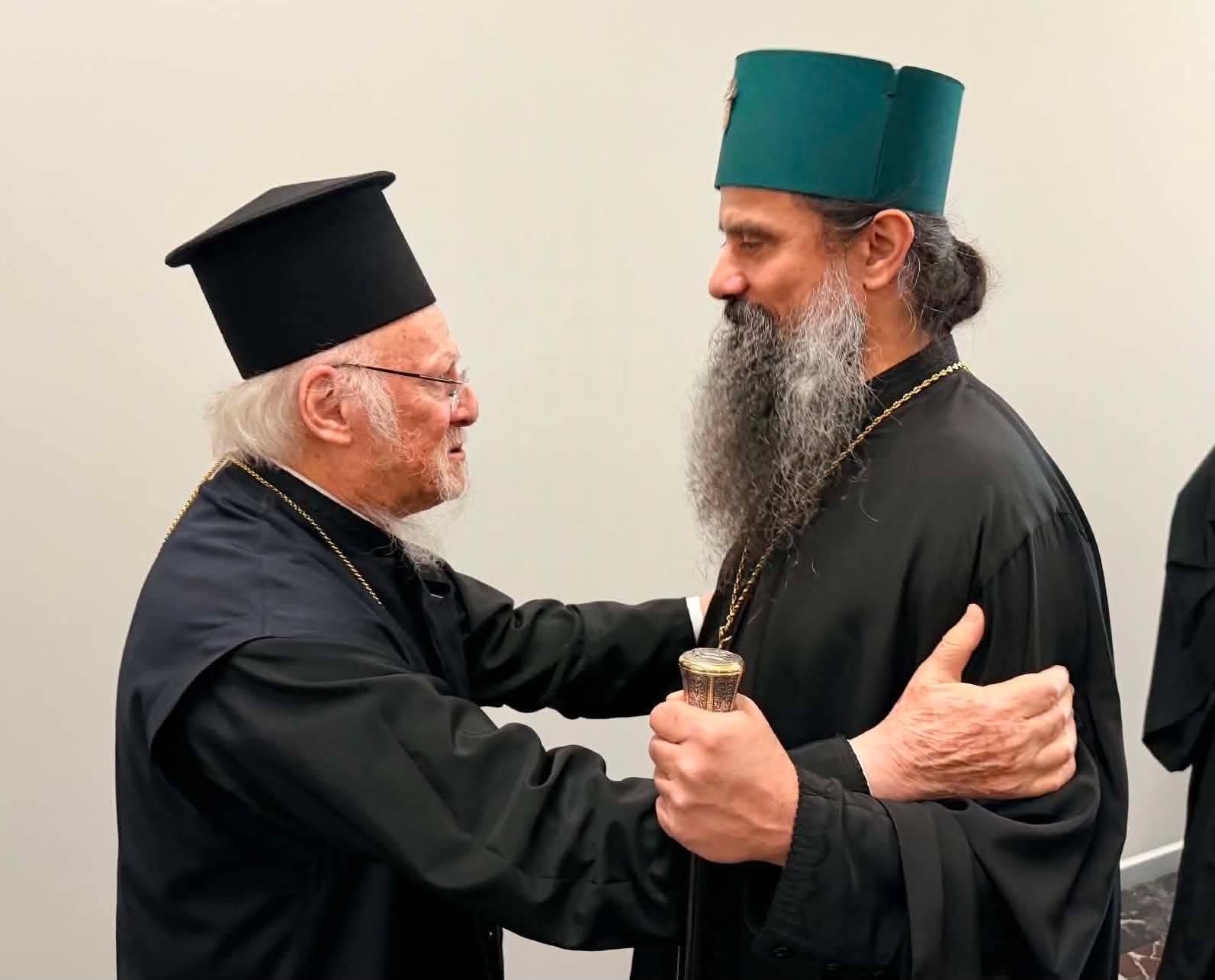
— At the same time, Patriarch Daniil is now meeting warmly with and accompanying Patriarch Bartholomew. What can you say about this meeting and visit?
— Listen, if I wouldn't hesitate to give the Patriarch's PR team a failing grade, then I can't help but give his canonical advisers the highest marks.
After a certain hesitation at the very outset and some delay, Patriarch Daniil oriented himself very quickly within the real state of inter-Orthodox relations and made his peace visit to the Phanar, followed by a second visit, undertaken purely out of goodwill, to take part personally in Patriarch Bartholomew's feast day. This is a rapid change of course — some say on Moscow's orders, or at least with its permission — but in any case, for most believers, both in Bulgaria and around the world, it came as an enormous surprise. Patriarch Daniil was expected to follow the line set out by Serbian Patriarch Porfirije, who neither paid a peace visit to the Ecumenical Patriarchate nor concelebrated with Patriarch Bartholomew or his bishops. Instead, he displayed an almost filial affection for the very same man he had, only the day before yesterday, been mercilessly criticizing. And not only in words, but by presenting himself as someone who, together with the Ecumenical Patriarch, welcomed and saw off his Romanian namesake, Patriarch Daniel, on the island of Imbros. He looked as though he were a close relative of the Ecumenical Patriarch, while the Romanian Patriarch appeared more like a guest. From the outside, it seemed as if the Bulgarians were once again part of the Mother Church, and their patriarch merely an exarch of the protothrone.
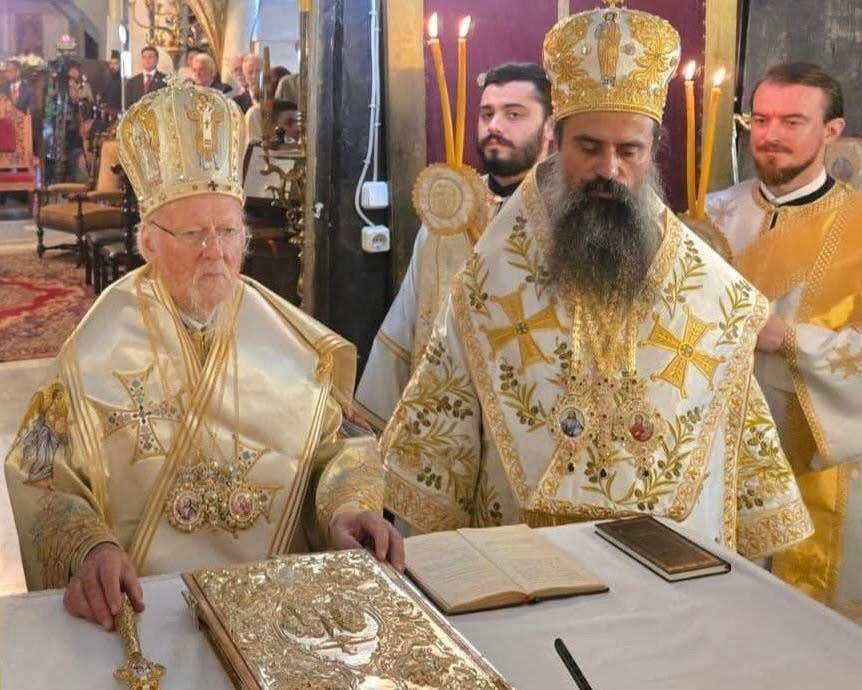
This gesture can be read as a deliberate act of self-abasement on Patriarch Daniil's part, a sign of humility and a request for forgiveness for his previous unbecoming conduct. In December, during his peace visit to the Phanar, Daniil promised the Ecumenical Patriarch that he would personally bring before the Bulgarian Synod for discussion the question of recognizing the decisions of the 2016 Council of Crete, which the Bulgarian Church had at the time refused to attend. This still hasn't been done, and that may, to some extent, explain the Bulgarian Patriarch's conduct on Imbros.
Either way, external recognition — specifically from someone who can legitimately represent world Orthodoxy — is of decisive importance for the Bulgarian Church. This is so because the canonical Synod, back in the 1990s, lost its legal battle with the schismatics and was declared illegitimate by the final ruling of the highest court, a decision that led to the adoption of a special law on religious denominations in 2002 (one that was later challenged before the ECHR) — a law that allows the canonical Bulgarian Church to exist within Bulgaria's legal space despite the Supreme Court's ruling. Yet instead of relying on national registration, the Bulgarian Church depends entirely on so-called “canonical recognition” from outside in order to legitimize itself within Bulgarian society. And that is precisely why, against all expectations, and seemingly to spite his most zealous supporters, Patriarch Daniil cannot follow in the footsteps of his Serbian brother.
Of course, one shouldn't discount the age-old traditions of Byzantine diplomacy either, nor Patriarch Bartholomew's own very human gifts, which allowed him to win over even such an unwelcoming man as Daniil, who scarcely ever smiles. But the Bulgarian Patriarch is a good calculator, since very soon there will enter “the game” as candidates for the patriarchal throne, metropolitans who enjoy incomparably greater support among Bulgaria's decision-makers than he does. Without the symbolic backing of the Mother Church, Patriarch Daniil would become easy prey for his younger, more ambitious colleagues.
— So Patriarch Daniil's authority isn't as solid as he would like it to be. And he's dependent on his younger bishops' attitude. Taking this into account, along with the circumstances that preceded his election, as you've described them, his pro-Russian position within the Bulgarian Church overall doesn't seem firmly grounded. So, how much support does he get from Bulgarian politicians and officials? Does he have a political lobby?
— Certainly, the Patriarch's power is nowhere near as great or as strong as he would like. First of all, I would point out that his prerogatives are clearly defined and, in a certain sense, limited by the Statute of the Bulgarian Orthodox Church, which, under Article 10 of the Law on Religious Denominations, has the legal force of a subordinate normative act. Patriarch Daniil has shown many times already that he either doesn't know this document well, or doesn't wish to be bound by its provisions — but things will look quite different if a force from within the Bulgarian Church, motivated to defend the rules, rises up against him. In that case, the Patriarch will have to yield, because the law is the law, and there is no political force that would back him if he decided to quietly suspend the church statute. In other words, with the departure of the Borisov–Peevski tandem (two extremely superstitious politicians), Patriarch Daniil is left without political support — he can count only on the institutional support the Church enjoys in our country. And that support is limited.
Although he and the new Bulgarian prime minister might seem, on the surface, to belong to the same pro-Russian social lobby, Radev will not allow the state to humble itself and make concessions to Daniil the way it did before, in a manner that irritated society. In this sense, the new government in Bulgaria is far more secular and — in the good sense of the word — neutral toward religious denominations. It's no accident that the prime minister's team politely declined to have priests from the Bulgarian Church come and bless his office with holy water. By tradition, the Bulgarian military is known for its strongly atheist views.
— The terrorist actions of the Russian Federation against Ukraine are blessed by Kirill (Gundyaev) and numerous other bishops of the ROC-MP. At the same time, publications — even books — regularly appear around the world accusing Kirill personally of heresy and of propagating the “Russian world.” But this often resembles the way accusations are leveled at Putin: he alone is guilty of the war, while Russians in general are not. It's the same with Kirill: he blesses the war and the aggression, while the ROC as a whole is treated as almost lily-white and blameless. At the same time, even those members of the ROC clergy who spoke out against the war, or were even expelled from the ROC for doing so, may well still hold imperial views themselves, refusing to accept Ukrainians' right to be a separate nation with an autocephalous Church.
In your view, how much real influence does an antiwar and anti-imperial position actually carry within the ROC itself?
— Look, at the moment of its creation on September 4, 1943, the Moscow Patriarchate was built in such a way that, from the very outset, there could be no other“positions of influence” — whether pro-war or anti-war — other than that of its leadership. Comrades Stalin, Beria, and Karpov never for a moment envisioned the ROC as some island of free conscience in the Soviet totalitarian sea. Specific tasks and expectations were placed on the ROC, tasks tied directly to the Soviet state and its domestic and foreign policy aims. It's no accident that, not long after, the notorious Department for External Church Relations of the ROC was created (something that had not existed before the Bolshevik coup), under the personal leadership and patronage of Lavrentiy Pavlovich himself.
Carrying out the tasks set by the state would not have gone smoothly, or even have been possible at all, if freedom of conscience had been permitted within the Russian Church, or the setting of goals different from those laid down by the Council for Religious Affairs — for instance, goals rooted in Gospel principles. So within the Moscow Patriarchate, there can, of course, be various tastes and currents, and we know many of its leaders who enjoy media popularity — but not one of them holds a genuine “position of influence.” The moment some clergyman gets above himself and decides he can influence the Church “from the bottom up,” his fate is sealed, no matter how many influential oligarchs, governors, ministers, or masses of ordinary people stand behind him. I need only remind you of Abbot Sergiy Romanov from the Urals, who is now sitting in prison.
The unholy conception in Stalin's embrace will forever weigh on this structure, and on everything dependent on it that lies beyond the borders of the Russian Federation.
This is precisely why the UOC-MP finds itself in such a sorry position at this moment — no serious, self-respecting state could allow a structure like this to exist on its territory without a serious risk to national security. However sincere its leaders' patriotism may be, however fanatically devoted its followers may be to what they take for “pure Orthodoxy,” the problem lies in its spiritual DNA. And that DNA is Stalinist.
As for Patriarch Kirill's heresies — regrettably, since he is the primate of this Church, and, following the Roman Catholic model, his name is commemorated by every one of its clergy at every service, everyone becomes implicated in his false teachings. If a Council of the Pentarchy were ever convened to judge him, condemnation would fall on the entire fullness of the Moscow Patriarchate, right down to the very last old woman in Petropavlovsk-Kamchatsky.
— As for the UOC-MP, what is its status now — how does the Bulgarian Church regard it? Has its attitude changed since the so-called Council at Feofaniya in May 2022?
— Listen, however much I might not want to say this — because I know what the everyday consequences will be for many of the brethren and their flocks — in the eyes of world Orthodoxy, the UOC-MP is recognized as a canonical Church only insofar as it is a subdivision of the Moscow Patriarchate!
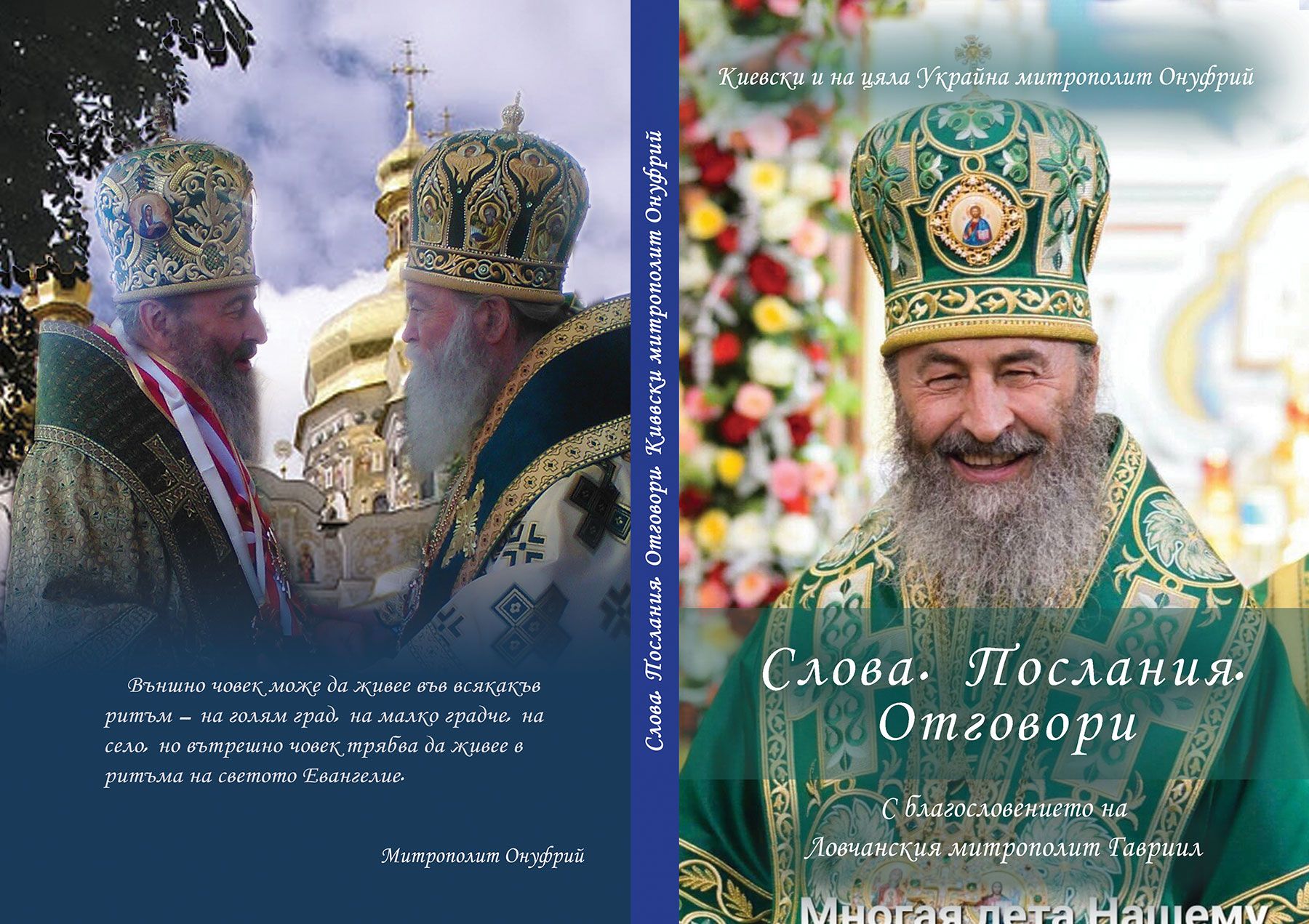
We have a clear parallel here with the Church in North Macedonia — as long as it remained outside eucharistic communion with its mother Church in Belgrade, everyone considered it schismatic and avoided communion with it. The moment it was received into canonical communion — still without a Tomos — it was accepted as an autonomous metropolitanate of the Serbian Orthodox Church, and its clergy can now concelebrate. So what's the attitude on this within the Bulgarian Church? Well, I have yet to hear Bulgarian Patriarch Daniil mention Metropolitan Onufriy among the Orthodox primates. That tells you everything, doesn't it?
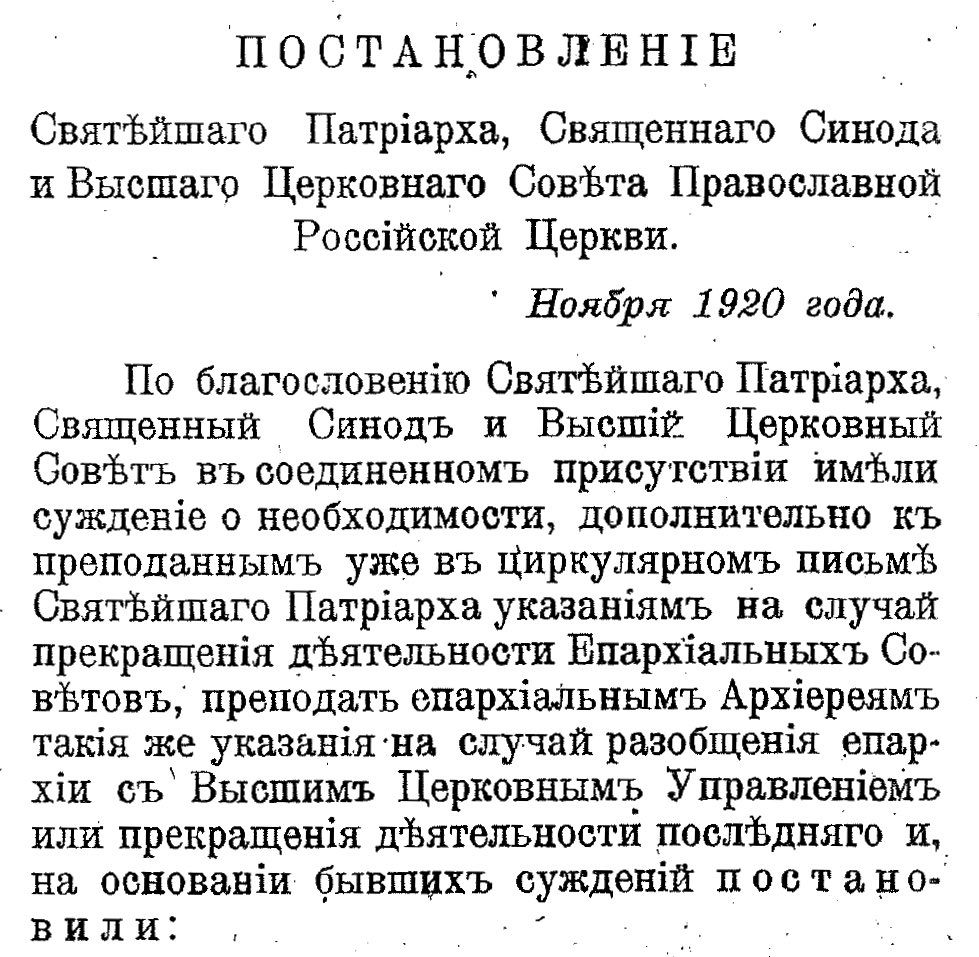
And what's the attitude on this within the Moscow Patriarchate itself? Hmm. You may not believe me, but it isn't what those foolish Russian church bloggers make it out to be. Now read very carefully what I'm about to tell you! Within the Russian Church, there is one particular illustrious saint and confessor — Patriarch Tikhon. Well, at one very turbulent moment, he issued a decree that no one has ever officially rescinded. This is Decree No. 362 of November 20, 1920, according to which parts of the Russian Church, if, owing to special circumstances — such as finding themselves on the other side of a front line — cannot maintain contact with the central church authority, may pass into self-governance, de facto into autocephaly! A word to the wise is enough. Now do you understand the canonical — I stress, entirely canonical — position Metropolitan Onufriy actually stands in? I'm sorry I let you in on that!
— So for the world, the UOC-MP is part of the ROC, and given the war and the impossibility of maintaining normal contact with its Mother Church, it could hold a status similar to the ROC Abroad — a temporary autonomy or autocephaly. But this still needs to be formally proclaimed. Instead, they removed references to unity with the ROC from the statute filed with the state, yet Clause 1.1 remains, which is precisely where that link is preserved — the 1990 charter of Alexy II granting the UOC self-governance within the bosom of the ROC.
Do you think the UOC-MP will be able to move toward a canonical proclamation of autocephaly, specifically? How do you see its future — what steps do you consider optimal for it?
— I've just explained to you that they can, entirely “canonically,” on the basis of Patriarch Tikhon's decree issued 100 years ago, govern themselves independently. The specific form doesn't matter.
Unfortunately, the UOC cannot become a canonically autocephalous Church, because, according to established and centuries-hallowed practice, in the absence of an Ecumenical Council, it is the Patriarch in Constantinople who issues the Tomos of autocephaly. But he has already issued precisely such a Tomos for the Church in Ukraine, on January 6, 2019, and, as we know from the Creed, there is only one Church. There cannot be two Churches in the same place at the same time. So I see no possibility whatsoever of Metropolitan Onufriy's UOC conducting its canonical life independently outside the Moscow Patriarchate.
Though it's very difficult, the only correct path is mutual recognition, reconciliation, and unification of the two canonical church structures in Ukraine — the autocephalous OCU and the Moscow-affiliated metropolitanate in Kyiv — while, for a certain period of time, some form of administrative independence of the UOC from the OCU is preserved. But at services, Metropolitan Onufriy must commemorate Metropolitan Epifaniy as his primate. This is the canonical path; there is no other reasonable one.
What is needed is forgiveness and love — regrettably, even toward one's enemies. But that is precisely what Christ calls us to and commands us to do! May Ukraine's bishops place their love and obedience to Christ above their own attachments and their own stubbornness!
— Over the past several years, Europe has seen a fair number of scandals connected with the espionage activity of ROC clergy. We've already discussed the Bulgarian example. There have been others in the Scandinavian countries, Finland, the Czech Republic, France, and elsewhere. And these are only the cases in which this spy network exposed itself. Can it be said that Europe has come to understand the role the ROC plays in the activity of the Russian regime, or is it still mostly perceived simply as a church institution?
— Unfortunately, I'm not confident that people in Western Europe realize just how thoroughly everything in Russia — following the tradition of the Soviet Union — is riddled with the tentacles of a totalitarian octopus. They never lived through those times, and they lack any lived-in immunity to it. And that is very dangerous, because, under the mask of freedom of conscience and religious belief, Russian intelligence services make intensive use of the Moscow Patriarchate's network of churches in Europe for a broad range of activities directed against the integrity of Western European societies and against the security of Western European states: from outright blackmail to the most sophisticated manipulation of public opinion through contact audiences.
— Father Nykanor, you recently published on your page on social media two lengthy comments — essentially articles — on the activity of Patriarch Theophilos III of Jerusalem.
In your view, why has he become so active in the church-political sphere? Who benefits from this activity of his?
— The Patriarchate of Jerusalem occupies a special place among the autocephalous Orthodox Churches, since its seat is located in the holy city of Jerusalem, where the central events of the Gospel took place, and also because it holds the Church of the Holy Sepulcher. At the same time, it is forced to coexist with a great many other Christian Churches — besides the Orthodox, the city also has Latin and Armenian patriarchates, as well as a Muslim and Jewish majority. This diversity of religions and cultures in Jerusalem lends the Patriarchate a cosmopolitan, ecumenical character.
Certain forces at work within the Orthodox world take advantage of this, forces whose ultimate goal is a complete reformatting of the Orthodox Church and a reorganization of its age-old canonical order. These forces are unhappy that primacy of honor and special prerogatives should continue belonging to the Patriarchate of Constantinople, since its unique position within the metropolis of Istanbul — part of the Turkish Republic, with the active backing of the Greek state and, since 1945, of the U.S. State Department as well — makes it difficult to control and nearly impossible to seize from within. And these same forces desperately need Orthodoxy as a replacement for the discredited Communist Party, as a fig leaf to cover neo-imperial ambitions, and as a kind of “social cement” cementing the political status quo in what is, formally, the largest Orthodox state.
It isn't widely known how, or by what means, Patriarch Theophilos of Jerusalem has been made to play the role of a second, or parallel, supreme authority within the Orthodox Church; presumably, we're talking about methods well known in history from the most ancient times. Some try to excuse his conduct as a fear of a possible incursion by the Russian Church into the Holy Land, similar to what happened with the Patriarchate of Alexandria, but Theophilos of Jerusalem's conduct appears far more deliberate than such a concern would suggest. What he demonstrates is a complete disregard for established church order and for the most elementary norms of courtesy and brotherly love, and at times even for diplomatic etiquette and civic loyalty — as in the case of his invoking the Pact of Umar in the presence of Turkish President Erdoğan, in a manner demeaning to Israeli sovereignty — and this speaks in favor of the hypothesis that he enjoys someone's very serious backing.
As they say, “he has a very strong back.
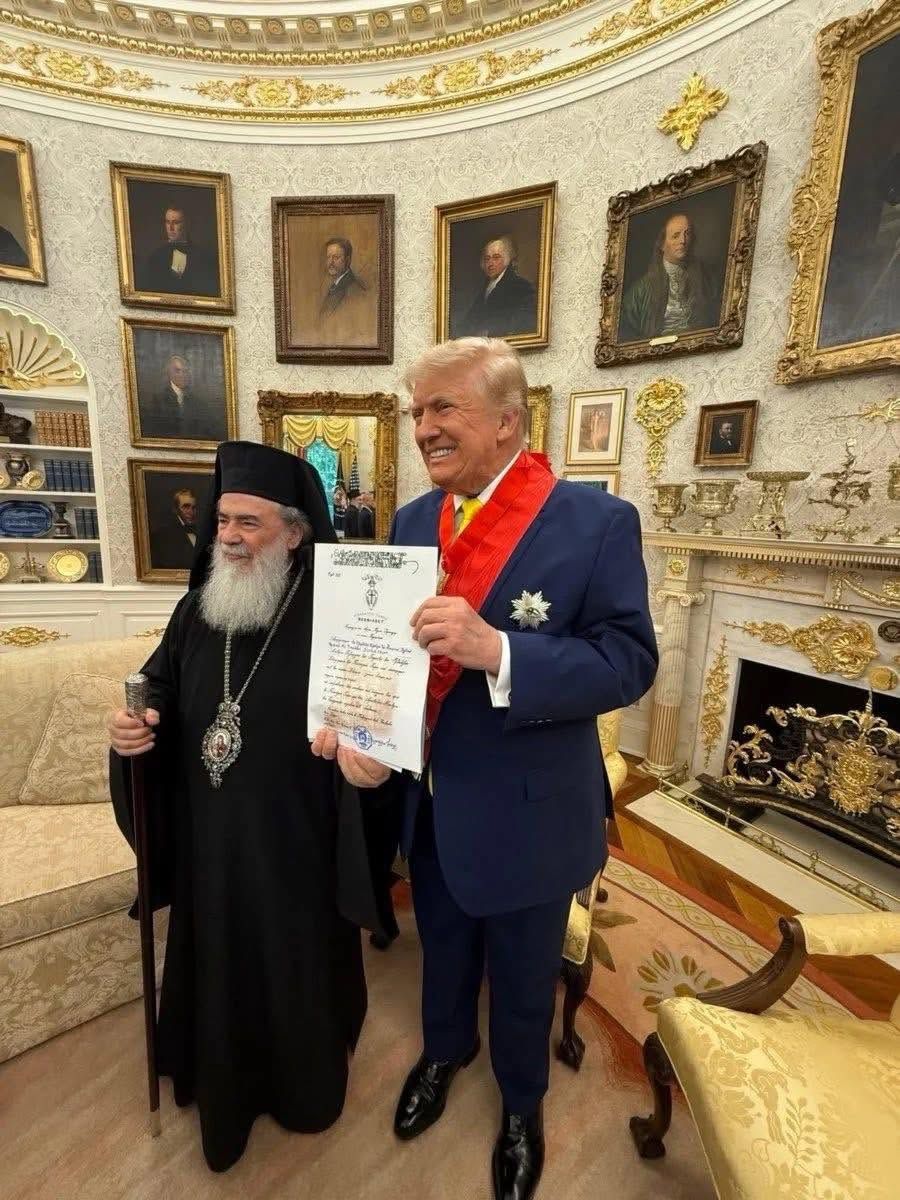
His conduct can be explained either by a secret dependence on the Kremlin — judging by whose benefit and at whose expense his actions are directed — or by the existence of a more global plan to shift spiritual emphasis and diminish the spiritual authority of the old Christian sees in Rome and Constantinople, which refuse to make concessions to the global elite, in favor of elevating Jerusalem — specifically in its Eastern Orthodox version. One that is, however, ecumenical enough to “accommodate everyone.” If it's this second explanation, then it undoubtedly carries an apocalyptic tinge.
What's important for the wider public to know, and what underscores everything said so far, is this: the Patriarchate of Jerusalem is the youngest partner among the ancient patriarchates, or the so-called “Pentarchy.” That is, even granting that, for some genuine reason, the Ecumenical Patriarchate is unable to fulfill its canonically defined functions, logic would dictate that its place and role pass to the next Church in order in the diptychs — that is, the Patriarchate of Alexandria, followed by Antioch, and only after that could the Patriarch of Jerusalem lay any claim to a leading role. Just as when Rome fell away from the Pentarchy after 1054, its place was taken by the next see in line — Constantinople.
So, before our eyes, a scenario is unfolding that one could call “revolutionary” — or, in church terms, schismatic. Consider this: the institution of the Church, as a divine-human organism with its earthly manifestation in our material world, is of key importance for defining Orthodox doctrine — that is, it is the Church itself that has the final word in matters of dogma and doctrine, and this is the very essence of every religion. For it is not that the Church is “wherever the correct confession is,” but rather that the correct confession is wherever the Church is. The visible, tangible Church, specifically. In other words, the struggle underway is not simply over clerical power between Constantinople and Moscow — it is a struggle over who will have the final word in judging every phenomenon of life from the standpoint of the Gospel: whether it is “sacred,” “pleasing to God,” or perhaps “godlessness” and “sin.” And it is precisely here that the Patriarchate of Jerusalem enters the fray as an ally of Moscow — one that quite possibly has scores of its own to settle.
Because for Moscow, shifting church primacy from Constantinople to Jerusalem is merely an intermediate step on the way to the final elevation of the Moscow see — not simply as the newest “Third Rome,” but as an “Orthodox Vatican.” Jerusalem, evidently, has its own vision of the matter, trying to make use of Moscow's power, but purely to its own advantage. If it turns out that Patriarch Theophilos does not depend on Russian intelligence services, then evidently the second scenario we mentioned is in play: very powerful supranational forces seeking to make Jerusalem the world's sole religious center.
Whatever the truth about Patriarch Theophilos' motives ultimately turns out to be, one thing must be entirely clear to us: they have nothing whatsoever to do with theology!
— Do you think that the hundreds of churches already destroyed by the war in Ukraine, or now the shelling by Russians of the Kyiv Pechersk Lavra, could in some way affect how the Russian aggressors are judged within the world Orthodox community? Could it affect the assessment of this war, or support for Ukraine among Orthodox countries?
— The shelling of the Kyiv Pechersk Lavra provoked an unexpectedly fierce reaction across the entire world community. Even UNESCO, under whose aegis the monastery complex falls, officially condemned this barbaric act. In Bulgaria, after delicately waiting for some kind of joint Synodal statement, it was Metropolitan Naum of Ruse who issued firm words in support of the suffering Ukrainian people. This sacrilegious act by the Russian aggressors forced even the paid mouthpieces of Russian propaganda to fall silent and start making excuses.
Indeed, such an assault on a sacred site by those supposedly waging a “holy war” for the “defense of Orthodoxy” defies understanding. Until now, only the fratricide Andrei “Bogolyubsky” [“God-loving”], the Tatars, and the Bolsheviks had ever raised a hand against the Lavra… and now the God-hating Putin as well. Public opinion in Bulgaria sharply criticized Patriarch Daniil and the entire Holy Synod for their failure to respond adequately.
And I think God perhaps allowed this to happen so the world could finally say “enough” and corner the bunker rat. Look how well the meeting between Trump and Zelensky went in the “G7” format…
— To finish, against the backdrop of some fairly grim events and processes in inter-Orthodox and church-state relations, is there any area where things are going better — where you could say you're cautiously optimistic?
— I think, if we're looking for one particular area, it's the situation at the front, and the overall balance of forces on the battlefield. Despite enormous strain and heavy losses, Ukraine is withstanding the pressure and is turning, more and more visibly, into a new David defeating a Chekist Goliath. But my thoughts run in a different direction. I draw my optimism from faith in the Living God, Who never abandons His children, and Who resists the proud but gives grace to the humble!
I think of your President, Zelensky, the “comedian” whose dignified conduct has shattered centuries-old stereotypes. I see how deeply God loves this man, who does not yet know Him “as he should” — loves him for his humanity and compassion, for his self-sacrifice and enforced courage. Did you know that between July 1940 and June 1941, another man who stood at the head of his country was utterly, completely alone, standing against the most efficient and most powerful war machine of his time? And he did not bow his head before force, did not give in to the temptation to take the outstretched hand of “peace” offered by the aggressor. And he lived to see his enemy cast down into the dust. And yet today, in my view, Ukraine's leadership stands greater than Churchill's — exactly to the degree that today's Ukraine is smaller than the British Empire of that time.
By the way, it's no coincidence that the United Kingdom is the most consistent and devoted ally of the Ukrainian people. The British simply feel the historical parallel. I know your people are exhausted by suffering, have lost faith in their leaders, and are deeply angry — but I beg you, hold on just a little longer! “He who endures to the end will be saved!” — our Savior promises. Ukraine will be saved, and victory will belong to the heroic Ukrainian people — for the sake of its wonderful children, too.
— Amen!
##DONATE_TEXT_BLOCK##