
Fifth Ukrainian Week begins in Washington, D.C.


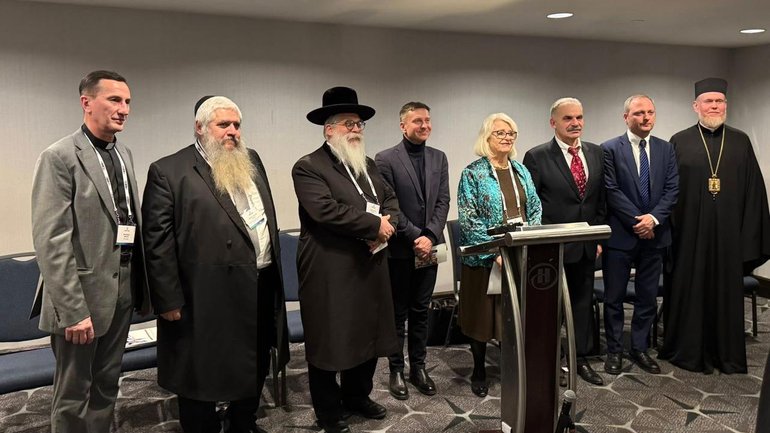
This was reported by the State Service of Ukraine on Ethnic Policy and Freedom of Conscience (DESS).
As part of the summit, a meeting of the Ukrainian delegation and a discussion panel titled “The Impact of War on Religious Freedom in Ukraine” took place. The event was attended by Viktor Yelensky, Head of the DESS.
In his speech, Yelensky described the grim reality in territories temporarily occupied by Russia, where freedom of religion has effectively ceased to exist. Religious communities are forced to either comply with the occupying power's rules or face disappearance. Clergy members are often intimidated, kidnapped, expelled, and places of worship are seized or repurposed into tools of control, turning faith from a space of freedom into a means of coercion.
He highlighted the role of the Russian Orthodox Church, noting that it is not a bystander in this war but an active participant that justifies aggression, violence, and occupation under the guise of a “spiritual mission.” This matter transcends theological differences; it involves complicity in criminal actions.
Yelensky emphasized that freedom of conscience remains a fundamental value for Ukraine, even during wartime. He affirmed that the state operates within the law while insisting that crimes against this freedom be documented, acknowledged, and met with consequences.
During the discussion, Ukrainian and American officials, religious leaders, and experts addressed the persecution of clergy, pressure on religious communities, and the Russian Orthodox Church's role in ideologically justifying the war against Ukraine. Participants particularly focused on issues of accountability for crimes against freedom of conscience and the importance of preventing impunity for the persecution of believers and religious leaders. They also discussed the role of international solidarity in safeguarding religious freedom in Ukraine.
The discussion featured representatives from both the Ukrainian delegation and international partners. Ukraine's representatives included Dmytro Senik, Minister-Counselor of the Embassy of Ukraine in the United States; Metropolitan Yevstratiy (Zoria) of Bila Tserkva; Archimandrite Cyril Hovorun, Doctor of Theology; Mykhailo Brytsyn, Pastor of the Evangelical Baptist Church “Grace” in Melitopol and Director of the Mission Eurasia Religious Freedom Initiative; Ihor Bandura, Vice President of the All-Ukrainian Union of Evangelical Christian Baptist Churches; Yaakov Dov Bleich, Chief Rabbi of Kyiv and Ukraine, and President of the Association of Jewish Religious Organizations of Ukraine; and Moshe Reuven Azman, Chief Rabbi of Ukraine and Rabbi of the Brodsky Synagogue in Kyiv.
From the American side, the discussion included Riley M. Barnes, Assistant Secretary of State for Democracy, Human Rights, and Labor, and Lauren Homer, President of the Law and Liberty Trust, who served as the panel's moderator.
This year's Ukrainian Week in Washington, D.C., carries special significance, as it coincides with the 250th anniversary of the United States. The focus of the event is on strengthening the strategic partnership between the two countries, particularly at a time when the shared values of freedom, faith, and human dignity are being severely tested by Russian aggression against Ukraine. Initiated in 2022, Ukrainian Week has evolved from a simple event into a significant platform for political advocacy over just a few years. The American-Ukrainian Christian Alliance is a co-organizer of the events.