
'For decades, there has been a negative selection process among the clergy in Russia': Metropolitan Evstratiy


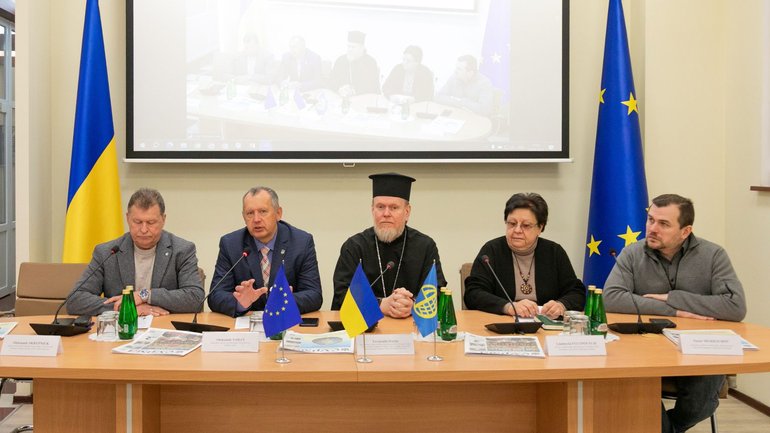
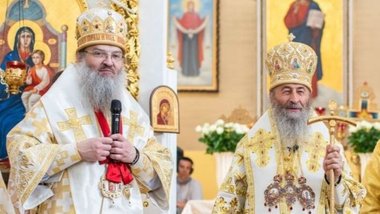
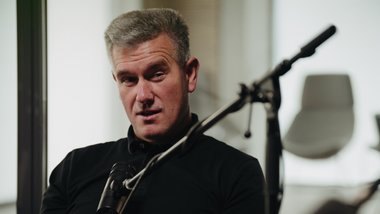
During a press conference titled “The Religious Factor in National Security in the Context of the Russian-Ukrainian War,” Metropolitan Yevstratiy (Zoria), the spokesperson for the Orthodox Church of Ukraine (OCU) and deputy head of the OCU’s Department for External Church Relations, addressed significant issues regarding religion and state relations. This was reported by Orthodox Ukraine.
He cited the example of North Korea, where an Orthodox community was established at the initiative of the authorities. Although this community appears to meet all characteristics of a religious organization, it actually serves to demonstrate the existence of religion under a dictatorship.
“The priest and all members of the community there are appointed by the authorities to showcase religion in a controlled environment. This illustrates how religious structures can be manipulated by the state,” he remarked.
Metropolitan Yevstratiy noted that this issue is systemic in Russia, where there has historically been no separation between church and state. “For centuries, religious institutions in the Muscovite state primarily served the interests of the authorities, and this model continues to exist today,” he emphasized.
He further noted that the modern Moscow Patriarchate was established in 1943 by a decision of the Soviet government, which has since influenced its evolution.
“For decades, a negative selection process took place, where individuals most loyal to the state rose to leadership positions,” he explained.
The OCU representative also highlighted that religious structures in the Russian Federation are actively supporting state policy, especially in the context of the war against Ukraine. “We can see how religious rhetoric is used to justify war crimes and promote the notion of a so-called ‘holy war,’ which contradicts the very essence of Christianity,” he said.
Additionally, he pointed out that Ukrainian society is aware of these challenges. According to sociological data, over 80% of citizens support restrictions on the activities of religious centers connected to Russia. “This is not about restricting freedom of conscience. It is about countering structures that exploit religion as a tool for hybrid aggression,” he emphasized.
He concluded by stressing the importance of conveying this position to international partners: “Today we face a new challenge — the need to defend religious freedom not only from state pressure but also from religious centers that have become instruments of the state.”