
Russia cannot be forgiven, – Jean-Paul Vande Reyde


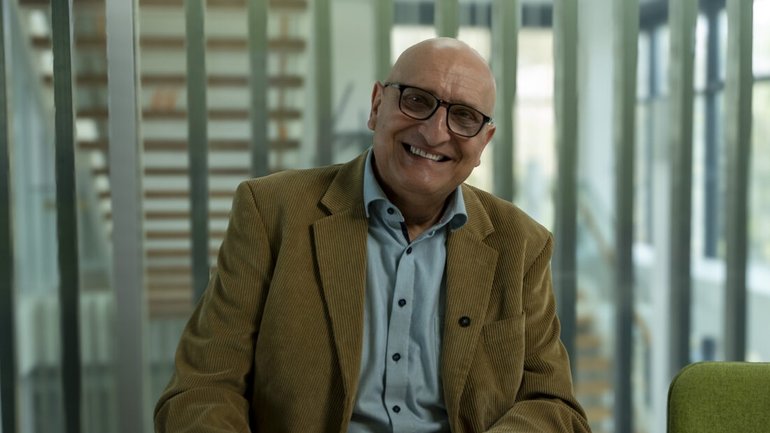
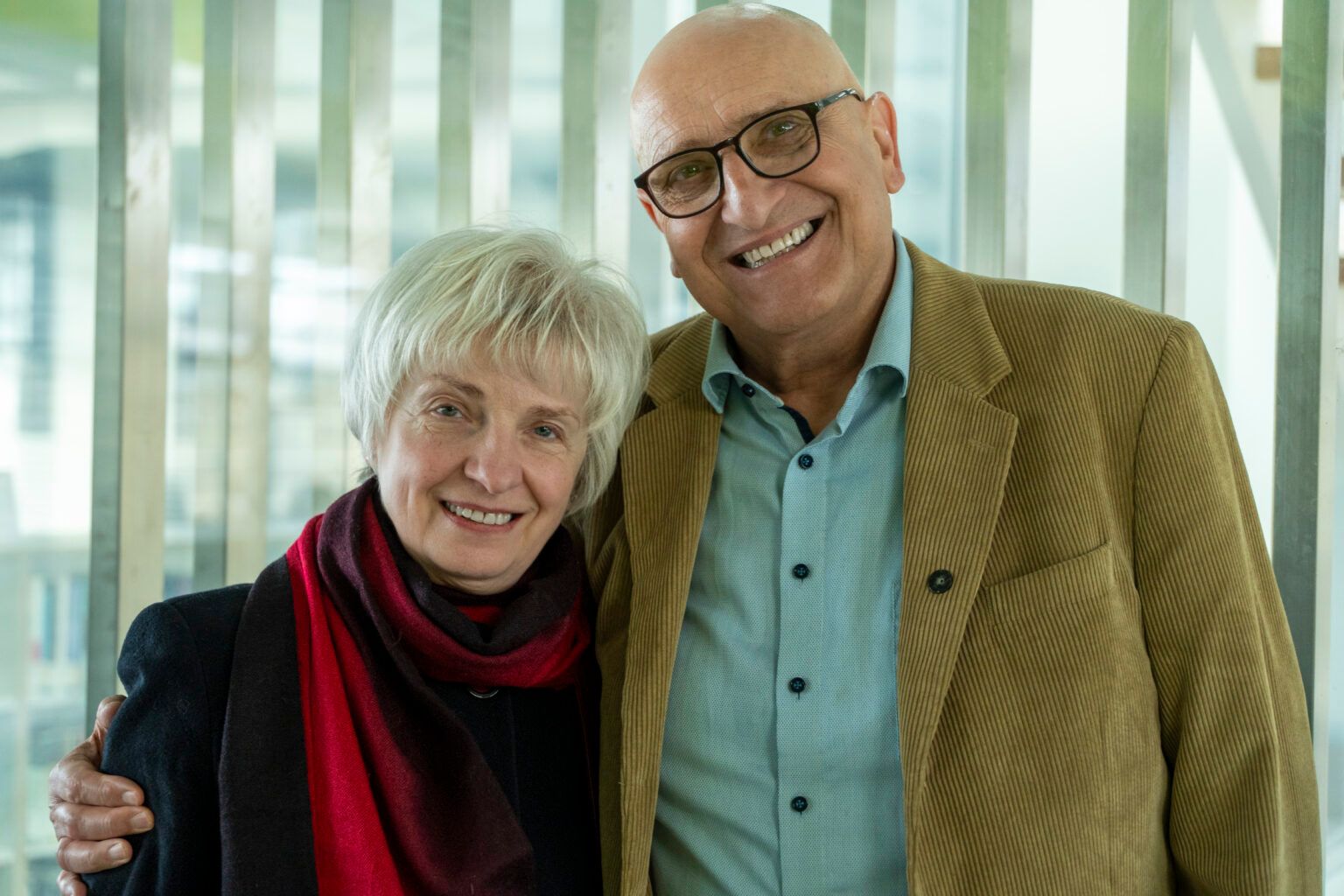
He has traveled much and worked in various European countries, and in fall 2022 traveled to Lviv and began to teach for the European University Online and Ivan Franko National University. In addition to teaching, Vande Reyde is involved in journalism and works together with the charitable organization Caritas in Lviv.
He calls himself an “energizer.” Regardless of his advanced age, he has energy for many things. He loves human contact and always finds a common language with students.
In an interview for the project “Little stories of a big war,” he talks about his impressions of time spent in Ukraine, amazement at the high level of knowledge of the English language among ordinary residents of the city, and the high level of professionalism of those with whom he works and whom he teaches.
Vande Reyde considers that Ukraine is the future of Europe. He shares his thoughts on how history influences the understanding and formation of the future and also how and why there are various reactions to the Russian aggression against Ukraine on the levels of governments and ordinary citizens of Europe.
Olena Dzhedzhora, a historian, UCU professor, and one of the leaders of the “Little stories of a big war” project, conducted the interview.
“Russia cannot be forgiven, because in order to receive forgiveness, you have
to ask for it. And I don’t think that the Russians will ever ask forgiveness.”
Olena Dzhedzhora (OD): Jean-Paul, thank you for coming here and let’s start from some knowledge about yourself as a personality, and who you are, actually.
JP: Well, I hate doing this because the least important person, in fact, in Ukraine is myself with all humility, really. But now that you have asked it in such a nice way, I am, in fact, a Belgian citizen and due to circumstances, after studying modern languages at the Catholic University of Leuven, I started afterwards as a consultant for a couple of French companies. And then I started my own consultancy firm, and after about 30 years, when I was 57, I closed it and I went back to teaching, because I started my career as an associate professor at the University of Navarra in Spain. So then I went to Spain for 10 years, 2 years to Italy, sabbatical year in Belgium again, then to Poland about 10 months and then, oops, Putin invaded Ukraine and I got invited by the European University of Lviv. So suddenly I was here in October 2022, and that was, because with some crowdfunding, I helped out some families here, together with a rich businessman in the UK, and so we helped out these people to go to any place for free and start their lives again.
So that is, jump off and ride it, and no more to add, and I rolled from one adventure to another one. So after the European University Online, I started working for the Catholic organization Caritas as a consultant for their sponsoring programs. And then Ivan Franko [National University in Lviv] asked me to be a guest lecturer. And gladly, and I hope also at UCU one day, just passing a good view on modern emotional intelligence, business skills, that is what I do.
And then if people ask me: “Why do you do that?” That is very simple, Olena. First of all, because I can, and secondly, because I want to, it is my choice. And then people say: “Coming to a country at war?…” And I always say laughingly: “Listen, I am already 71, I came to Ukraine when I was 68 and I had a choice, either watching Netflix in Brussels or be in Netflix here in Ukraine.” [laughing] So I took the second choice.
OD: Good for you and good for us. What did you actually know about Ukraine previously, before the war started and you happened to be here?
JP: Very little. I even didn’t know Lviv existed. So it was all a surprise. And then of course I started studying something about the country. But the best thing was just being here. And in these three years, the good people I have met, they have explained to me everything about your wonderful country.
OD:. Where in Ukraine have you been?
JP: Well, to tell you the truth, everywhere, because I’m also a journalist. So I was a journalist in Belgium for one year, when I graduated from university and when I went to Spain. And then I asked: could you send me an official paper from Belgium and maybe I could be also a journalist here? So the National Association of Journalism here in Ukraine, they just gave me a journalist card. Now, that was important, because now when businessman friends of mine came and visited me, not too many, then we went to the different war zones. So Bucha, Irpin, Liman, Kharkiv, Kherson, you just name it, I’ve been there.
OD: That’s really wonderful. Okay, let’s start from the interesting and good things about Ukraine. What do you like about Ukraine, being here for three years already in such challenging circumstances? Let us put it like this: What do you like, what do you dislike?
JP: Okay. What I like. I like the open-minded mentality of the Ukrainian people. So my favorite philosopher is Socrates, because he’s the guy who taught me: Be curious, because you don’t know too much. So I met such interesting people at a high level, not only at the different universities or at Caritas, but also in the street when I asked: Hey, could you help me find the way to the town hall? And I have to tell you, everybody speaks English, as long as they’re a woman. Oh, brother, that was a shock to me. I can talk, hear my English, I don’t know one word of Ukrainian. And I thought that I knew one word that was that “diakuyu” [“thank you” in Ukrainian]. But I said during a full year “dakufu”. And nobody laughed at me. And after a year, somebody said, John Paul, it’s not “dakufu”, it’s “diakuyu.” I said: “Okay, I’ll always speak English, no problems.” And I have to say – most of the ladies, no problems. I think they pay attention at school, in their classes. I also teach at the ninth grade in a high school. Wonderful.
Then what I dislike, you will not believe it. I love your famous soup, borsch. But I don’t like too much varenyky. That is the only thing, in fact, I dislike.
OD: Just some kind of a cuisine?
JP: Yes, absolutely. But the mentality and the people – very open.
OD: Have you developed a closer friendship with some Ukrainians?
JP: Well, to tell you the truth, in that aspect, I’m Flemish. As a Belgian, those who live in the North, we are very similar. We are not the people to invite home. So no, I have not been close to many, but I’ve made a very good friend, who is also now my lawyer. He’s got a law firm and he takes care, not only as a friend, but also as a businessman, of all my legal things, because I am a resident and everything has to be in order.
So I’ve got also another couple, young people, who are my friends. Every two weeks, we have something to drink, a bite. And also the principal of the school where I teach. Very nice, very nice people. But I try not to intrude in private lives. Though I got invited to the Carpathian Mountains by that young couple and I spent three, four wonderful days with their families. And I thought: “Oh Jesus, they sing with their parents!” You know, Merry Christmas, the whole thing.” It was such a nice experience. Yes.
OD: Besides teaching, working in Caritas, is there anything else you are doing here?
JP: Well, I’m getting older. And I read a lot. And I write articles on emotional intelligence for my students.
OD: I would like to ask you about the international community here in Lviv. What could you tell about these people? It seems to me they are very special.
JP: It seems to me they are not special. For Ukrainian people, everybody who speaks English and who doesn’t speak Ukrainian, they’re special. That’s the same for us in Belgium. Everybody who speaks Ukrainian and doesn’t speak Flemish, Dutch, – special. To answer your question, I try to avoid those circles, because they cannot give me an added value for any cultural aspect. I’d rather look up the circles that belong to Ukrainian societies, because Ukrainians are intellectually top class. I don’t see any difference here. I went for some surgery here, it was wonderful. They speak English. They treat you even better than in a Belgian hospital. And the same with the professors here. All top level, really.
OD: We met with you in this meeting of the Rotary International Club in Lviv. And my impression was that there is a circle of people who are very active in actually understanding the Ukrainian position in this war and helping Ukraine. That’s why I said that they are special, because, well, that’s not so interesting for most of the European audience.
JP: Absolutely. This is another kind of question. If you’d say: And what about the Ukrainian circles? I said: Oh, that is interesting. Such as, for example, the Caritas circle, such as, for example, the Rotary, where they invited me as well, and where I really loved the speech of your husband [Professor Yaroslav Hrytsak]. He taught me something very important I didn’t know. And then suddenly I said: “Oh, yeah, that is the reason!” So, interesting people, nice people, and they’re helping out Ukrainian people, as I try to help out.
OD: Well, let’s pass to the present moment. What is your perception of this war?
JP: Of course, every war is a bad thing. And for the last 70 years in Europe, we have not known any war. I would never have imagined I would still be witnessing a war, out of my choice, personal choice, okay? But here we are. And every war is bad, because people are injured, people are killed. And for example, one out of five children here in Ukraine, they’re confronted with someone in the family who passed, who was killed, who was maimed physically. So, this hurts me. This hurts me a lot. The thing is, what can we do about that suffering? Question mark. And that is one of the reasons I’m here.
OD: And what are you doing besides teaching and helping students? What else are you doing helping Ukraine in this struggle?
JP: The thing is, I try to help out with my talents as a teacher, a guest lecturer. And I propose to those who are interested: Would you like to have some extra French or German? Or as a linguist, I dominate some languages, Spanish. I’m willing, I have some time to do that for you in a public place.” And then some say: oh, yeah. And then here we meet for that extra 30 minutes. So, this is the extra value I try to put into my week. And that is the reason why I’m here.
OD: What do you think about European countries, European politicians, and their attitude, their reactions concerning the Russian war in Ukraine?
JP: Good question.Now, politicians have decided, like yesterday, with 800 million extra dollars, euros, to help out Ukraine. Because what Trump said, they have an ocean in between, but we don’t have an ocean between Russia and us. So we consider them as a real threat. And that is the reason why European politicians, they really help out Ukraine, because you are our ocean between Russia and us. But that is the politicians, their decision. Now, the people themselves, that is a different answer to your question. When I go back to Belgium, nobody asks me too many questions. No. And that might be a surprise to you.
And therefore, I always tell my Ukrainian friends: “Do not react to that in an emotional way.” Because that is what I learned from your husband. He gave me the answer why there is, for many, apathy. Why: “Oh, it’s far from my bed.” Okay. And the answer is that before you really know what war is, you have to be killed by the enemy. And not one European country has suffered a direct kill from Russia. So as we don’t have an uncle or a brother who was killed by Russians, there is no emotional aspect that makes us: “Oh, well, yeah, they’re the bad guys. Oh, this is terrible.” So there is an emotional disconnection. And we have to understand that.
OD: Sure. So there is no immediate danger. And that’s so awful even to imagine it, that it’s better not to think about that at all.
JP: Number one: Let’s not talk about it, let’s not think about it. But I say, as long as you do something about it, I’m happy. So give me stuff when I go back to Ukraine that I can give to people. I have a very good friend, Peter, and whenever he comes down, his van, a big Toyota, is full of medicine, full of help, and also from his friends. So he’s helped out.
And his club in Belgium, of Belgian businessmen, a lot – for prisoners of war contributions, for Caritas, for the army. That’s good.
OD: How do you see the future of Ukraine?
JP: Very bright. Absolutely. There are things that up till now, maybe, we don’t understand here in Ukraine very well. So: “Hey, oh, what is happening? Now we don’t get any aid from the Americans anymore.” Well, first, that will be restored very fast. That’s just a business game. Okay? Absolutely. So that’s number one.
For every war, there is afterwards peace, because what goes up must come down. So peace there will be. Not the kind of peace that we want, but there will be peace. And then step by step… So I think if we can train the elite, the students, who will be doctors and engineers and whatever profession to reconstruct this country with all the help of Europe. Because Europe, we have decided with lots of money to help out the economy, to pay for all the civil servants here, their salaries. How low they may be, but the parks are very well kept up and these people are paid. But you don’t have the money. We give the money. We better give the money if we don’t want a knock from Putin very soon.
So that is the good thing. But they have to be trained. So training is the master. I’ve never seen, and I’ve been everywhere in the world, young people speaking English so well. And when I asked them: “How come you speak English so well ?” Also, young men don’t worry, okay? So they say:”JB, we started studying English at school at seven.” I say: “What? In Belgium, only at the age of 12.” Now that is important. And apparently you have very good English teachers here with perfect pronunciation.
So together with English, together with the help of the European Union, the first thing is you will be a member of the European Union and it will not take long. Very recently, we heard 2030. That is because Ursula von der Leyen, she’s really pushing for this. There is also a military reason that not many people know about. So if you can be a member of the European Union, whether you like it or not, Mr. Putin, from that moment on you will not only be helped economically, but even if he comes back and he attacks again, militarily. Because there is in the Treaty of the European Countries to which you will belong, an article, Article 42, that says that whatever happens, whomever invades, attacks one of these 27 countries, 28 with the UK, they will step in and each member decides then: okay, with military help or economic help. And nobody knows about that. But Macron, he did. Because in 2015, he invoked Article 42, Paragraph 7. And he invoked that throughout the whole European territory to counteract terrorism. And every country said: “Okay, good for those people who want to harm us and have terrorist attacks.” As you know about Belgium and about Germany and other countries. So we said: “Yes, due to Article 42, Paragraph 7, here we go and we take the necessary measurements to protect ourselves.” You will be protected by the European Union. And apart from NATO, this is completely different. So that would be an extra help, whether Trump or not. But Trump is already 78. He will not be for eternity. Whoa, whoa, whoa. Maybe in two years with the midterm elections, he will be a lame duck. He won’t have anything to say. And Congress will take power again. So everything changes.
Now it’s not positive with the United States and also for Europe. Because “Europe, we drop you,” okay, that’s also a good thing. It’s like with the students, if they don’t get money from mom and dad, you know what? “Move you’re a.s.s., go to McDonald’s, work there a couple of hours, you’ve got enough to eat for a week.” That is my answer for the European Union, for the future and all these companies that will come to Ukraine and they will ask us: “Hey, hoh, are the good guys here”? I said: “Oh, I know the best of my students.” And then I will send them their resumes, and good luck. Because they are good.
OD: At this Rotary meeting, you have stolen my heart. Because you have been asked a similar question to this last one. And your answer, you just bought me completely. Being asked how do you see Ukraine in the future, you replied : “Ukraine is the future.”
JP: It is. Absolutely. Because we have to live in the moment. And we can learn a lesson from the past. And that is the same with Europe, with Belgium and France. When the Germans invaded our countries and when they slaughtered so many of us, not only Jews. And then it takes generations to forgive.
No, Olena, in this case, Russia cannot be forgiven. Because in order to receive forgiveness, you have to ask for it. And I don’t think that the Russians will ever ask forgiveness, because they consider everything so normal, the Holodomor and all the rest, the invasion of Crimea in 2014, this invasion. For them, it’s normal. Well, it’s not for us.
Now, you don’t ask for forgiveness? All right, you know what we can do? We can still live together at peace. You in your home and we in our European Union home. And I understand the Ukrainians: “Oh, JP, we really hate them.” I said: “Well, I was the same in the ‘50s, the ‘60s. We really hated the Germans.” But now, two, three generations, especially the Zen generation, my grandchildren, they don’t even know what the Second World War is about. So it goes fast. So I said: “Okay, I understand, you hate because of so many atrocities.” My answer to them is: “As long as you’re not revengeful in the next generation, don’t take revenge on what happened with your grandparents, your parents. If you do so, then we will live – them in their sphere and we in our sphere in peace.” That is my opinion.
So you may hate. Don’t count on forgiveness. You don’t have to forgive. The only thing, just don’t be revengeful in your heart and your mind. But that’s my personal opinion.
OD: I agree with you on that. What do you think about the future of the Russians?
JP: Well, that is their problem.
OD: Partly.
JP: Partly? Well, no, no, no. So money rules the world. I teach that in my classes at university. And I said: “Business babes, why do you want to go into business?” And the answer is one word – success. You have to be successful. So it’s all about money. Money rules the world.
Now, the Americans, in order to get the Nobel Prize for Trump, that’s the only thing he wants: “Hey, look at me. I did it.” [laughing] The economic sanctions from the States, they will be abolished. But that will not help out Russia completely. Because of the European sanctions, they will be maintained. Don’t you ever forget, it’s Brussels with a company that is called Euroclear. We have billions of dollars, euros of assets that Russia put into that company to make money. With that money, you can pay a lot. The World Bank said it will cost about 485 billion to reconstruct the 150,000 houses that were destroyed, the nearly 714 universities, maternity wards, hospitals, schools. Everything has to be rebuilt. Well, probably we’ll take that money because they [Russians] will not give it to reconstruct. Now, I’ve got bad news for Putin because he will need for the occupied territories of the Donbas, according to Bloomberg, a very good American company that counts everything for different countries by their economy. He will need about 50 billion dollars just to maintain and pay everyone, even though very low pensions as in Ukraine, but that will change as well.
That’s his big problem. And the second big problem. Mr. Putin, you turned into a war economy and suddenly there is no war anymore! So, what is going to happen? All these people, they would like to have a job again in the private companies. So, high inflation, high interest due to the economic sanctions. So, many businesses go bankrupt if you have to pay 25 percent. So, he will have big trouble.
And at the same time, of course, China is buying their oil, what is left. And they [Russians] take advantage of cheap oil and cheap gas. So, whatever they produce now, they cannot sell it to Europe because we’re buying it from the States four times more than we bought it from Putin. But we learned our lesson during 20 years. Of course, it was all cheap. Then we got rich, the European countries. And now we say:”Oh, we sold our soul for money.” So, now we are changing and getting independent from them. And I wish Russia lots of luck with their economy. I don’t think it will work out very well.
OD: Thank you. Maybe there is something you would like to tell and I didn’t ask?
JP: There is so much to tell, but who am I? I told you at the beginning, I have to be humble. Maybe there is one thing. Everything depends, according to me, on details. And only God and a person beloved to us are in details.
I will never forget a young mother, when I was in the Flixbus, coming back with her two little children to Poland, and where the baby was crying, and she sang a song, just to keep it quiet, so the other people in the Flixbus could sleep. It really impressed me. Then there was a young mother, Victoria, and I read a BBC article about her, how her husband and her child of 10 years were killed in front of her eyes. So, I contacted her in Lviv, and I said: “Where would you like to go? I can help out.” Now she’s in England. What impressed me about that young mama was – no complaining. She didn’t say one word, what happened. And I didn’t have to give a comment on that, but I knew and she knew what happened.
So, with these details, these young Ukrainian women, now abroad, later coming back probably, they passed an element of energy towards the energizer. Because with details, you can get one really wonderful result, and that is comfort, that is resilience, and that is hope. And these three elements are so important. Because then suddenly, I got invited by a professor for a cup of coffee. So, people invite me for a meal, and I always say: “On one condition, if I can pay, all right?” Why? Because I can, and that’s the simple reason.
And then, people, I see them going to church on Sunday, and I say, well, churches are still full here, in Belgium they’re empty, okay. You’re with 20, 30 people. So, I say: “Oh, again, a detail.” And what is the detail? The detail is – willing to share. If it’s a coffee or a meal, or that you want to share your problems that I have, like everyone else, different, like Ukrainian people, but I want to share it with God. And as long as you want to share, with a walk, a talk, a wine, a dine, there we go. So, showing details, sharing. It’s all about details. And from whom did I learn that? I was 38, and then my life changed by people like your husband writing interesting books. And that was a book by Jorge Luis Borges, a very famous Nobel Prize winner. And he wrote: For everyone who wants every day in good or bad conditions, there is always a moment of paradise. What is the moment of paradise today? Well, if I say this interview – no. It was really nice. It gives me a good feeling. I can help many people with my interview for their hope and resilience. But the moment of paradise was the coffee. That was the lady giving that coffee in perfect English. And she wanted to give me the change back. I said: “Just keep it.” And she said: “Oh, thank you.” So, the little details of gratitude. And all this Trump story… of course, Ukrainians are very thankful! I can feel that every day.
OD: Thank you very much, Jean-Paul, for sharing your thoughts with us. We are very grateful.
JP: Okay. You do with this interview whatever you want as long as you can reach the people who are interested in that and who can be moved. Like with your husband when he told me: “Only when in a literal way you’re confronted with death, such as the Ukrainian people with the Russians, you can understand what we go through.” And then I said: Now I know why people are not interested in that war in Belgium, why they don’t ask me too many questions.