
“Symbolic War” on European Sanctions


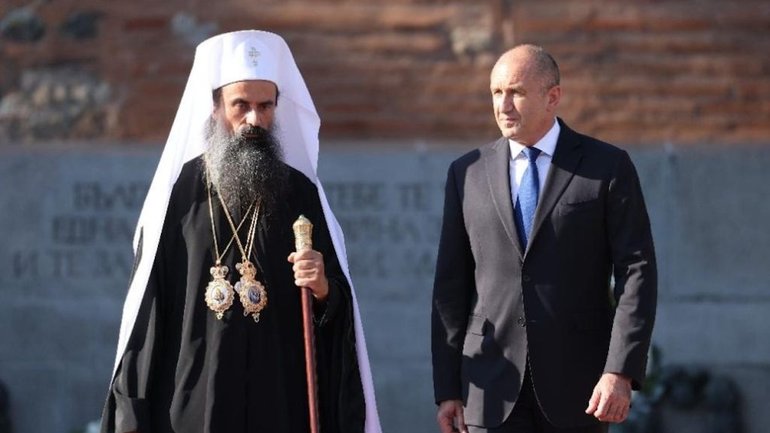
It should come as little surprise that Bulgaria’s new government—which made no secret of its Kremlin sympathies long before last spring’s elections—has now stepped into the role once played by Viktor Orbán: blocking the inclusion of Patriarch Kirill of Moscow in the European Union’s sanctions regime. With Hungary’s new government finally willing to let Kirill face restrictions, Sofia has moved in to fill the gap.
When Prime Minister Rumen Radev announced that Bulgaria would oppose Kirill’s inclusion in the 21st EU sanctions package, he offered this explanation: “I don’t care about Patriarch Kirill. I care about the fact that he is the head of the Russian Orthodox Church, which is Eastern Orthodox, just like ours. I care about all those millions of people who are part of this Church.”
Foreign Minister Velislava Petrova followed on June 17, describing the measure as “symbolic” and potentially “counterproductive.” The statements set off a sharp public debate, both within Bulgaria and beyond its borders.
Radev’s argument deserves scrutiny. Sanctions on Patriarch Kirill are personal—they target Vladimir Gundyaev, who also happens to hold ecclesiastical office. They concern his financial assets and his publicly expressed support for the war; they do not touch the Russian Orthodox Church as an institution, its clergy, or its faithful. The comparison Radev implies—that sanctioning Kirill is tantamount to persecuting Russian Orthodoxy — collapses on inspection. Greece, Romania, and Cyprus, countries with strong Orthodox traditions and no history of hostility toward the Russian church, have raised no objections to the measure. Nor is Radev himself a convincing spokesman for Orthodox sensibilities: he is not known to be a practicing believer.
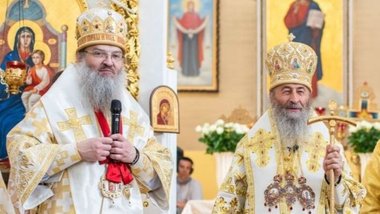
What actually drove the decision was not the decision itself—which serious analysts could see coming—but the way it was publicly justified. Rather than citing intelligence assessments or strategic interests, Petrova also pointed to consultations with Patriarch Daniel of the Bulgarian Orthodox Church, a figure already well known for his controversial record on the war in Ukraine.
That record deserves some context for Western readers. Elected as Patriarch in June 2024, Daniel has consistently promoted positions that echo Russian Orthodox narratives: he described both the 2014 Euromaidan uprising and Russia’s subsequent invasion as equally blameworthy events; condemned Ukraine’s legislation restricting the Moscow-linked church as “discriminatory”; publicly defended Russian priests expelled from Bulgaria on national security grounds; and refused to recognize the Orthodox Church of Ukraine. At his enthronement, the Russian ambassador made a rare public appearance. Patriarch Kirill personally welcomed his election. One Bulgarian archimandrite resigned in protest the same day, describing the vote as conducted “by the KGB’s rulebook.”
Under normal circumstances, had the government simply wished to do Daniel a favor—or act on his request—it would have done so quietly. That is how these things work. What is remarkable here is that exactly the opposite happened.
Rather than shielding Daniel from accusations that he serves as a conduit of Russian church-political interests in Bulgaria and in the EU more broadly, the government used him as a public explanation for its own decision. Like Pontius Pilate washing his hands, Sofia’s politicians offered the Patriarch as cover for a position that required no theological justification. The image damage fell entirely on the Church; the political benefit stayed with the government.
This suggests the real motivation lies elsewhere: not in any deep commitment to Russian interests, and not in Radev’s apparent ambition to replace Orbán as Brussels’ chief disruptor. More likely, it is a calculated move in domestic politics—an act of cheap and easy signaling to a pro-Russian constituency, executed while the government quietly makes far more consequential concessions in the opposite direction.
The pattern is recognizable. Earlier this spring, Radev’s government extended the stay of American military aircraft conducting operations in connection with the Iran situation—yet announced, on what happened to be the final day of their previously agreed deployment period, that the planes would be asked to leave “by the end of next month.” The performance was designed to read as a firm rebuke to Washington. Observers who knew the timeline saw through it; most of the public did not.
Bulgaria’s electorate is sharply divided between broadly Western-oriented and broadly Russian-sympathizing camps, a division deepened by years of media fragmentation and political polarization. In that environment, theatrical gestures carry real value. Radev can play the defender of Russian Orthodox tradition for his base while remaining functionally cooperative with Western partners on the issues that actually matter to them.
The use of Patriarch Daniel as a prop in this performance—twice within a single month—signals something more significant than temporary political convenience. It marks a shift in the balance of power between the Bulgarian state and the Bulgarian Church. Under the previous Borissov era, widely characterized as one of institutional corruption, the Church occupied the position of a privileged and occasionally capricious partner: its demands were accommodated, even at real cost to the state’s image and treasury. Now the relationship has inverted. The Church is asked to absorb reputational damage for decisions the government has already made. The benefits accrue to the state; the costs fall on the institution.
This is a dynamic worth watching. An early indicator will be the appointment of a new director at the Directorate for Religious Denominations—Bulgaria’s rough equivalent of the Soviet-era Committee for the Affairs of the Russian Orthodox Church. A politically loyal appointment there would signal that the government intends to formalize its leverage over the Synod. Conversely, a neutral appointment would suggest the current arrangement remains opportunistic rather than structural.
The deeper irony is that the government may be creating conditions it cannot fully control. If Radev uses Daniel today because Daniel is useful to him, a different government tomorrow may exploit the same institutional dependency for entirely different ends—ends that neither Daniel nor his allies in Moscow would welcome.
The precedent here is older than it looks. Some eighty-five years ago, Bulgaria found itself formally allied with Nazi Germany while having no practical capacity—or desire—to wage war against Great Britain, the United States, or the Soviet Union. The solution was a “symbolic war”: a declaration of hostilities against the Western Allies, carefully calibrated to carry no military consequences, while pointedly refraining from any declaration against the Soviet Union, where Bulgarian troops might actually have had to fight.
The same logic is at work today—and it carries the same risks. Symbolic gestures have a way of producing consequences their authors did not intend.