
Secret Services Agents among Orthodox Bishops: From the Stalin Concordat to the Khrushchev Purge


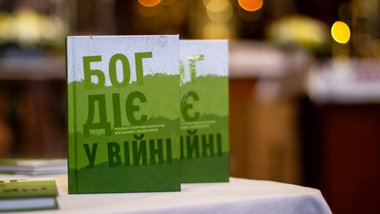
In 2025, the Ukrainian Catholic University Press published Roman Skakun’s monograph “The NKVD–MGB–KGB Agent Network within the Orthodox Episcopate of Ukraine (1939–1964).” As the title suggests, the author focuses on an extremely relevant and complex issue: the cooperation of Orthodox bishops with Soviet security services during the late Stalinist period and the years of Nikita Khrushchev’s rule.
Today, Ukrainian researchers have access to the archives of the Security Service of Ukraine (SBU), which preserve, among other things, the documents of the Soviet-era NKVD, MGB, and KGB. However, there are also objective challenges in researching this topic. As the author notes, by order of then–KGB chairman V. Kryuchkov, a brutal “purge” of KGB archives took place in 1989–1991, both in Ukraine and across the Soviet Union. Many agent files were destroyed. Consequently, a significant portion of information about the agent activities of the Orthodox episcopate in Ukraine has been lost forever…
Nonetheless, relying on the available archival material, as well as the achievements of recent historiography, the author attempts to reconstruct the broader backdrop of cooperation between bishops and priests and the Soviet state security organs.
Contents of the monograph
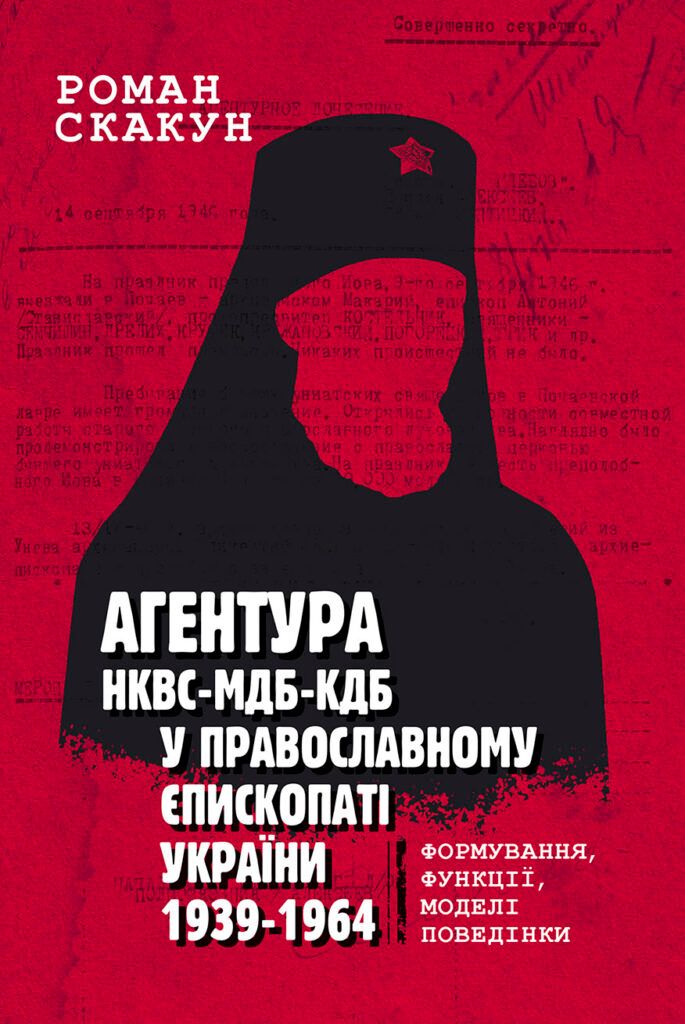
In his book, Roman Skakun provides a general overview of religious policy in the USSR from the late 1930s to 1964. He also presents biographical information about the Orthodox bishops who served in Ukraine during this period and about whom there is evidence identifying them as agents of the state security services. In total, the monograph contains information about several dozen hierarchs. In addition, the author examines the mechanisms used to recruit informants and to maintain control over them.
The description of the turning point that occurred in Soviet religious policy at the end of the 1950s proves to be extremely important. If the years from 1943 to 1957 are rightly characterized by the author as the period of the “Stalin concordat,” then the late 1950s and early 1960s marked a time of purges within the episcopate, the closure of churches, the liquidation of monasteries and seminaries, and the establishment of tighter control over the agent network.
The main text of the monograph concludes with substantial findings (pp. 271–298). This is not merely a formal summary of the research. Drawing on the broad factual material presented throughout the book, the author conducts a highly engaging analysis. He outlines the particular features of state–church relations in the Soviet era. He also provides a clear description of the main groups within the episcopate and analyzes the distinct patterns of their behavior in dealings with state security organs. The author further details the tasks assigned to agents in different years. Also valuable are his reflections on generational shifts among the bishops and the significant differences in how they cooperated with the Soviet security services.
Thus, we have a cohesive study that reveals a little-known aspect of Church life during the Soviet period. Here, I would like to offer only a few reflections on some of the themes addressed in the author’s thorough monograph.
“Sergianism” or Stalin’s “Neo-Symphony”
The chronological scope of Roman Skakun’s study covers the period from 1939 to 1964. At the same time, the author periodically turns to the earlier history of the Russian Church.
It is extremely important to emphasize here that the Stalinist “concordat” with the Orthodox Church, usually dated to 1943, has its roots in a much earlier period. In my view, the alliance between the Soviet government and the Moscow Patriarchate in 1943 was merely the culmination of processes that had begun as early as the 1920s.
Let me recall that during the tenure of Patriarch Tikhon of Moscow (1917–1925), the authorities inspired the “Renovationist movement,” whose leaders were completely loyal to the Soviet regime. Moreover, they acted in close cooperation with the authorities. For a certain time, the Renovationists even managed to seize control of the Russian Church. Although in 1922–1923 a show trial of Patriarch Tikhon had been planned, the Soviet government eventually abandoned the idea and released him. In the final period of his life, Patriarch Tikhon did not openly oppose the Soviet authorities, but he also refrained from close cooperation with them.
After his death in 1925, the government made efforts to create a fundamentally new model of interaction with the church leadership. Metropolitan Peter (Poliansky), appointed as locum tenens according to Patriarch Tikhon’s will, refused to cooperate with the OGPU and was therefore arrested in December 1925; he never again returned to the actual governance of the Church.
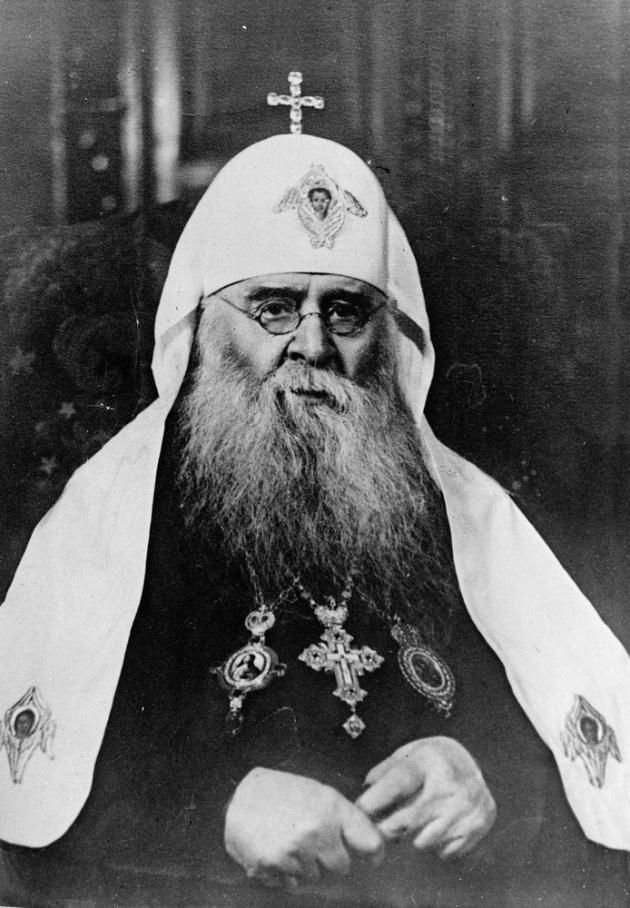
At that time, Metropolitan Sergius (Stragorodsky) became the deputy locum tenens. It was precisely with him that the authorities succeeded in establishing a peculiar “new symphony.” In November 1926, Metropolitan Sergius was arrested and remained imprisoned until March 1927. There is little doubt that during this imprisonment, he agreed to return to church governance entirely on new terms. To this day, no archival documents have been discovered that would shed light on the precise nature of the agreement between him and the Soviet authorities. It remains unclear whether this was a written agreement or merely an oral understanding. Nevertheless, after Metropolitan Sergius was released, the character of the highest church administration underwent a drastic change.
First of all, Metropolitan Sergius issued the well-known declaration of loyalty to the Soviet authorities. After this, he was allowed to form a temporary Synod, in which only bishops completely loyal to the Soviet regime were included. From that moment on, all personnel policy of the Russian Church was placed under the control of the Soviet security services. Only those whose candidacies had been approved in advance by the authorities were appointed to diocesan sees. Accordingly, those who showed disloyalty to the Soviet government or to Metropolitan Sergius’s policies were removed from their sees. At that time, such removal was usually only the first step toward repressions against the “unreliable” bishop…
This was the peculiar “neo-symphony,” which in various forms existed until the very collapse of the USSR. What was its fundamental novelty? In the fact that Metropolitan Sergius concluded an alliance with a political regime that openly declared its atheist character. The Soviet authorities directly and unequivocally proclaimed their intention to destroy the Church, and yet the Church agreed not merely to coexist with this regime, but to place all its personnel decisions under its control. The Soviet security service fully controlled the activities of the Synod created in 1927. This “neo-symphony” is usually referred to as “Sergianism.”
In traditional Russian church historiography, this step by Metropolitan Sergius is justified by insisting that in this way he “saved the Church.” However, opponents of Sergianism rightly point out that the issue was not “preserving the Church,” but the beginning of the formation of an entirely different ecclesial structure. During the 1930s, almost all bishops who disagreed with the compromises made by Metropolitan Sergius either withdrew from church service, ended up in labor camps, or were physically eliminated. Therefore, by 1941, the network of dioceses and parishes of the Russian Orthodox Church had been dealt a devastating blow. As Roman Skakun notes, as of spring 1939, only 22 churches were functioning on the territory of the Ukrainian SSR (including 4 in Kyiv). And by June 1941, in the Ukrainian SSR (excluding the territories of Western Ukraine annexed in 1939), only about 5–10 churches remained open (p. 47). Thus, Metropolitan Sergius’s compromise with the Soviet authorities did not “save” the Church at all. The militant atheist regime continued systematically to destroy ecclesiastical structures.
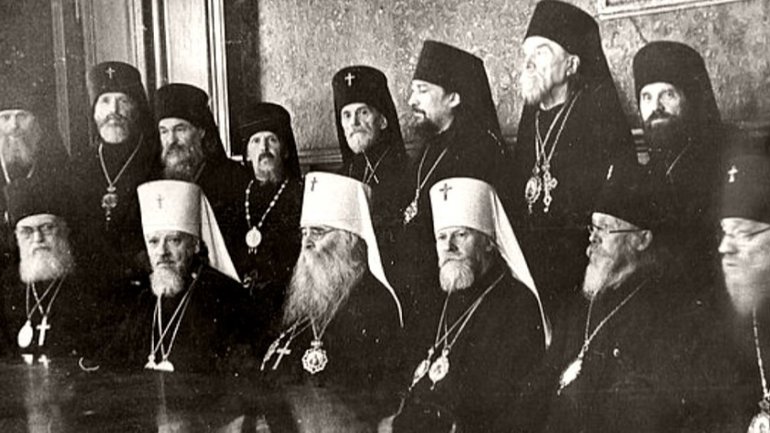
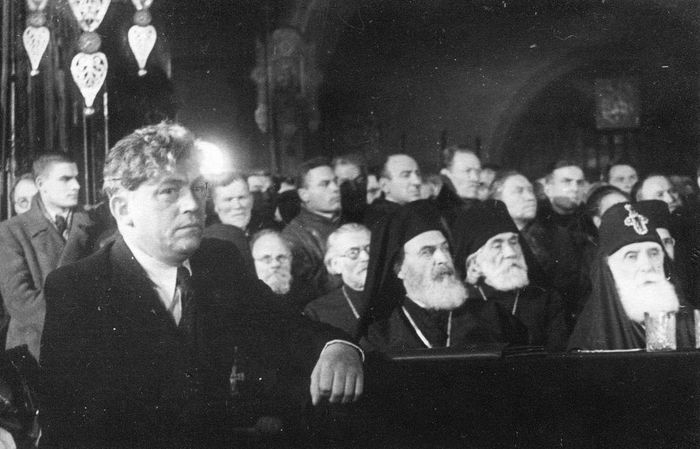
In my view, this “prequel” must be taken into account when analyzing the Church's life after 1943. Stalin’s well-known meeting with the three metropolitans in September 1943 was not the beginning of the “neo-symphony.” It was merely a revision of its terms. During the war, the Soviet leadership realized that the Church could be used in foreign policy. For this reason, the directive to completely eradicate the Russian Orthodox Church was replaced with the practical formation of a new generation of bishops who could serve as conduits for Soviet state interests.
The near-total destruction in the 1930s of those capable of active resistance to the regime cleared the way for a new generation to assume senior church positions. Roman Skakun’s observations help us understand who this generation was and how this new cohort fundamentally differed from the ‘old-regime’ clergy.
The Birth of a “New Church”
Beginning in 1943 and continuing into the mid-1950s, a significant personnel revolution occurred within the Russian Orthodox Church. After the authorities permitted the Church to restore its network in 1943, bishops began to be consecrated from among people with an entirely different background. The episcopate came to include those who had spent very little time in holy orders, those who had come into the ROC from the Renovationist movement, or those who had abandoned priestly service in the 1930s and quietly worked in various secular jobs. Sometimes, completely random individuals ended up among the bishops. Thu,s in 1944–1945, a “new Church” rapidly emerged, in which the “old-regime” clergy represented only a small minority.
The following figures are striking. As of 1955, 78.1% of ROC bishops had been consecrated after 1941. At that time, only two bishops in the entire Russian Orthodox Church still had pre-revolutionary episcopal consecrations (p. 317). This is clear evidence of the birth of a “new Church” with a new episcopate.
It was precisely in 1944–45 that the practice of preliminary recruitment by the NKVD–MGB–KGB of potential candidates for episcopal office emerged. The results of this recruitment directly determined the future careers of church dignitaries. Bishops consecrated earlier were also subjected to recruitment attempts. Thus, from 1944 onward, the episcopate was placed in a completely different relationship with the Soviet security services.
Let us again resort to the dry language of numbers. As of January 1945 (when the ROC Local Council met in Moscow), 11 bishops were serving in the territory of Ukraine. Of these, only three had been consecrated before the start of World War II. The rest became bishops between 1943 and 1944. Of those 11 bishops, six were former Renovationists, who were the most open to cooperation with Soviet state security.
The author of the book demonstrates with documentary evidence that in 1945, at least 8 out of 11 Ukrainian bishops were agents of the NKDB–MDB (p. 68). However, even the remaining three, for whom no such information has been found in Ukrainian archives, most likely also actively cooperated with the Soviet security services. For example, Bishop Photios (Topiro) of Kherson, who was soon transferred to the Oryol see, carried out an extremely delicate church-political mission in Austria and Czechoslovakia in the same year, 1945, and in 1946 was sent on a special assignment to Paris. It is entirely evident that in that period, only a person with experience in close cooperation with state security could have been chosen for such foreign missions.
By 1946, there were already 15 bishops in Ukraine. Of these, 12 had been consecrated between 1944 and 1945. According to the author, all 15 of these hierarchs were agents of the NKDB–MDB (p. 69). As of 21 November 1947, the Ukrainian Exarchate of the ROC had 17 bishops, of whom 15 were agents (p. 174).
The author convincingly demonstrates how the concept of working with informants evolved during the period he examines. From 1944 to 1952, the prevailing directive was to maximize the saturation of all Soviet society, including church bodies, with agents. Yet, the final year of Stalin’s life and the first years after his death saw a substantial reduction in the number of agents. Accordingly, even those who had previously been recruited were used only minimally by the state security organs during these years. As the author notes, from 1953 to 1958, the bishops were essentially left alone, although the percentage of agents within the episcopate remained traditionally high, albeit formally. The situation changed radically in 1958, when the authorities reverted to a harsh anti-religious policy, thereby significantly strengthening control over the agent network.
Who Were the Agents?
It is necessary to clarify who exactly we should consider agents of the NKVD–MGB–KGB. Sometimes, popular literature or public statements by church figures suggest that this involved only formal conversations between bishops and government representatives that did not impose any real obligations. However, the documents tell a different story.
One should not confuse agents with simple informants. In Roman Skakun’s study, agents are understood to be secret collaborators of the security services. All of them gave written consent to such cooperation; all of them were assigned agent codenames; all of them periodically met with their handlers from the NKVD–MGB–KGB (usually in safe houses) and submitted agent reports. Various tasks were assigned to the agent network. Of course, first and foremost, this involved gathering and transmitting information. Yet their work was by no means limited to this.
In western Ukraine, bishops who served as agents were assigned specific missions against the Greek Catholic Church. In the east, these same bishops worked hand in hand with security officials to root out the “church underground” and various sectarian currents. Bishops acting as agents coordinated personnel policy with the security services, dismissing priests not favored by the authorities and elevating those useful to the regime.
At the turn of the 1950s–1960s, the KGB attempted to use bishops who were agents to close parishes, monasteries, and seminaries (notably, even among recruited agents, far from all agreed to participate actively in such measures).
Who Was Not an Agent?
The author demonstrates with documentary evidence that the saturation of the episcopate with NKVD–MGB–KGB agents between 1944 and 1964 reached 90–100%. Interestingly, during the postwar years, the agent–informant network among parish clergy covered only 5–10% of its members (p. 274).
The author offers especially compelling insights into those bishops who were not agents and were considered unrecruitable. Several notable examples illustrate this point.
For instance, no evidence has been found of agent activity by Archbishop Luka (Voino-Yasenetsky) of Crimea. The author notes that Bishop Luka did not hesitate in his sermons to expose the materialist worldview and to express dissatisfaction with the Soviet order. Therefore, he was not an agent but, on the contrary, an object of operational surveillance by the MGB (p. 194).
Resistance to recruitment was also shown by Bishop Symeon (Ivanovskyi) of Vinnytsia. It should be noted that since 1924, he had been a bishop of the Polish Orthodox Church; thus, in the USSR, he was regarded as something of a “foreigner.” In 1944, Bishop Symeon was sentenced to ten years for delivering anti-Soviet sermons during the German occupation. After being released, he returned to episcopal service, but attempts to recruit him were unsuccessful. As a result, in 1961 Bishop Symeon was retired and spent the rest of his life in Vinnytsia.
Another example is Bishop Mstyslav (Volontsevych). In the 1930s, he was a priest of the same Polish Church, and after the war, he served in West Germany under the jurisdiction of the Russian Orthodox Church Outside Russia (ROCOR). In 1953, he voluntarily returned to the USSR and was ordained as a bishop in 1956. At least at the time of his episcopal consecration, he did not belong to the KGB’s agent network.
The attempt to recruit the rector of Kyiv’s Alexander Nevsky Church, Fr. Dmytro Pohorsky, also failed. Despite this, in 1958, he became a bishop (under the monastic name Theodosii). During Khrushchev’s anti-religious campaign, Bishop Theodosii actively defended the Church, which resulted in his being transferred to the Ufa diocese, where in 1975 he was brutally beaten by unknown assailants and soon died.
Another hierarch who attempted to sabotage the authorities’ measures to close churches at the turn of the 1950s–1960s was Bishop Andrii (Sukhenko) of Chernihiv. In 1961, he was arrested and sentenced to eight years in prison for economic crimes and “immoral behavior.” He was released in 1964 with a severe psychological disorder.
It is also evident that Bishop Seraphim (Sharapov) of Poltava and Bishop Venedikt (Polyakov) of Zhytomyr did not belong to the ranks of agents.
Thus, the possibility of refusing to work as an agent did exist. However, very often such refusal had to be paid for—whether by losing one’s episcopal see, by imprisonment, or even by physical violence…
Self-Perception of the Bishop-Agents
Naturally, a reader of Roman Skakun’s book cannot avoid asking how the bishops themselves regarded their cooperation with the state security organs.
Based on the information presented in the book, a fairly clear picture emerges. It appears that those most willing to cooperate actively with the security services were bishops who had “Renovationist episodes” in their biographies. As noted earlier, the Renovationist movement, by its very nature, represented an attempt to find a compromise between the Church and the new Soviet authorities. Therefore, even after 1944, the security services continued to view former Renovationists as their most valuable agents.
In Ukraine, this group included Archbishops Serhii (Larin), Nikon (Petin), Borys (Vik), and several others. Significantly, the Soviet security services were even willing to overlook (as in the case of Serhii Larin) a scandalous lifestyle or financial misconduct.
Another group consists of the so-called “old-regime” hierarchs, “whose personality and worldview were formed in the pre-revolutionary Church or, at least, in the pre-Sergian Church” (p. 281). These bishops clearly experienced their cooperation with the security services as a heavy burden. Thus, they “did not show persistence or initiative in searching for compromising materials on priests who were close to them in mindset, and sometimes even tried to shield them from the authorities” (p. 282).
A typical representative of this group was Bishop (later Metropolitan) Makarii (Oksiiuk), who in the pre-revolutionary period was a well-known patrologist and professor at the Kyiv Theological Academy. The author cites interesting testimonies about Bishop Makarii’s inner condition during his service on the Lviv see. Protopriest Mykolai Kolchytsky, who visited Lviv in 1948, reported:
“Makarii’s soul and conscience are not at peace. He has a strong pull toward the bottle and drinks, gets drunk… Many times, when slightly inebriated… he said: ‘It makes no difference: I am doomed anyway.’” (p. 110).
Another hierarch of the same group was Bishop Volodymyr (Kobets) of Zhytomyr. In 1955, he said in a private conversation:
“My conscience is clear, because no one has been imprisoned as a result of my reports. On the contrary, I have always tried to warn a person of impending danger and to get him out of trouble.”
He even recounted that he had attempted to warn Archimandrite Veniamin (Milov) of the threat of arrest, but the latter did not heed the warning and was indeed arrested soon afterward (in 1949) (pp. 286–287).
However, the person with whom Bishop Volodymyr was so candid turned out to be a secret MGB collaborator. He submitted an agent report about the conversation. After this, the state security organs lost trust in Bishop Volodymyr, and in 1956, he was retired.
At the turn of the 1950s–1960s, more and more “new figures” emerged in the episcopate: the individuals whom the author refers to as “agent-liquidators” (p. 231). It was precisely at this time that the state launched a campaign to radically reduce the church network. The authorities, however, sought to carry out this task through the hands of the bishops themselves. While the older generation of bishops (even those who had previously cooperated actively with the security services) viewed this new policy negatively and even attempted to sabotage it, the younger generation of “liquidators” fully joined the campaign. Among such hierarchs, the author singles out Bishop (later Metropolitan) Ioasaf (Leliukhin), Bishop Alipii (Khotovytskyi), and others. For example, Bishop Ioasaf, while serving on the Dnipropetrovsk see, fully supported the liquidation of monasteries. The author explains this by his Renovationist past (p. 247).
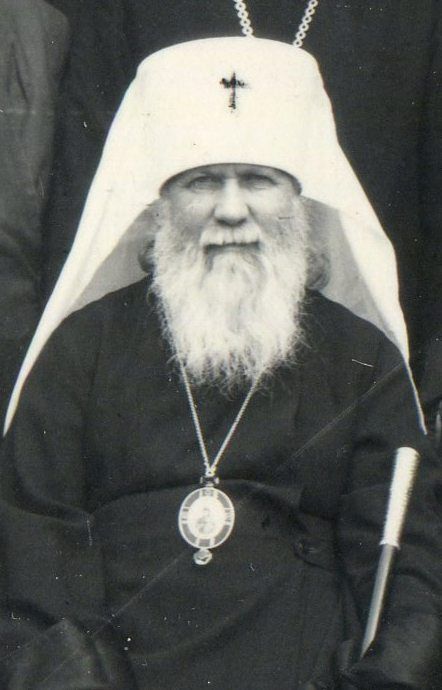
The author also examines other groups within the Orthodox episcopate, including former members of the UGCC, former members of the Ukrainian Autonomous Church (active during World War II), and re-emigrants, among others. Each of these groups had its own specific characteristics. Typically, the recruitment of such individuals was conducted based on their cooperation with the occupation administrations or their anti-Soviet statements during the war years. Refusal to cooperate could lead to criminal charges and imprisonment.
Thus, Roman Skakun presents a broad and comprehensive picture. Based on documents, he reveals various aspects of cooperation between bishops and Soviet security organs, drawing extremely important conceptual conclusions. The author is absolutely correct when he writes that it is impossible to adequately understand the biographical trajectories of Orthodox bishops of that period without taking into account the role of Soviet security agencies (p. 297).
An Undigested Plot
Naturally, while reading the book, an obvious question arises: how did this story develop after 1964? How did the agent network function within the Church during the Brezhnev stagnation or the Gorbachev perestroika period? These questions lie beyond the chronological scope of the monograph under review and still await their researchers.
Even more relevant is the question of how the cooperation between the episcopate and the security services evolved after the collapse of the USSR. How, in particular, did Russian security agencies of the post-Soviet era interact with the Church? What tasks did they seek to accomplish through bishops and priests? If Soviet security organs had openly declared their intention to destroy the Church, in the Russian Federation after 1991, the state authorities no longer pursued such a goal. At the same time, the mechanism of interaction established in Soviet times obviously did not disappear. We may assume that it continued to exist, transforming and adapting to new historical circumstances.
Another important question arising from the reading of Roman Skakun’s book concerns the internal church reaction to this Soviet past. The author notes that in 1991, a parliamentary commission was created to investigate the causes and circumstances of the coup attempt in the USSR. This commission obtained access, among other things, to KGB materials related to agent activity within the Church. It concluded that there had been “anti-constitutional use by the Central Committee of the CPSU and the KGB of a number of church bodies for their own purposes through the recruitment and placement of KGB agents within them” (p. 9). However, the commission’s work was halted as early as 1992.
In the autumn of 1992, a synodal commission of the ROC was created under Archbishop Aleksandr (Mogilyov) to investigate facts of episcopal cooperation with the KGB. But this commission produced no results. In effect, the Church chose to suppress this topic, avoiding open and honest discussion. No lustration took place within the ROC. As a result, those who had actively cooperated with the Soviet security services remained in the office, continuing to participate in the upper-level church governance. Thus this history episode has remained unaddressed…
Only now has it become possible to examine, on firm grounds, the nature of the Church’s cooperation with Soviet security agencies in the 1940s–1960s. A similar level of certainty about the events within the Church in the 1990s–2000s will likely require many more years to achieve. Naturally, such a discussion will become possible only after profound political changes in Russia and the opening of access to archival collections that are currently closed to scholars…
##DONATE_TEXT_BLOCK##