
"The situation regarding human rights and freedoms on the peninsula is critical," - Permanent Representative of the President of Ukraine in Crimea addresses the European Parliament


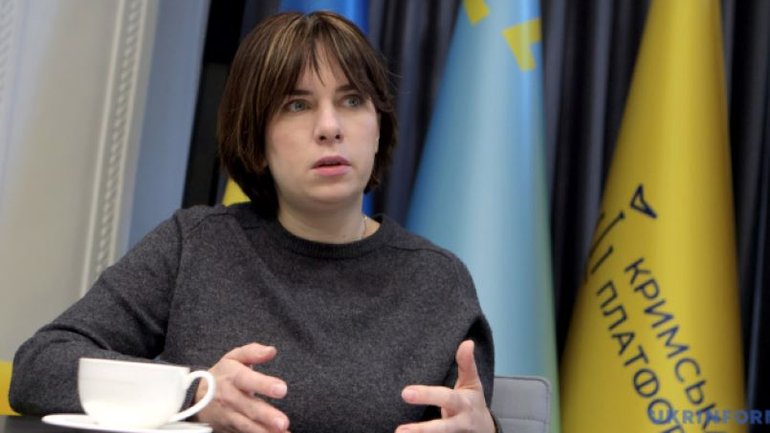
This was reported by the mission, according to Ukrinform.
The Permanent Representative emphasized that the temporary occupation of Crimea in 2014 marked the beginning of Russian aggression against Ukraine. This occupation not only challenges the territorial integrity of the state but also has led to a deep humanitarian and security crisis affecting all of Europe.
Kuryshko specifically highlighted the environmental threats resulting from the occupation and the subsequent militarization of Crimea. She pointed out that Russia is systematically destroying the peninsula's ecosystem, including pollution of soil and seawater, as well as engaging in massive illegal mining and deforestation.
“The struggle for Crimea is not just about territorial claims; it is also about restoring human rights, protecting the indigenous peoples of Ukraine, preserving the environment, and ensuring security in the Black Sea region,” Kuryshko emphasized.
She noted that the human rights situation in Crimea is critical. Since the occupation began, there have been numerous reports of enforced disappearances, torture, politically motivated arrests, and suppression of freedom of speech and religion. The Crimean Tatars are the most vulnerable group, with 133 of the 223 political prisoners being Crimean Tatars.
Kuryshko underscored the significance of the European Court of Human Rights' decision in the case of Ukraine v. Russia, issued in June 2024, which found Russia responsible for systematic human rights violations in Crimea.
She expressed gratitude to the governments of Latvia, Lithuania, Canada, Poland, Estonia, and the Czech Senate for officially recognizing the deportation of Crimean Tatars in 1944 as an act of genocide.
Additionally, Kuryshko shared Ukraine's vision for the de-occupation and reintegration of Crimea. She discussed already developed strategies for economic recovery, cognitive de-occupation, restoration of justice, and the initiative from the First Lady of Ukraine, Olena Zelenska, called Global Ukrainian Studies, which includes Crimean Tatar studies and is being implemented in European universities.
“We do not just believe in the return of Crimea; we are preparing for it thoroughly and systematically, with a deep understanding of the challenges and responsibilities to the people who are waiting for justice,” the Permanent Representative concluded.