
"The UOC is not asked to betray Orthodoxy, only to break ties with the ROC-MP," - Viktor Yelensky


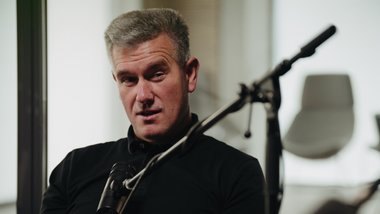
This opinion was expressed by the head of the State Service for Ethnic Policy and Freedom of Conscience (SEFC), Viktor Yelensky, in an interview with Suspilne.Chernivtsi.
According to Yelensky, the law adopted in August 2024 prohibits the activities of the Russian Orthodox Church as a foreign organization and explains why.
This, however, does not mean that the Ukrainian Orthodox Church, which is affiliated with the ROC, is automatically banned.
“The law refers to the prevention of the activities of religious organizations affiliated with the Russian Orthodox Church. The law clearly defines what affiliation is and what these ties mean,” emphasizes the head of the SEFC.
“These bishops (of the UOC-MP - ed.) say they cannot influence what the Russian Orthodox Church writes and speaks about, so the law is discriminatory and directed against them. Yet, in fact, the law stipulates that this clause does not apply if people leave the Russian Church and give evidence of this.”
Viktor Yelensky also explained the essence of the scientific examination, which was carried out pursuant to a government order in early 2023.
Religious studies expertise is provided for by the Law of Ukraine on Freedom of Conscience, stating that the state body for religious affairs provides religious studies expertise. If a religious organization submits its documents for the first time, local administrations must pass them to the service for such an examination.
According to the official, the religious expertise determining that the UOC is part of the Moscow Patriarchate was carried out by seven religious experts.
“As stated in the law, we conduct this examination with the participation of the religious organization itself. That is, we actively involve its theologians, priests, and activists to explain this or that provision of their doctrine and practices,” said Yelensky. ”Of course, we also invited representatives of the UOC, who refused to participate in this expert group. In short, there were a lot of reports that some members of this group spoke unfavorably of the Moscow Patriarchate. In Ukraine, it is not easy to find experts who spoke favorably of it. Still, they voted unanimously for their conclusion and in such a way that it would be impossible to refute that the UOC is part of the ROC.”
At the moment, the SEFC will not conduct such a re-examination.
“We will conduct a so-called study, looking for the signs of affiliation. If a religious organization is affiliated with the Russian Orthodox Church, we will issue an order. For example, we determine that a certain organization is part of the Russian Orthodox Church as its primate or head is a member of the Synod of the Russian Orthodox Church. We issue an order in which we ask: “Your Eminence, you are a member of the ROC's governing body, and thus your religious organization is affiliated with the former. Please withdraw from said body.'”
If he complies and does so, the law is not applied. If he does not, then from May 2025, the SEFC will have the right to sue to terminate this organization.
“The court, and only the court, as it should be in a democratic society, can stop the activities of a religious parish,” Viktor Yelensky emphasized.
As reported previously, yesterday, March 20, Metropolitan Filaret (Zverev) of the UOC-MP took part in a meeting of the Holy Synod of the Russian Orthodox Church-MP. Metropolitan Filaret, who is the ruling bishop of the Diocese of Novokakhovka and Genichesk of the UOC-MP, is one of the temporary members of the Holy Synod appointed to work in the Synod for the period of spring-summer 2025.