
Vatican representative to UN calls for reforming this institution


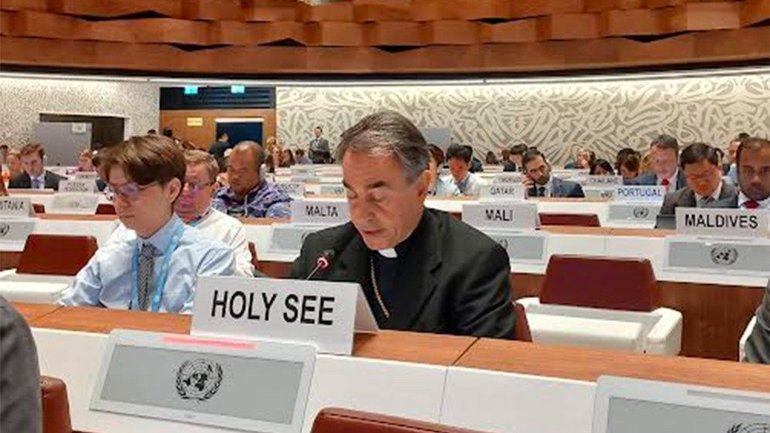
This was reported by Vatican Radio.
Archbishop Balestrero observes, "If words lose their connection to reality and reality itself becomes overly subjective, it becomes impossible to understand one another."
He highlights that the United Nations is currently facing a crisis, particularly a financial one. This is in reference to recent statements by UN Secretary-General António Guterres, who indicated that the organization is on the brink of financial collapse due to member states failing to pay their contributions. The diplomat warns, "If this crisis is not addressed promptly, we will see significant delays in conducting missions, supporting programs and peacekeeping operations, paying staff salaries, and recruiting new employees."
The situation is exacerbated by an overdependence on a small number of countries. Furthermore, this crisis signifies a deeper disorder and a multifaceted crisis. Archbishop Balestrero elaborates on this by pointing to the paralysis of multilateral institutions in response to ongoing wars, a new arms race, the dismantling of the disarmament framework established by the UN after World War II, the erosion of the rule of law in favor of might, and the rise of protectionist economic policies.
The consensus reached after World War II, which deemed conflicts illegal, has been overshadowed by a new balance of power. In this context, countries are increasingly focused on maintaining their positions or expanding their influence. As Archbishop Balestrero states, "Today, the United Nations reflects a world that no longer exists and is unable to respond to new global challenges effectively."
He asserts that the financial crisis the UN is enduring is a manifestation of the broader crisis of multilateralism — the concept of organizing international relations based on cooperation among three or more nations to tackle shared political, economic, or security issues. This shift in the balance of power is a key contributing factor. Another reason is the gradual erosion of trust in the idea of the common good: "International relations are increasingly viewed as a zero-sum game." Consequently, the belief that the common rules of multilateral institutions can genuinely benefit everyone is fading. At the same time, the illusion that security and development can be achieved unilaterally becomes more prevalent, as noted by the Holy See's Permanent Observer. Existing inequalities also undermine trust in multilateral relations.
He recalls Pope Leo XIV's remarks made on January 9, 2026, during a meeting with the diplomatic corps accredited to the Holy See, which emphasized that international organizations should foster dialogue and work towards creating a more just world. "The Holy See's stance is that multilateral relations should provide a platform for countries to convene and engage in dialogue. However, as the Pope highlighted, meaningful dialogue requires a shared understanding of words and concepts. If words lose their connection to reality, and reality becomes too subjective, true mutual understanding becomes impossible," the Archbishop notes.
In this regard, the United Nations must become more effective in promoting "a policy aimed at uniting the human race rather than just ideologies or short-term unilateral interests."
According to the Holy See Observer, this transformation requires goodwill and a commitment to the common good from UN member states.
"The distribution of power must be accompanied by a corresponding distribution of responsibility for the benefit of all. Multipolarity necessitates shared responsibility and cooperation, always respecting the dignity of each person," Archbishop Balestrero concludes.