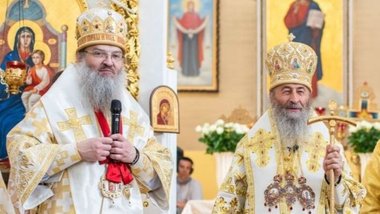

Viktor Yelensky: The situation regarding the Russian Orthodox Church in Ukraine necessitates extraordinary security measures from the state



Viktor Yelensky, head of the State Service of Ukraine for Ethnic Policy and Freedom of Conscience (DESS), stated this in an interview with Ukrinform.
"There have never been banned churches in Ukraine before. The situation concerning the Russian Orthodox Church is extraordinary, which requires the Ukrainian state to implement security measures that it has never undertaken previously. This is not unprecedented in history. For instance, during the struggle for independence in the United States, the colonies enacted laws prohibiting prayers for the King of England, ultimately forcing the Church of England to be referred to as the Episcopal Church in the United States,” he explained.
Yelensky highlighted that an examination of the Ukrainian Orthodox Church of the Moscow Patriarchate's (UOC-MP) affiliation with the Russian Orthodox Church is currently underway, as mandated by the Law on Protection of the Constitutional Order in the Field of Religious Organizations. He noted that the law specifies clear criteria for identifying affiliation with the Russian Orthodox Church. If it is established that the Kyiv Metropolitanate meets one or more of these criteria, it will receive an order requiring the rectification of these violations.
“If this is done, the Kyiv Metropolitanate will be allowed to continue its operations without obstruction. If not, the DESS will have the authority to file a lawsuit aiming to terminate the activities of this religious organization. The relevant amendments to the Code of Administrative Offenses of Ukraine, which empower the State Department of Legal Services to take such actions, came into effect at the end of May, nine months after the Verkhovna Rada passed the Law on Protection of the Constitutional Order in the Field of Religious Organizations,” he stated.
Additionally, the head of the DESS stressed that the final decision regarding the UOC-MP will be made through a competitive court process.