

"God gave me optimism": The story of Mark, who survived prisons, war, and 56 surgeries


By Khrystyna Kruhliak and Khrystyna Levus
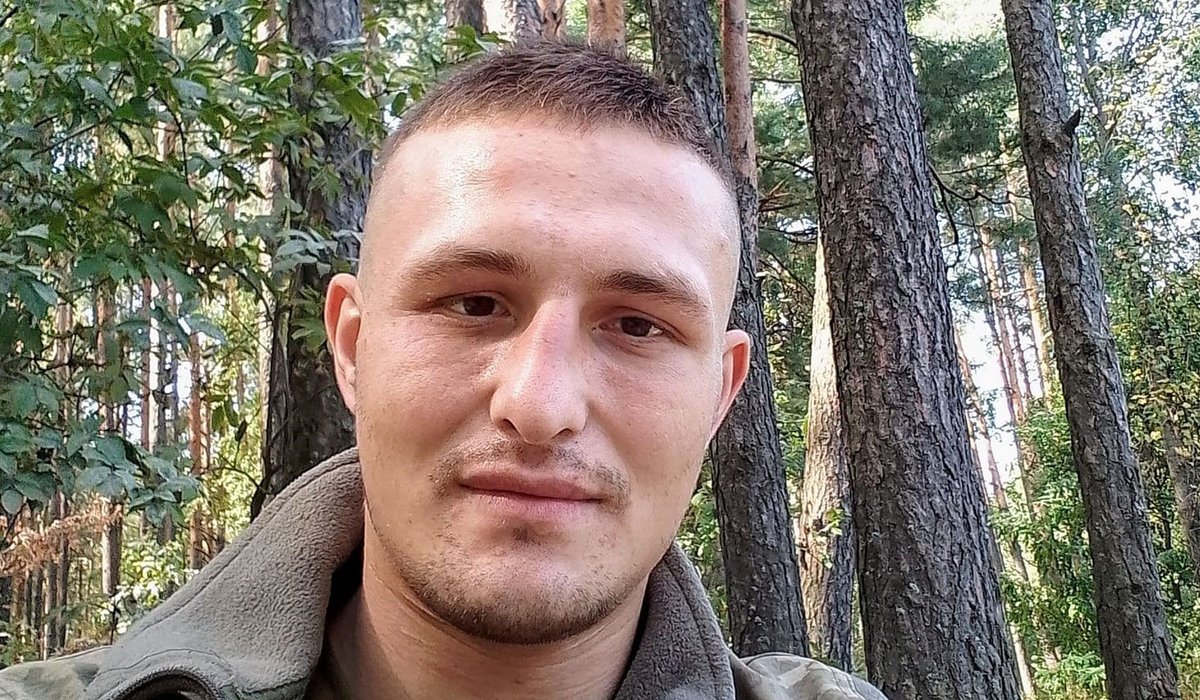
Mark Fedoriv is a fighter of the 36th Marine Brigade, a former prisoner who was drawn to the army not only by his will but also by prayer. His life is an example of how one can rise even from the darkest places if there is a dialogue with God. His story is about faith that became his armor.
Our conversation took place in a hospital, far from the front line, where Mark was undergoing rehabilitation. He ended up in the hospital after being seriously wounded during a combat mission. According to him, he’s feeling well now, mostly because there haven’t been any surgeries recently. In total, he has undergone 56 surgical operations (as of now, already 60 — editor’s note).
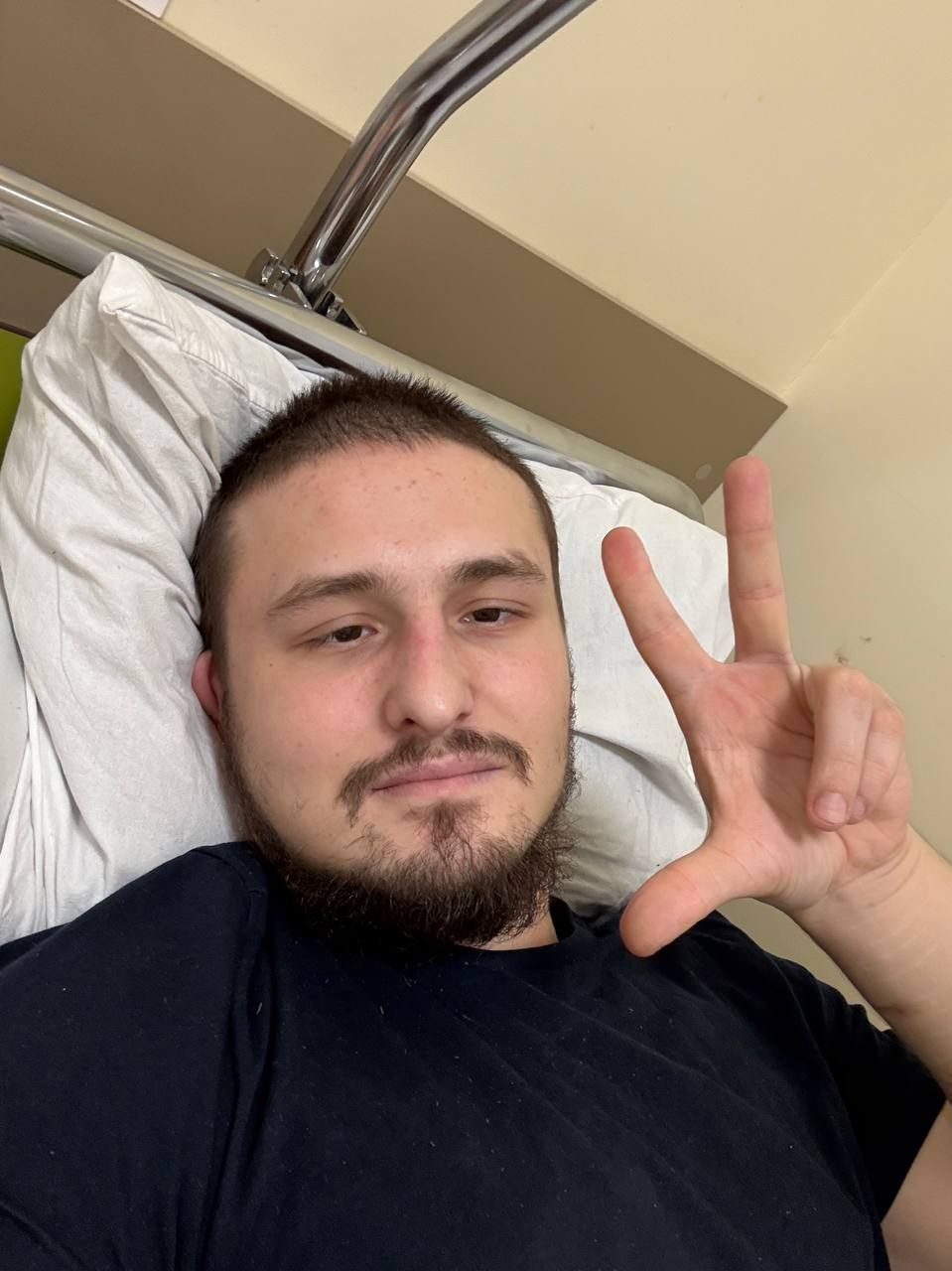
“Honestly, I’m already a bit tired of it, but I understand the surgeries are necessary — I still have a lot of health problems. Soon they’ll send me back to Kyiv for more operations.
This is how it happened: an FPV drone with an unusual explosive fell at my feet. Normally, such drones carry an RPG-7 round or a grenade, but in my case, it was a homemade explosive device. The guys found the remains: a Pringles can, filled with nails, ball bearings, fishing hooks, glass, and cast iron, all wrapped in a chainsaw chain. The device landed at my feet — I saw a flash, and then everything went black. I woke up a week later in intensive care. At first, I didn’t know where I was. I thought I was still in the forest, and the battle was ongoing.
My unit mates told me that after the explosion, they pulled me into a pit, applied tourniquets, and radioed the commander. There was no evacuation vehicle, so they removed the tourniquets and used Israeli bandages. I lay in the pit for a whole day because drone and mortar attacks made evacuation impossible. Eventually, a Humvee arrived. They quickly pulled me out and threw me into the trunk. The driver sped through the field in zigzags at up to 200 km/h under mortar fire.
First, they took me to a stabilization center in Sudzha, then to Sumy. But the doctors there refused to operate — they were afraid I would die on the table. So they transferred me to Kyiv. Doctor Ivan Mykolayovych Rudenko later told me that when I arrived, I had no blood pressure and barely any blood left in my body. My heart stopped three times — the longest for eight minutes. The last time, they restarted it right on the hospital grounds using a defibrillator and an adrenaline shot straight to the heart. The surgery lasted from 9:30 p.m. until 4:30 a.m.
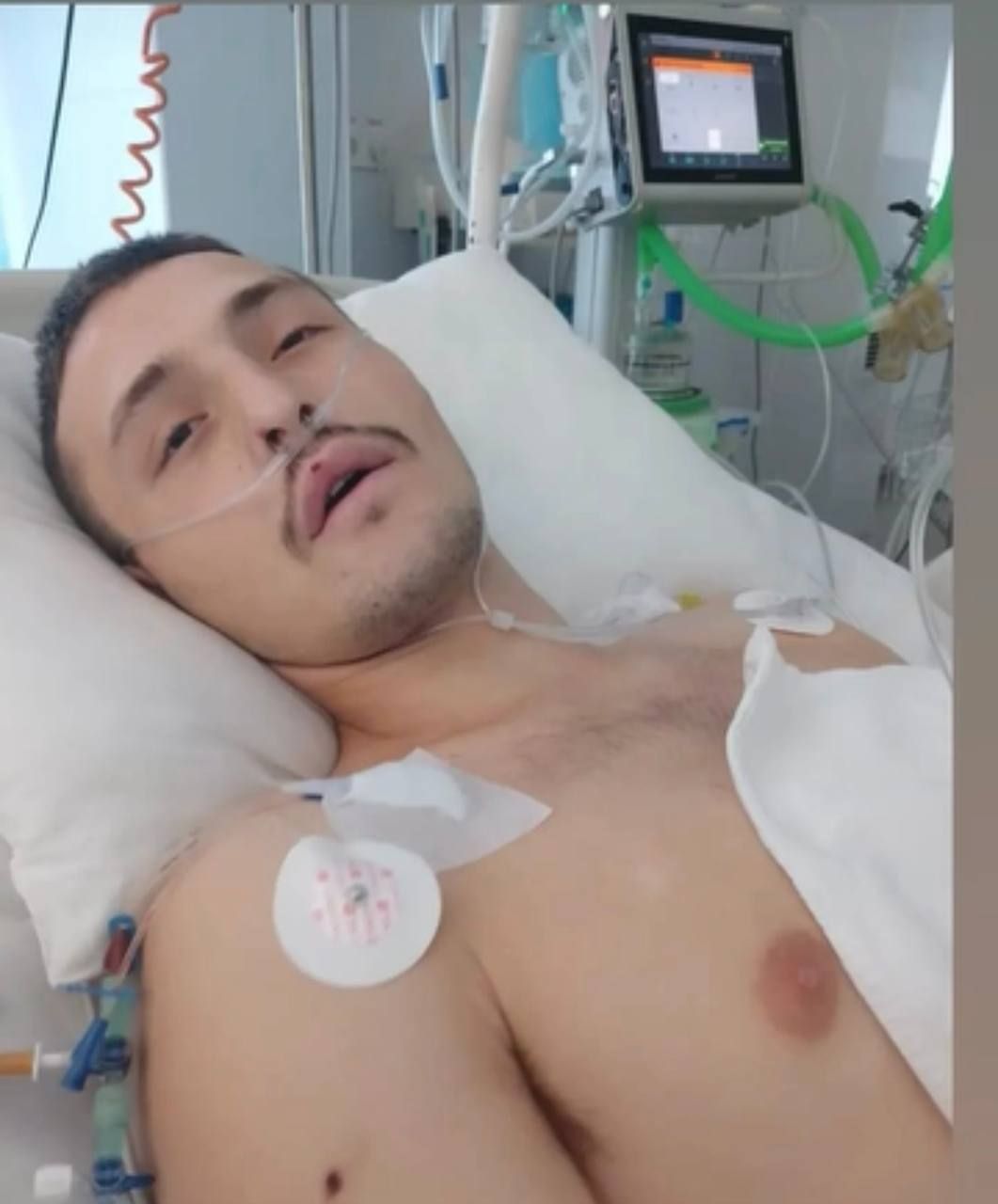
After that, I spent nearly three months in intensive care. Only my hands and neck could move — the rest of my body was immobilized by an epidural catheter in my spine for pain control. I underwent surgery every two days. When I finally got out of intensive care, I felt better, but I’d been through some really intense experiences. I couldn’t tell if I was hallucinating, having visions, or if I’d been in hell.
I remember one of them clearly. It felt like I was approaching three podiums, like the ones at the Olympics — they had no numbers but were different heights. I walked up to the middle one. A man was standing there. I didn’t recognize him, didn’t understand who he was. Then they introduced themselves, one by one. The first reached out his hand and said, “Hi, my name is Raphael.” The second said his name was Michael. The third — Gabriel. They told me everything would end the way it was meant to end, but they didn’t explain what was the actual plan.”
"I’d like to go back a bit to your childhood memories. How would you describe yourself in your early years?"
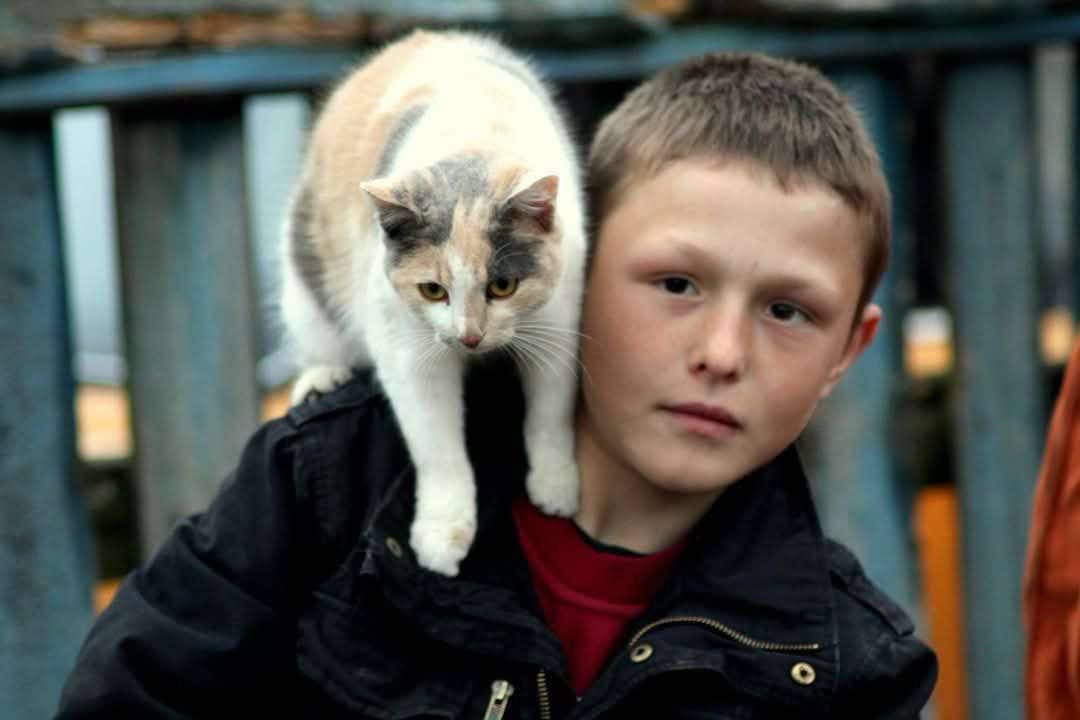
"I was a hyperactive kid — that was in early childhood. Later, I became more of a troublemaker, you could say. I was always chasing some kind of fun. I constantly got into things that gave me an adrenaline rush. Even just simple street fights, football matches, clashes between fans, jumping across rooftops and high-rise buildings — things like that. I was always looking for some kind of... adventure, but the kind that was dangerous.
If I think back to my childhood, my father probably went gray because of me. One memory especially stands out: my friends and I were collecting scrap metal in the fields. We sold it at a collection point and got some money. I thought, 'Well, this is a decent business.' So, when some neighbors went away, I broke into their yard, busted the lock, dismantled their stove, and sold the metal. My dad had to buy the scrap back, reassemble the stove, and fix everything. That wasn’t the only story like that — there were plenty more."
“Did your father make you attend church services?”
“I remember every Sunday my father and I would go to church for children’s services. There, they would talk to the kids about God and about faith in Jesus Christ. But over the course of my life, I’ve been to many churches of different denominations — Orthodox, Charismatics, Seventh-Day Adventists, Baptists, Pentecostals. In many of them, I felt out of place. I always wanted to leave. I didn’t like the people there. But now my father says that everyone has their own path to God. Some come to faith as children, some in adulthood — each person has their own timing and their own trials. These days, I have no problem with that anymore. My parents loved and supported me, but I was a real troublemaker. I was raised both by my parents and by the street — more by the street, because I often ran away there.
At 17, after being released from juvenile detention, I met Vasyl Voznyak. He invited me to a service at the Monastery of Saint Basil the Great in Kyiv. Initially, I didn’t want to go, but Vasyl insisted. There, we were welcomed by a monk, Brother Pakhomiy. He greeted me warmly and gave me a tour. The service felt light, and I felt peace in my soul. After that, I started going to church more often. I got involved with the ‘Obnova’ youth movement and even took part in a Christmas play.
I considered entering a seminary, but I ended up back in prison again, chasing adrenaline. After that, I began speaking more with priests, listening, and learning to trust. Since then, I’ve been reading the Bible. I found something that speaks to my heart. It brings peace to my soul. I found my place there, and I’ve learned to trust in God — and in people.”
“Do you think that not feeling at home in church, while your father was a pastor, influenced your choice to spend more time in the streets?”
“Maybe. A child looks for comfort wherever they can find it. I was searching for attention and recognition from my friends, and that drew me to the streets more than to the church. I just didn’t like some of the people in the church.”
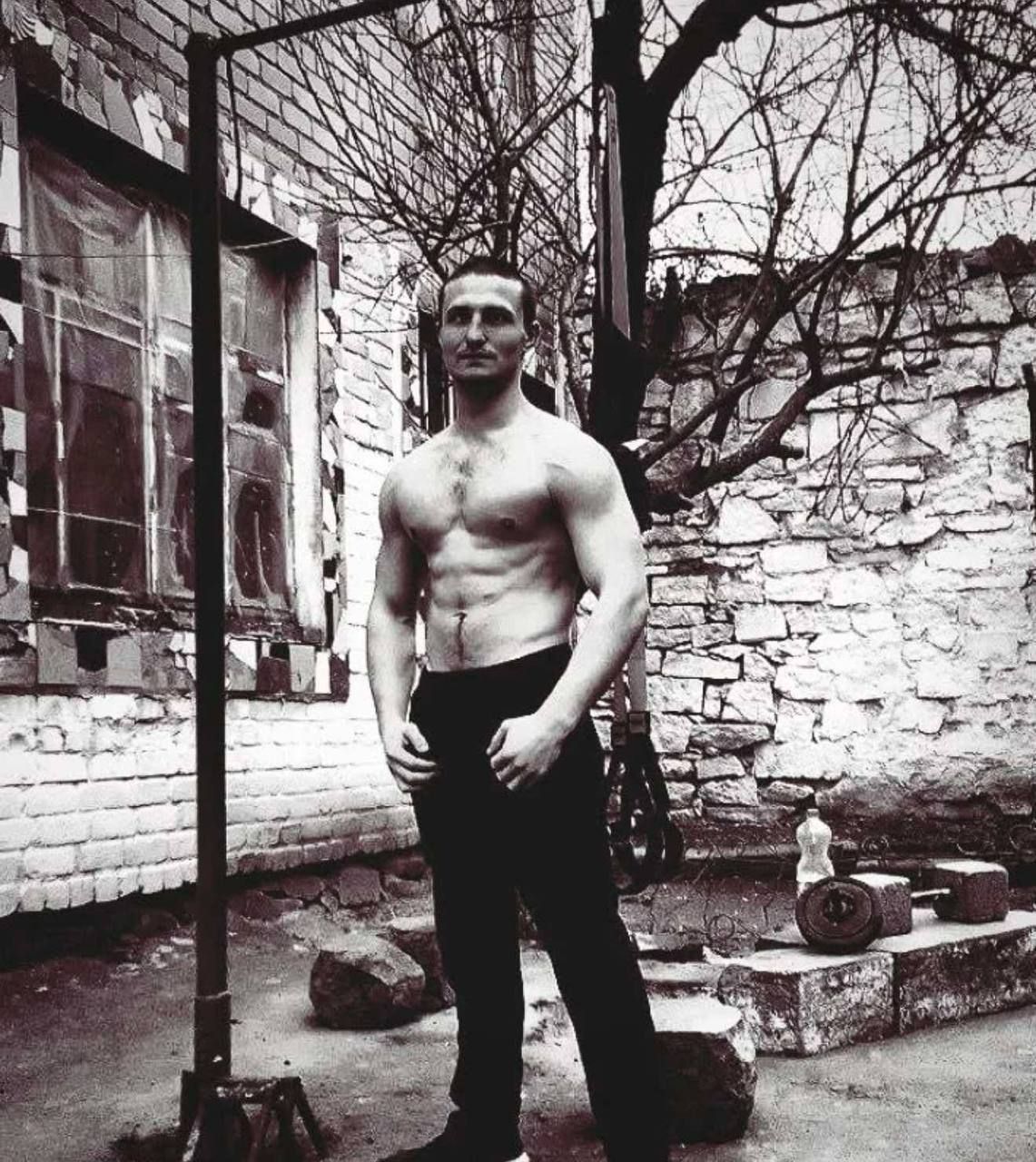
“Let’s talk about your time in the pre-trial detention center. How did you end up there?”
“I was 14 when I first ended up in a detention center. My friends and I were drinking in the courtyard when a drunk man approached us and started making accusations. I didn’t stay silent — we got into a fight. I hit him in the temple, and some time later, he died. I didn’t know about it. I was arrested at home — by 30 police officers. At first, I was charged with premeditated murder, but after the forensic examination, it was reclassified as grievous bodily harm resulting in death. I was sentenced to five years but released after three for good behavior.
When I was 17, I went back to prison for stealing a phone. I needed a smartphone for work and decided to take one from a drunk man. I was quickly caught and sentenced to seven years. Already in the detention center, I started reflecting on life. I would pray secretly.
I often had conversations with myself and with God. I asked: ‘What are you doing? Why do you need this? Why am I here? What am I doing here? What do I need to do to move forward?’ I remember one particular time — my third stint in detention — there were 19 of us in the cell. One evening, everyone started talking about what they had achieved in life. Some had families, kids, things like that. And I sat there thinking: what can I even say? I was the youngest one there and had done nothing in life except fool around like a kid. I thought, ‘God, why am I even in this world?’
So I prayed — quietly, so no one would hear. That night, I had a dream. I saw a beautiful iconostasis. I was kneeling in a cassock with a white collar, holding a rosary and a prayer book. At the same time, I was watching myself from behind, as if I were sitting right behind my own back. That image stuck with me.
After that, I realized I needed to follow some kind of path like my father’s — but not to become a pastor like him. I wanted to enter a seminary and become a priest because I had come to love the Ukrainian Greek Catholic Church. Even while in prison, I started studying Church history, philosophy, and theology. Eventually, I got into studying the history of Catholic monastic orders, and global religious communities — including the Jesuit Order.
The first person I discovered was Father Andriy Zelinskyi. He’s an incredible person — a priest, monk, political scientist, writer, and public intellectual. He teaches at three universities and is also a military chaplain. Father Andriy headed the Department of Military Chaplaincy in the Patriarchal Curia of the UGCC. I got in touch with him, and we started talking about political science, psychology, and philosophy.”
When Russia launched its full-scale invasion in 2022, many prisoners were willing to join the army to defend the homeland. Everyone had loved ones who needed protection. But there was no legal way to enlist — until I ended up in a prison colony in Cherkasy Oblast, in the village of Stari Babany. That’s when a law was passed allowing prisoners to join the military.
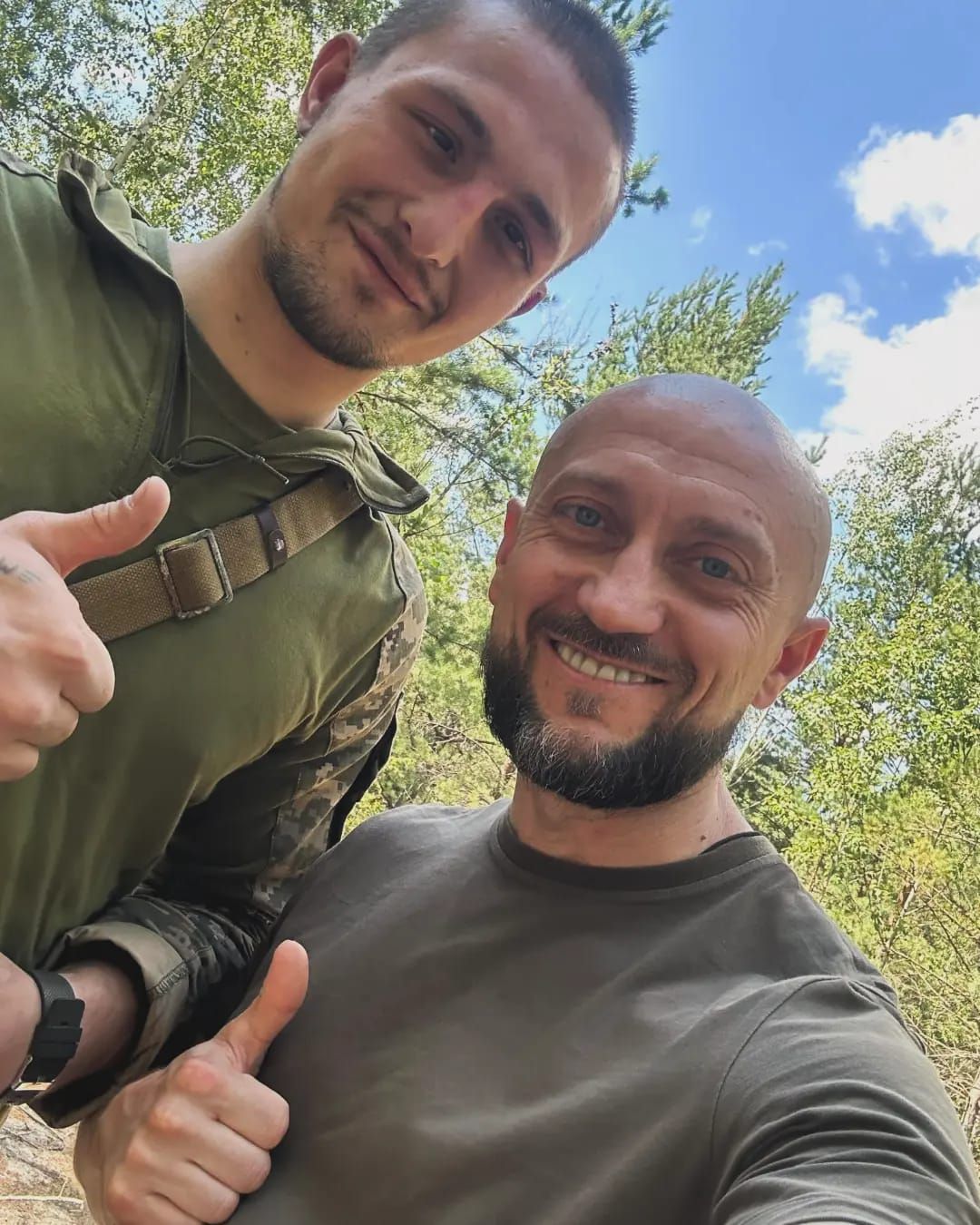
Father Andriy, the chaplain of the 36th Marine Brigade, was highly respected among the troops. After consulting with him, I decided to join that particular brigade, even though there were offers from other units. Training went well. Later, we took part in combat operations in the Kharkiv region, including in Vovchansk, where the fighting was intense. We were successful in our assaults, and I actually liked it — the adrenaline, which I had always craved in life. But at the same time, it was terrifying.
At war, everyone holds on to some kind of faith. And you know what? It really helps. First of all, prayer and sincere belief, especially when you realize that this might be the last thing you can do. You understand that you could die at any moment, and the only thing left is to pray.
"Are there any particular words that had a strong impact on you?”
“Our chaplain was Father Andriy. I used to talk to him more privately, away from the others. I asked him a lot of questions — like, ‘What do you think it’s like to die? What is it like not to live?’ And he always told me, ‘You won’t die until your time comes. God is giving you the right to live right now — and today, you are alive.’
So on one hand, you can keep asking God forever: ‘Why am I here?’ You ask fate, God, your life, yourself — why you are here. But if you flip that around, you should ask yourself: what can I do, what am I worth, and why am I here?
From the beginning of time, every human has been given the freedom to choose between good and evil. And you choose your own path. Your today is the result of what you chose yesterday. And what you choose today is what you’ll receive tomorrow. Those words really motivated me to live, to fight. Every one of us, as a soldier, understood why we were there — why we picked up weapons, what our purpose was, and what we were fighting for.”
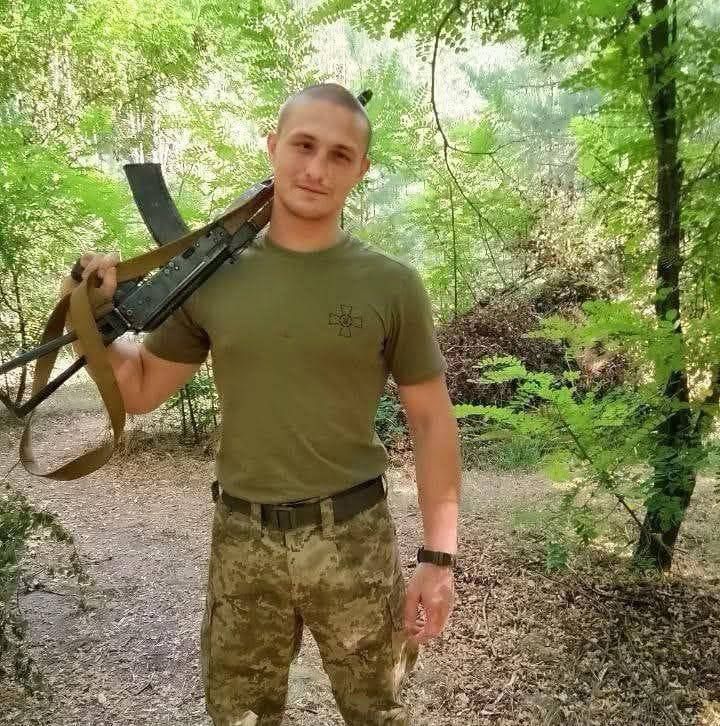
“While you were on the battlefield — in combat — how did you feel God’s presence? In what moments did you turn to prayer, and how did it help you?”
“You need it all the time, to be honest. In war, you realize that even a dugout won’t save you. One time, we were running, and the commander shouted that a KAB — a guided air bomb — was incoming. We dropped our backpacks and jumped into a cellar, but even that wouldn’t have saved us. On the next street over, we later saw a crater over ten meters deep — we would’ve been blown to pieces.
When KABs are flying overhead, or you hear a drone behind you, it’s terrifying. You know you could die at any moment. And the only thing you can do is ask God to forgive your sins and just get ready to go to Him.
Even here, in the hospital, I’ve heard guys cry out to God — especially the ones in severe pain. I’ve done that too. You ask, ‘Lord, please take the pain away,’ or, ‘Just let me go to You.’ Those kinds of prayers are very common because the fear and the pain are real.
Right now, I’d say I’m doing okay, at least during the day. But at night it’s really bad. I’m in constant pain. I have several tubes in my abdomen, and when they twist, they press against my internal organs. The pain is so intense that it brings me to tears. And in moments like that, all you can do is read the Bible, pray to God, and believe that this is your trial — your cross — and you have to carry it.”
During my entire recovery, the book that stood out to me the most was the Book of Job. Just look at how many trials he went through. From that story, we understand that God never gives you a burden heavier than you can bear. That’s why I believe this is my burden — and it’s the burden of everyone who has taken up arms, of everyone now undergoing treatment, of everyone in the trenches or on an assault mission, or lying in ambush.
There’s this short parable: five or six people are walking through a desert, each carrying their own cross. Some of them threw their crosses away to walk more easily. Others carried theirs all the way. At the end of their journey, they came to a deep ravine. Those who still had their crosses laid them down across the gap like a bridge, and crossed to the other side, where there was grass, a lake, and berries. So the things we endure — they are our trials. And a person becomes stronger once they understand that it is a trial.
After understanding that, life became a lot easier for me. People ask, “How do you manage to take things so calmly?” I say, “There are problems today, there’ll be problems tomorrow. You either face them calmly with a cool head, or you get irritated and fall into despair. It all depends on how you perceive reality.”
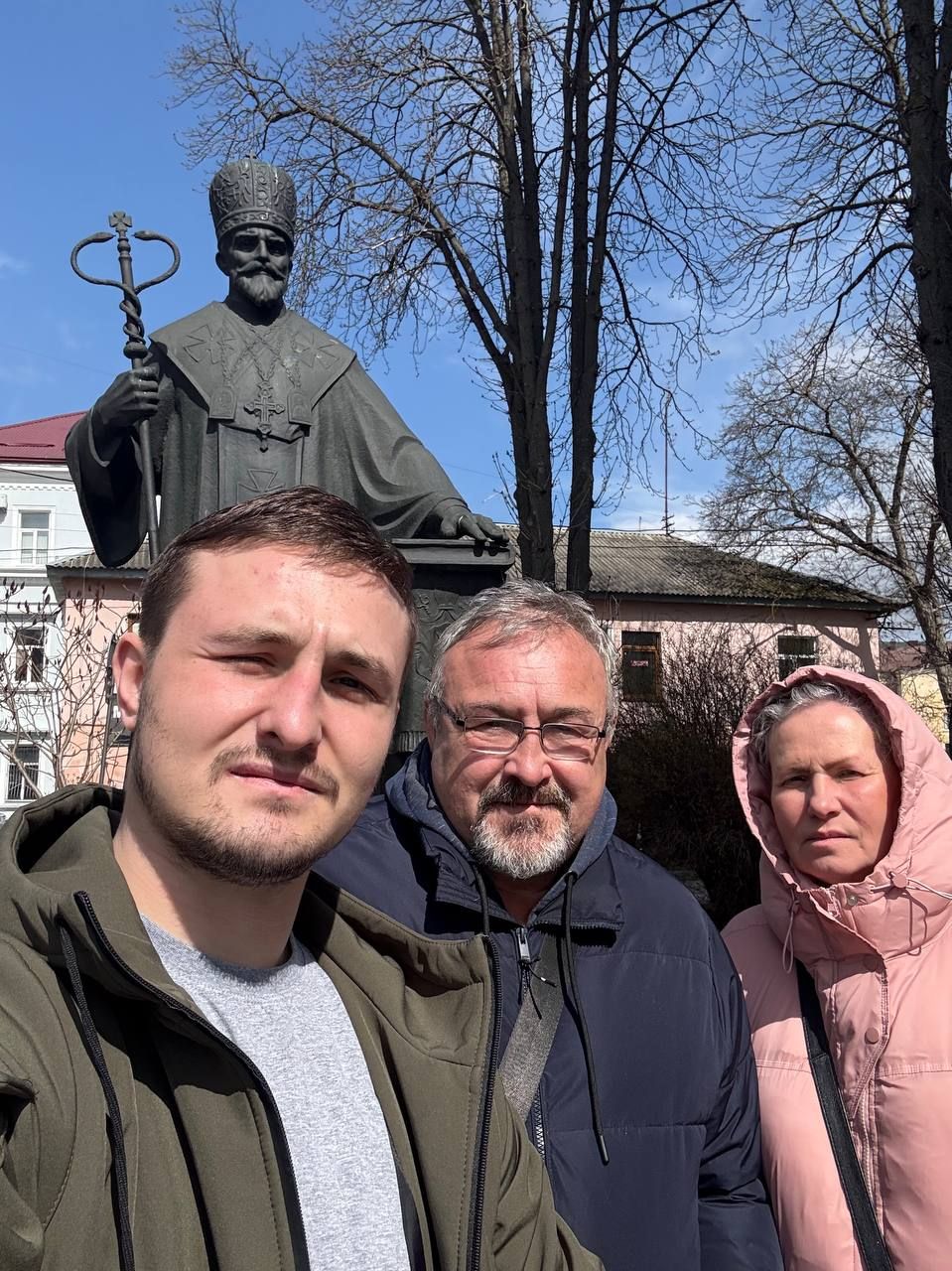
“And what was your communication with your father like while you were on the front line? How did his guidance and support help?”
“As long as I was still in Ukrainian territory, every time there was a signal, the first person I called was my dad. He was really worried about me — I called him several times a day. He always told me how much he loved me, that God loves me, that he prays for me, and that many others are praying for me, too. That kind of spiritual support really helped. But after I crossed into the Kursk region, I lost signal completely.”
“Overall, what helps you stay strong during recovery and rehabilitation?”
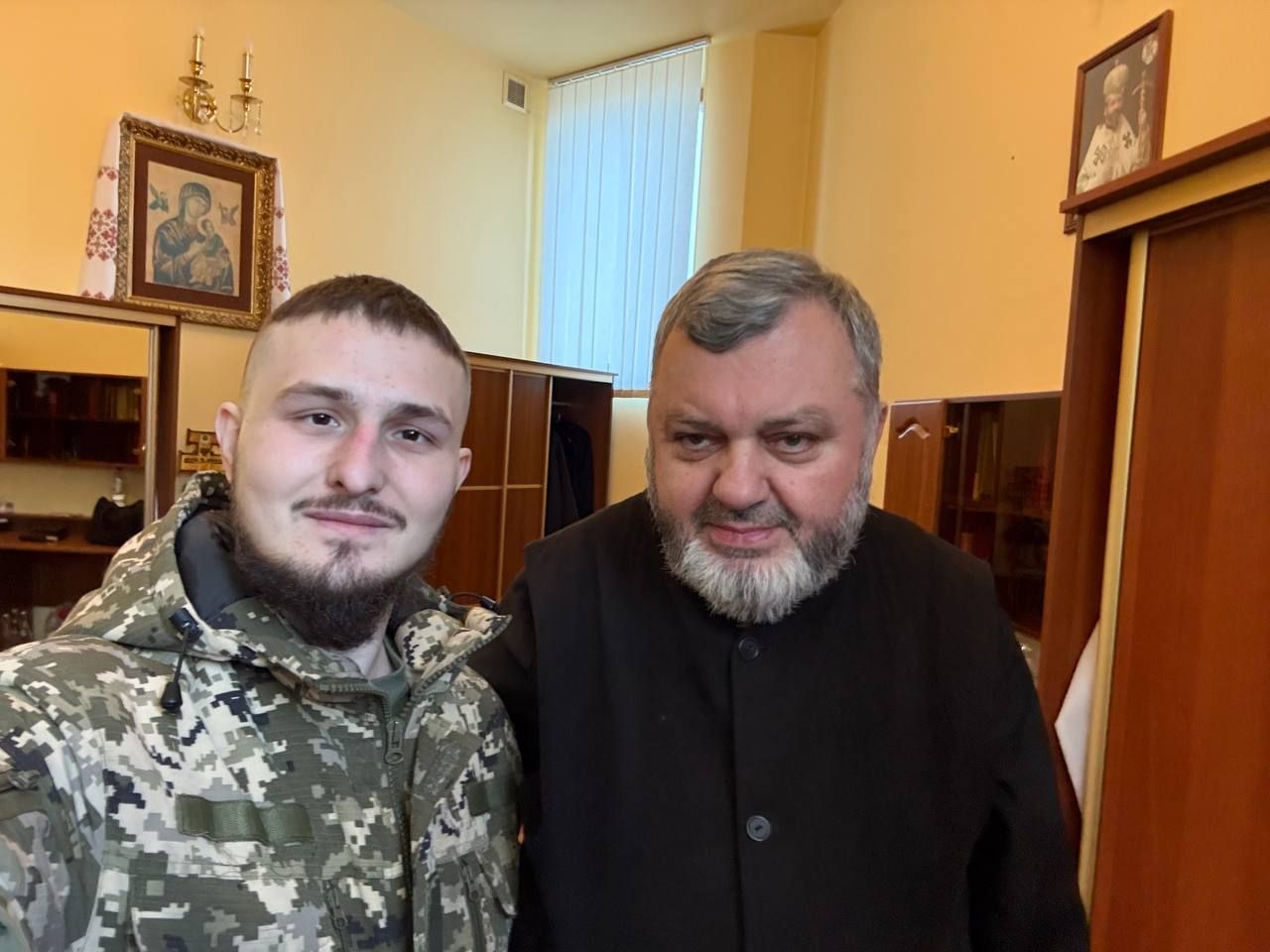
“Well, first of all, my personal faith, my prayer life, and reading the Bible. Every day, I find something new and meaningful in it. Then, there’s communication with my parents — their presence, their spiritual support, and their prayers. Also, just interaction in general. No matter what city I went to, there was always a priest waiting to meet me outside the hospital.
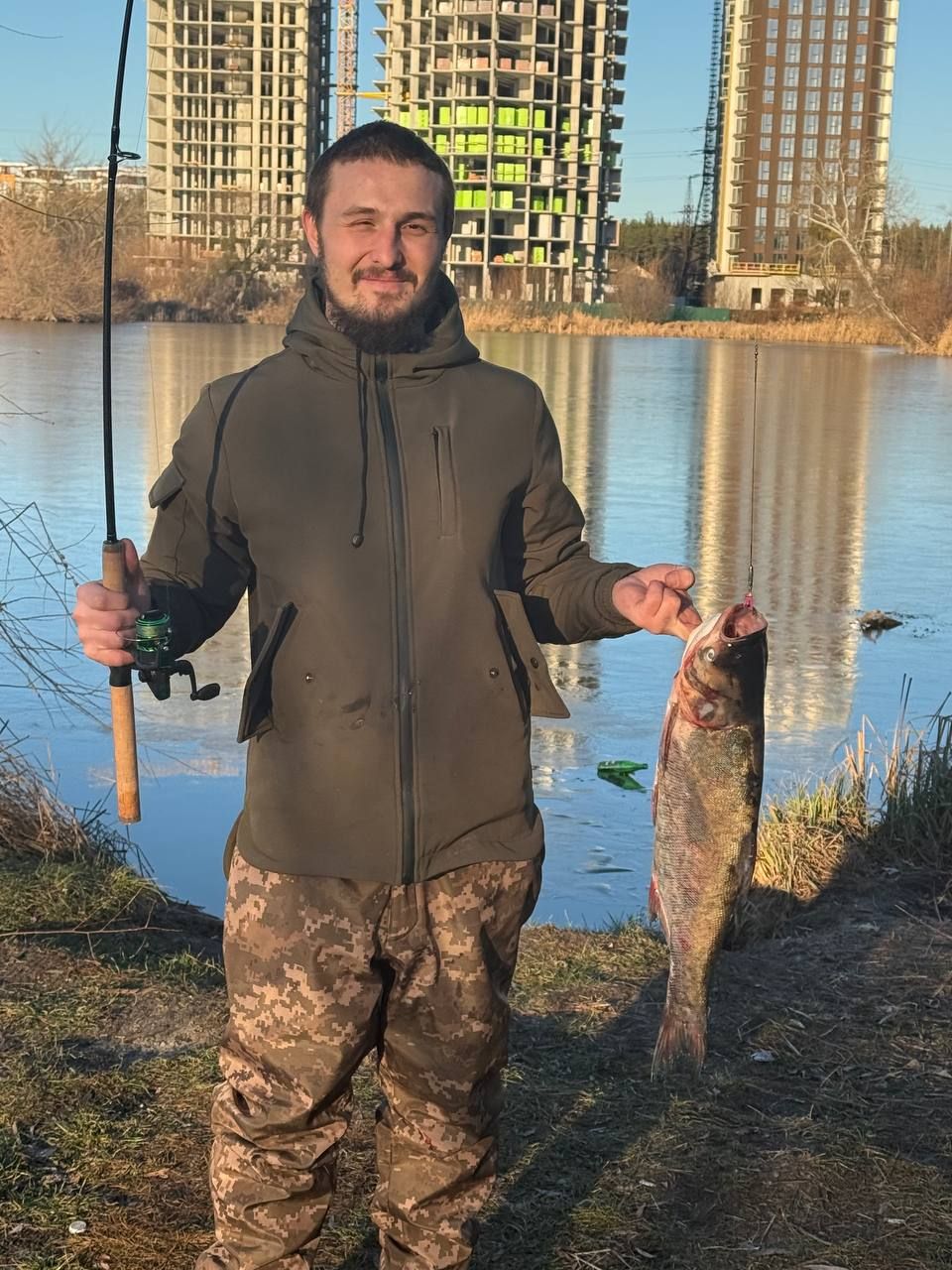
And second, God gave me optimism. It’s spring now, and we’ve already gone out and bought ourselves fishing rods. We go fishing almost every day, walk around the city, and spend time together. The guys who can walk — great. Even those who can’t — we’d carry them into the car and take them with us, then bring them to a bench. No problem at all. So it comes down to this: you either choose to believe that everything is terrible, or that everything is good.”
“I’d like to ask you about the future — how you see it, what you’re striving for, and what you dream about.”
“That’s a tough question, because I haven’t fully decided whether I want to get married or not — and whether that will even work out for me. I also have the desire to continue studying. I don’t yet know whether I want to apply to UCU in Lviv or go to a seminary. But if I eventually decide not to get married, I’ve been thinking about joining the Redemptorist monastic order. So for now, it’s all still very uncertain. I need to finish my treatment first. Because looking ahead to the future when you haven’t finished dealing with today — that’s nice for dreaming and planning, sure, but you have to finish what you’re doing now.”
“What would you say to yourself five years ago?”
“I’d say: live for yourself, and be who you truly are — the way God created you. Don’t try to earn someone else’s approval or respect, because God truly sees your heart for what it is. You could be a gentle guy inside, but put on a mask of someone cruel, insulting others, and so on. But God still sees that you’re weak inside — He sees the mask. You just have to live in a way that lets you be yourself.
The interview was conducted within the framework of RISU's cooperation with the Faculty of Journalism of the Ivan Franko National University of Lviv.
##DONATE_TEXT_BLOCK##