
Where All Diplomatic Roads Meet: A Conversation with Andrii Yurash, Ukraine’s Ambassador to the Holy See
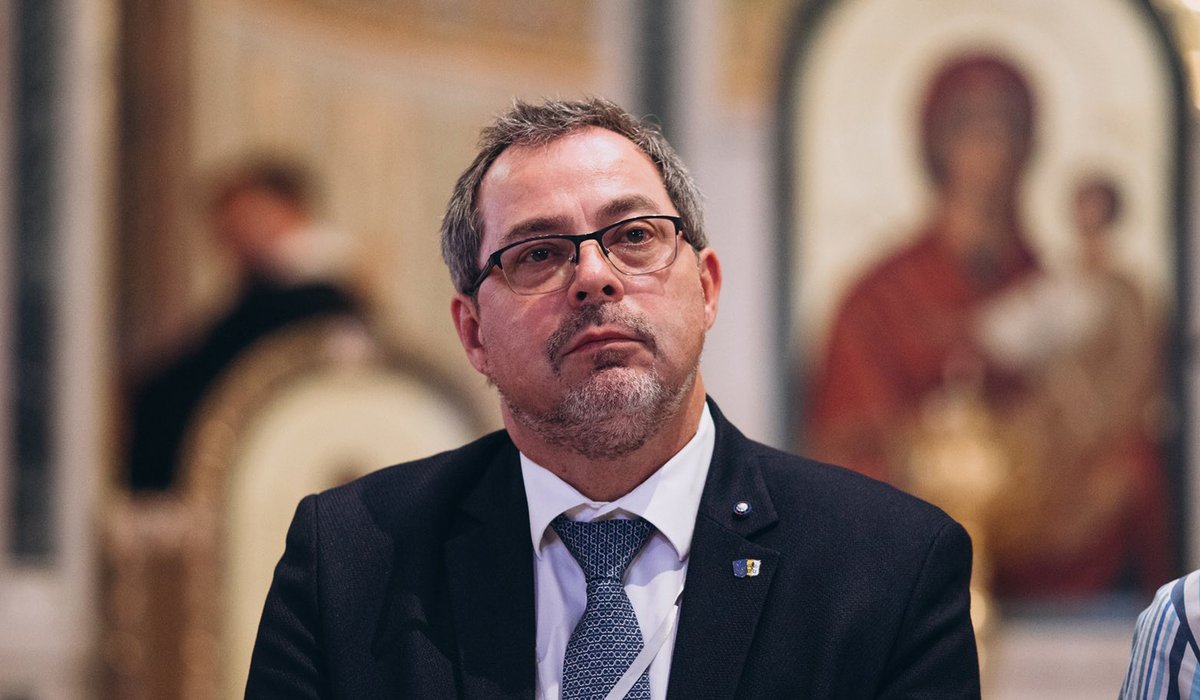


This conversation was supposed to take place earlier, but due to the ambassador's tight schedule, it had to be postponed several times. And when we finally began our discussion, the Holy See had just become sede vacante. We are concluding it now under the new pontificate.
Editorial: With this interview, we launch a series of publications marking the 25th anniversary of RISU and the 25th anniversary of Pope John Paul II's visit to Ukraine.
— Mr. Yurash, it has been more than three and a half years since you departed to take up your duties as Ukraine's ambassador to the Vatican. Before that, you had experience as a high-ranking civil servant, but not in the diplomatic service. What did you have to learn, and what were your first impressions of this new work?
— Thank you for your interest in the work and functions of the ambassador to the Holy See and for the opportunity to discuss many important topics together. Regarding your question, I can't give a one-dimensional or linear answer. But I will begin with the direct one: my appointment as ambassador to the Holy See was not something spontaneous or unrelated to the logic of my previous experience.
You are right to note that before President Volodymyr Zelensky decided to entrust me with representing Ukraine at the Holy See, I headed a government division for about six years (at that time, the relevant department of the Ministry of Culture), which was responsible for the state's relations with religious organizations and national communities, including in the context of our country's international obligations. In practice, this position not only involved but also required maintaining a large number of international contacts. In fact, during those six years, I had to travel abroad roughly sixty times, representing Ukraine within the scope of the department's responsibilities and competencies at numerous conferences and meetings, while reporting before the Council of Europe, the OSCE, and relevant UN committees, and cooperating with many other institutions, religious organizations, and various international partners.
For example, for almost six years, I represented Ukraine on the Council of Europe's Committee of Experts on Roma and Traveller Issues (CAHROM), and I also served as Secretary of all four of Ukraine's bilateral commissions on national minorities, with Germany, Slovakia, Romania, and Hungary.
Additionally, the years I spent heading the Department for Religious Affairs and Nationalities (from 2014 to 2020) were an extremely active period. Ukraine was defending its interests on numerous international platforms, including efforts to counter the Russian propaganda machine, and was implementing many unique projects critically important for its identity, such as pursuing the idea of obtaining canonical autocephaly for the local Orthodox Church. For example, this single major undertaking, in which the Ukrainian state needed to confirm and carry out certain functions strictly within the scope of its responsibilities and authority, required nearly fifteen foreign trips.
Why am I describing all this in such detail? To show that the "diplomatic dimension" of my duties in my previous positions was not merely present, but one of the defining elements.
In carrying out all these dozens of foreign missions, I naturally had to be in constant contact with the Ministry of Foreign Affairs — both with staff at the central office and with personnel in our diplomatic missions abroad. Therefore, diplomatic work was neither foreign nor unfamiliar to me, and within the MFA, I was not someone viewed as an accidental outsider.
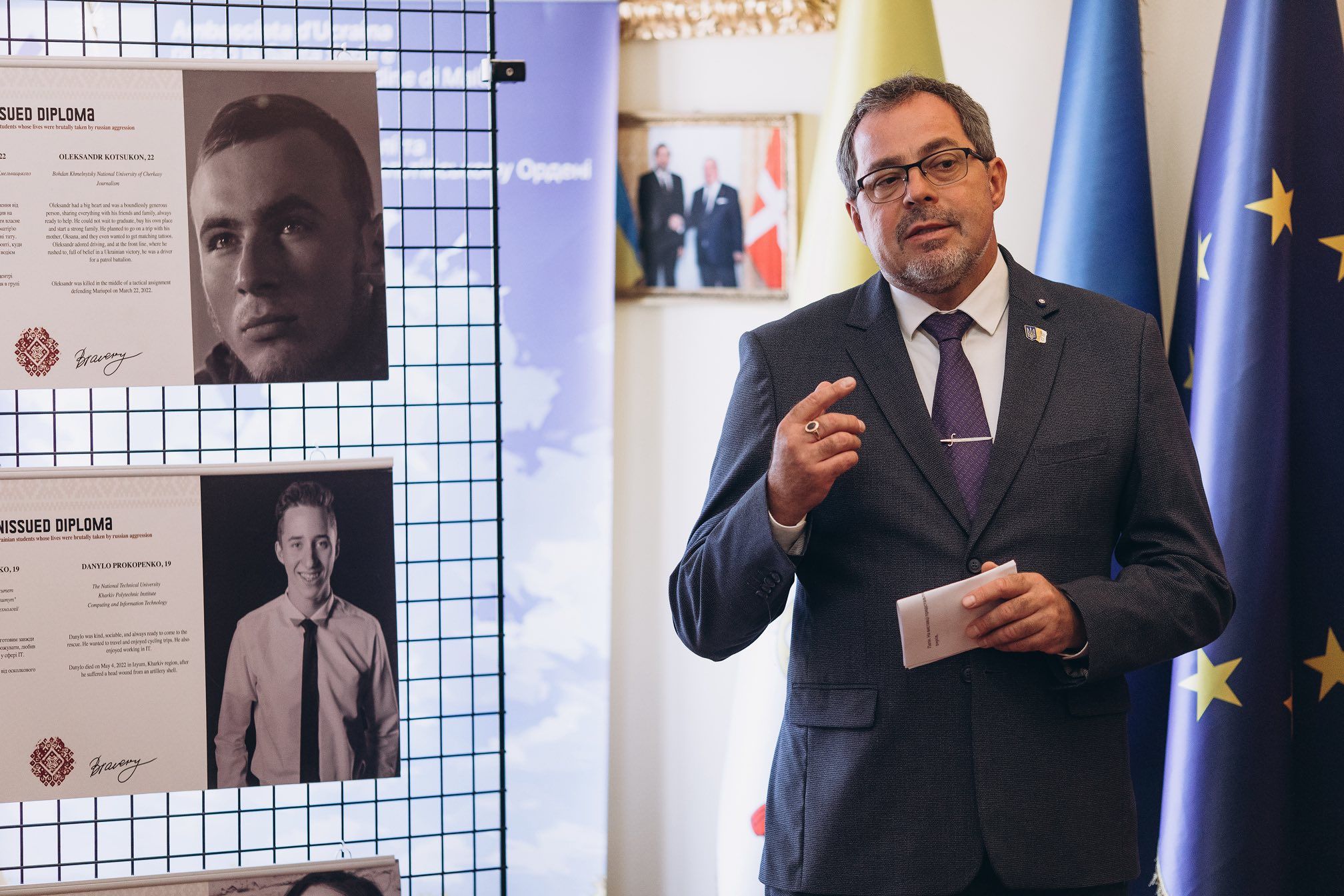
I would even add more: the "diplomatic dimension" of my duties was also one of the main components during the years 2020-2022, when I headed the Department for Freedom of Conscience at the Secretariat of the Cabinet of Ministers of Ukraine. For example, during this period, I was responsible for organizing three foreign visits of Ukraine's Prime Minister, Denys Shmyhal. Each of them had a clear, one might say, "religious focus": to Istanbul, where the head of government met with Patriarch Bartholomew; to the Holy See, where a meeting with Pope Francis took place; and to Georgia for a meeting with Patriarch Ilia II.
Moreover, when Patriarch Bartholomew and the Holy See's Secretary of State, Cardinal Pietro Parolin, visited Kyiv during the celebrations of Ukraine's thirtieth anniversary of independence, I was responsible for every detail of their stay, from greeting them at the airport to their departure after the official events.
As you can see, and I believe I have already convinced you of this, my appointment as Ambassador to the Holy See could hardly be called spontaneous...
— What does an ambassador's working day look like?
— On one hand, the daily responsibilities of any ambassador may seem quite traditional. However, each host country uniquely influences the ambassador's agenda. From conversations with my colleagues in the diplomatic corps accredited to the Holy See, many of whom have experience in other nations, I am convinced that the roles and daily routines of an ambassador to the Holy See are some of the most distinctive, differing significantly from those in other countries.
To effectively navigate this role, one must understand the specific characteristics of the Holy See — its unique state structure, functioning mechanisms, and the ecclesiastical traditions of the Catholic Church. These elements significantly shape all aspects of the ambassador's work and the interactions with the host state.
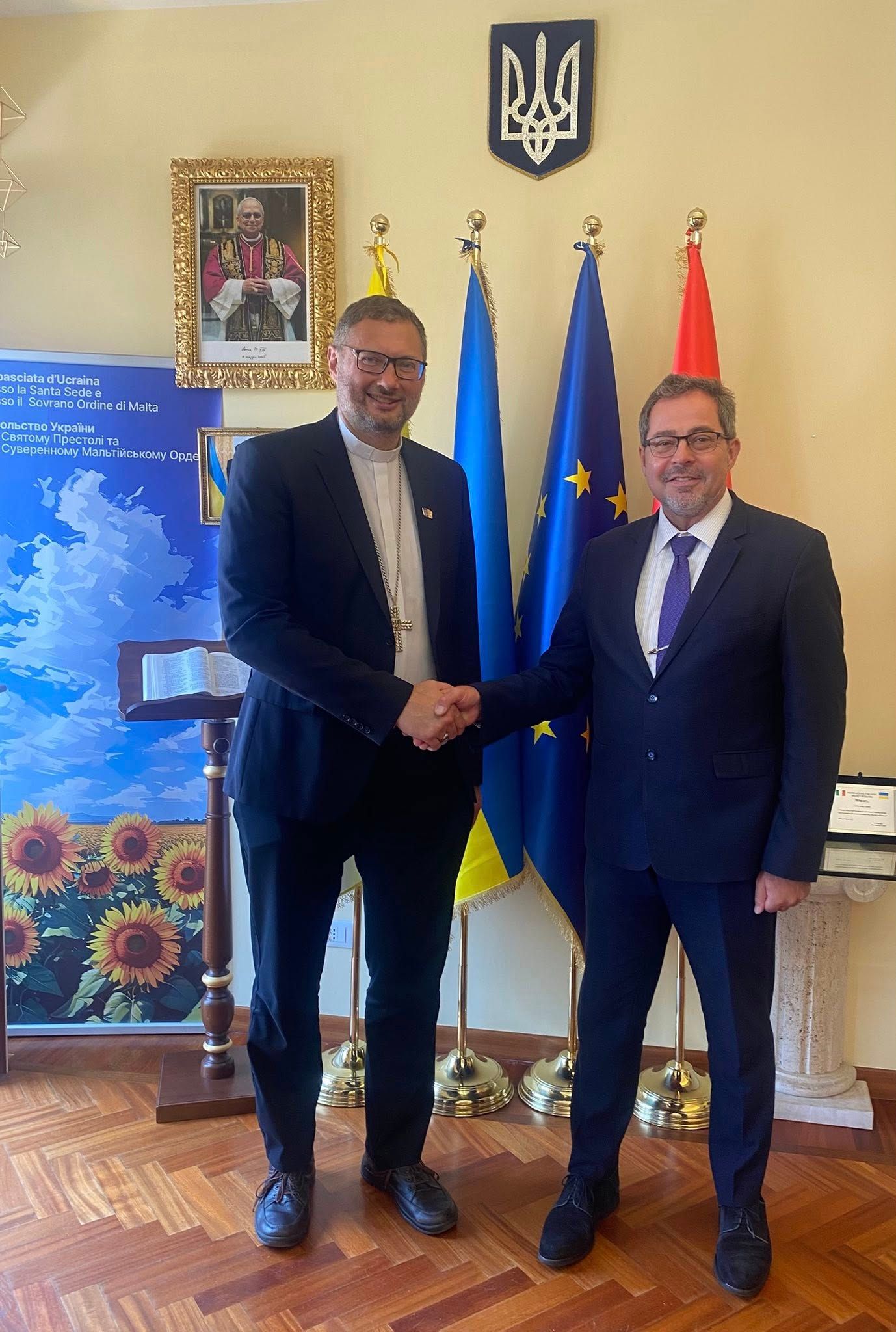
Among the most apparent features of the daily routine of an ambassador to the Vatican, as you say, is the extremely close and almost daily communication with colleagues from other embassies, as well as the nearly daily participation in liturgical events organized either by the Holy See or directly by the embassies. There are days when one must attend two or even three liturgies.
One must remember that the Holy See maintains diplomatic relations with perhaps the largest number of states in the world. As of early 2025, it had diplomatic relations with 185 countries and four multilateral international organizations. Ninety-one countries, along with all these international organizations, have permanent missions in Rome, while the ambassadors of the remaining ninety-four states are so-called non-residents, meaning that they carry out their duties while residing in other capitals. A distinctive feature of Holy See diplomacy is that it may receive and accredit an ambassador who resides in any country except Italy, which in practice means that no ambassador serving in the Italian Republic can simultaneously represent their country to the Holy See.
As you can imagine, such a number of diplomatic missions, even though most have very small staffs, as in the case of our Embassy, inevitably creates an exceptionally intense workload for an ambassador.
If the events and activities organized by our Embassy draw one of the highest numbers of guests — and events hosted by other embassies sometimes include representatives of around seventy missions permanently based in Rome — this means that, as ambassador, I must also attend several events in addition to my daily responsibilities.
— Your background as a scholar of religion must be very useful to you. Is it so?
— I have already partially answered this question, so I will limit myself now to a brief follow-up. Of course it has been. When someone arrives at the Holy See without being familiar with the specifics of church life in all its forms, from knowing how to address a cardinal or how to communicate with an ordinary monsignor to understanding what to do and how to behave during Mass, that person will either feel completely out of place or will need a great deal of time to acquire the basic knowledge of ecclesial and spiritual life that is absolutely essential for any ambassador who wishes to carry out their duties properly here.
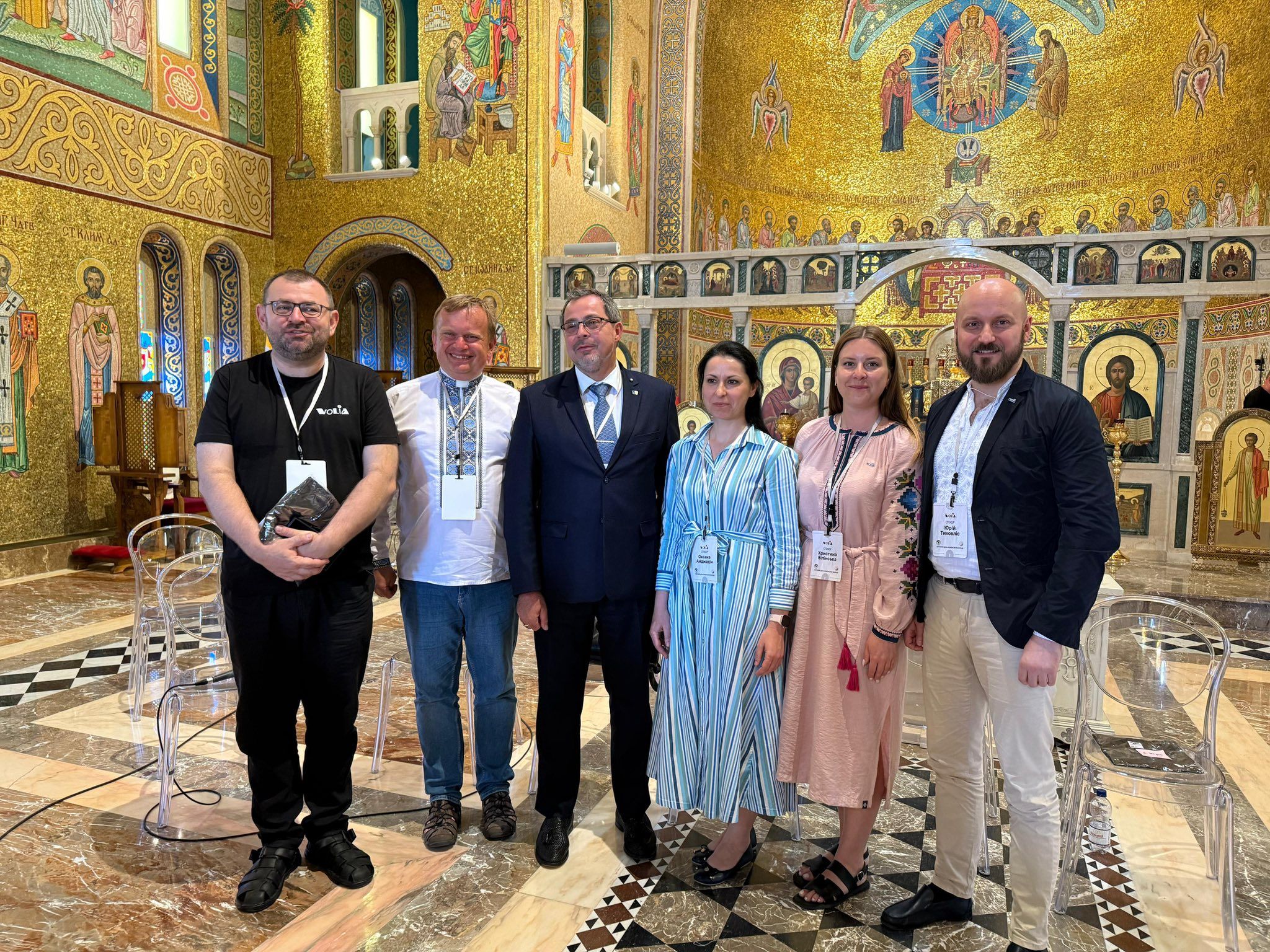
Therefore, it is clear that all my knowledge, not only theoretical as a scholar of religion but also my practical experience in communicating with representatives of the religious sphere, has been more than useful. When I began my mission, I already had many well-established and very important contacts and personal acquaintances.
One example is the Holy See's Secretary of State, Cardinal Pietro Parolin, who is effectively the second-highest figure not only in the Holy See but in the entire Catholic Church. As I mentioned earlier, I had the great pleasure of organizing his visit to Kyiv in August 2021.
— You mentioned that the Ukrainian representation at the Apostolic See is small. How many people, exactly, work at our embassy? And as an ambassador, which specialists do you most lack?
— Oh, you have touched on a painful subject. In calmer times, four diplomats worked at the Embassy, and there were seven staff members in total. Now, with communication with the Apostolic See more intensive than ever and expectations at their highest, we have only two diplomats and two additional staff members, totaling four people. When I arrived in Rome, we effectively had only three permanent staff. Since then, we have managed to secure some reinforcement on what one might call the technical and administrative side. But we are in great need of, and constantly request, at least one more diplomat who could focus specifically on cultural cooperation and media relations.
Of course, we cannot compare ourselves to, nor can we dream of having, the resources available to the diplomatic missions of Italy, Brazil, or the Philippines, which employ eleven, eight, and seven diplomats, respectively. Or even Germany and France, which each have six. But when, for example, Congo, Ghana, Iraq, or Côte d'Ivoire have five diplomats each (and here I am not even referring to their total staff numbers, which with support personnel can reach several dozen), it becomes clear that two diplomats in the embassy of a country that is constantly in the international spotlight is simply not enough. Even the newly opened missions of Azerbaijan and Kazakhstan have three diplomats each.
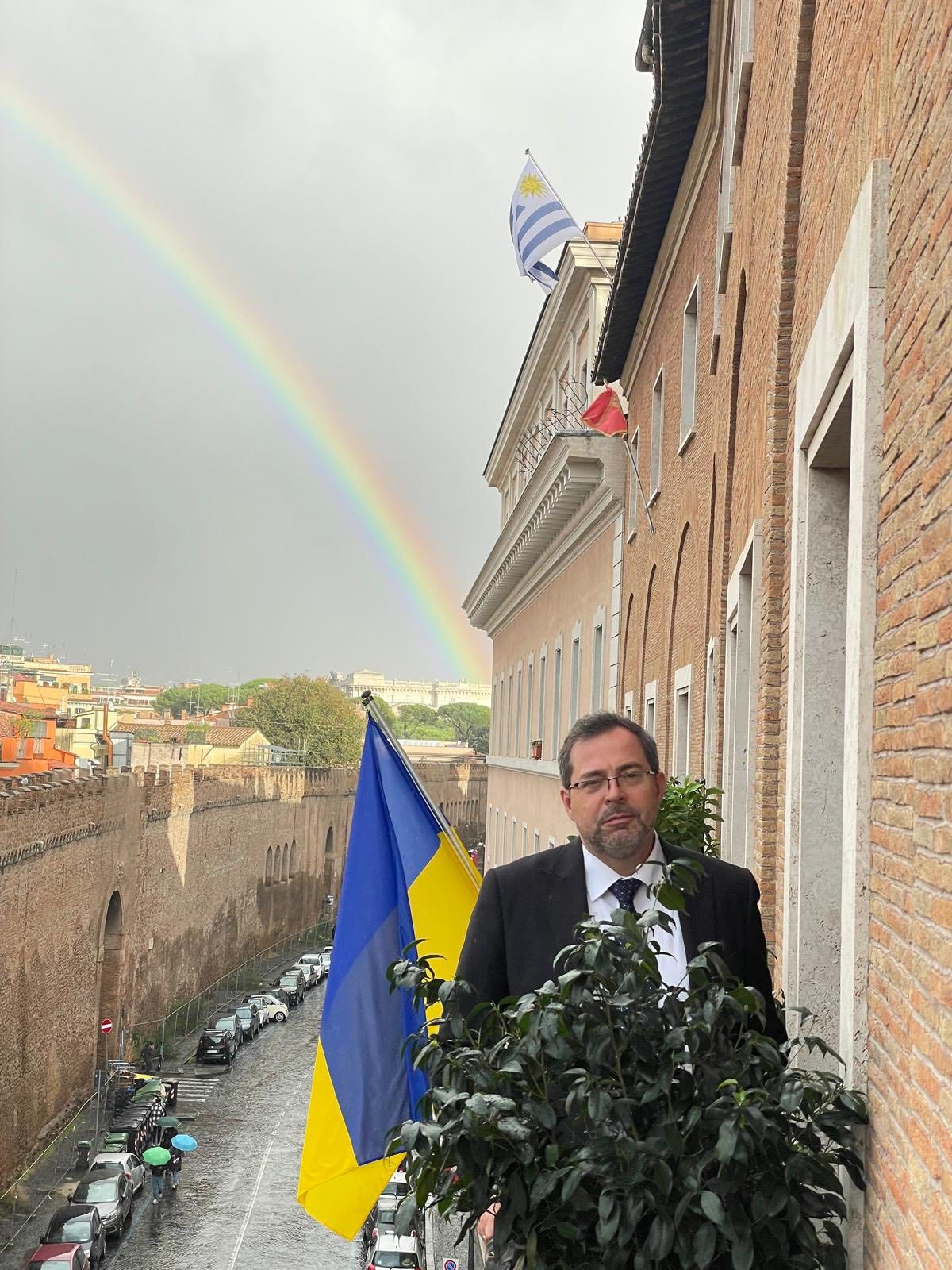
— His Beatitude Lubomyr once said that the representation to the Holy See is extremely important precisely because so many other states are present here, and one can influence and work in many directions. As an ambassador, what possibilities do you see in this regard?
— Of course, His Beatitude Lubomyr was absolutely right. In this regard, there are many ways to utilize the situation, and as an Embassy, we strive to employ all of them. I can elaborate further if you are interested, but for now, I will mention only the main directions we actively pursue.
These include personal contacts, consultations, exchanges of opinions and information, as well as both formal and informal communication of specific messages — all at the ambassadorial level. There is practically no day when I do not have at least one, and often several, conversations with fellow ambassadors.
They also include participation in the numerous events that take place almost daily in various venues, both within and outside the Vatican. Our presence, our participation, and our speeches are always one more testimony about Ukraine, about our priorities, and about the pain we are living through.
This includes the daily participation in liturgies and prayer events, which I mentioned earlier.
And it includes initiating and organizing our own events of various kinds, all of which we now dedicate to one single and exceptional purpose: to show the world the horrors of the war initiated by Russia, the suffering of Ukrainians, and at the same time their heroism in defending freedom and dignity, both their own and that of our entire State.
Let me cite not my own view, but the assessment of diplomats from other countries. Over the past three years, since the beginning of the full-scale war, the Ukrainian Embassy has initiated and carried out more events than even the missions of states with far greater capacities and resources.
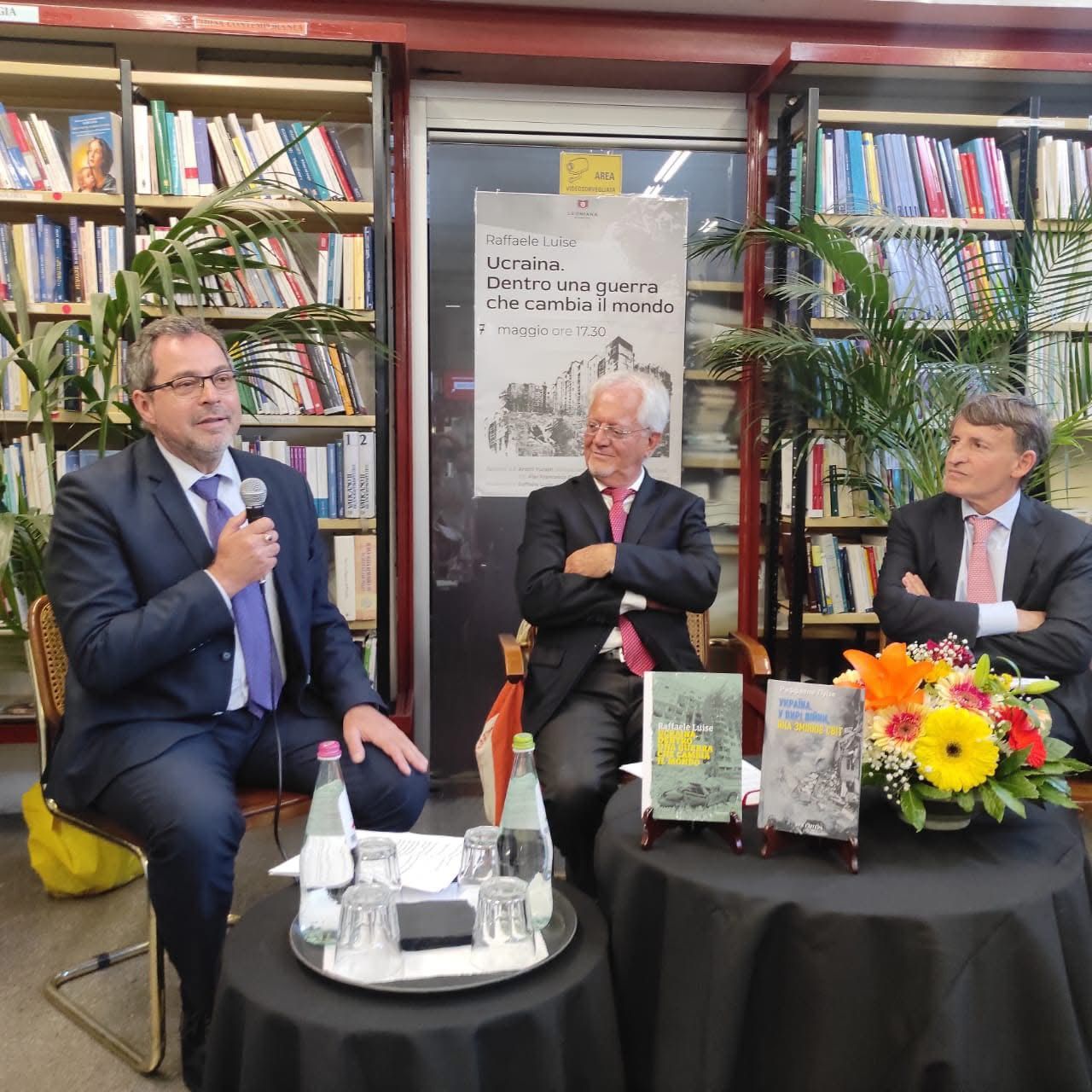
When I speak of events, I mean special meetings and seminars dedicated to specific developments or explanations of particular issues; cultural diplomacy initiatives — over this period, we have opened around ten exhibitions of various kinds and held screenings of about fifteen films. Among them, we organized three screenings directly in the Vatican in the new Synod Hall. These were films such as Evgeny Afineevsky's Freedom on Fire, which was nominated for an Oscar, and Mstyslav Chernov's 20 Days in Mariupol, which won the Oscar.
There were also about fifteen liturgical services held at our initiative, to which we invited the diplomatic corps accredited to the Holy See and to the Sovereign Military Order of Malta, as well as senior figures of the Holy See. There is no doubt that every such prayer, every homily, and every address by the ambassador before hundreds of attendees is a testimony about Ukraine, another appeal to the world whose representatives take part in these events, and a reminder of what Pope Francis constantly calls "the martyred" (martoriata) Ukraine.
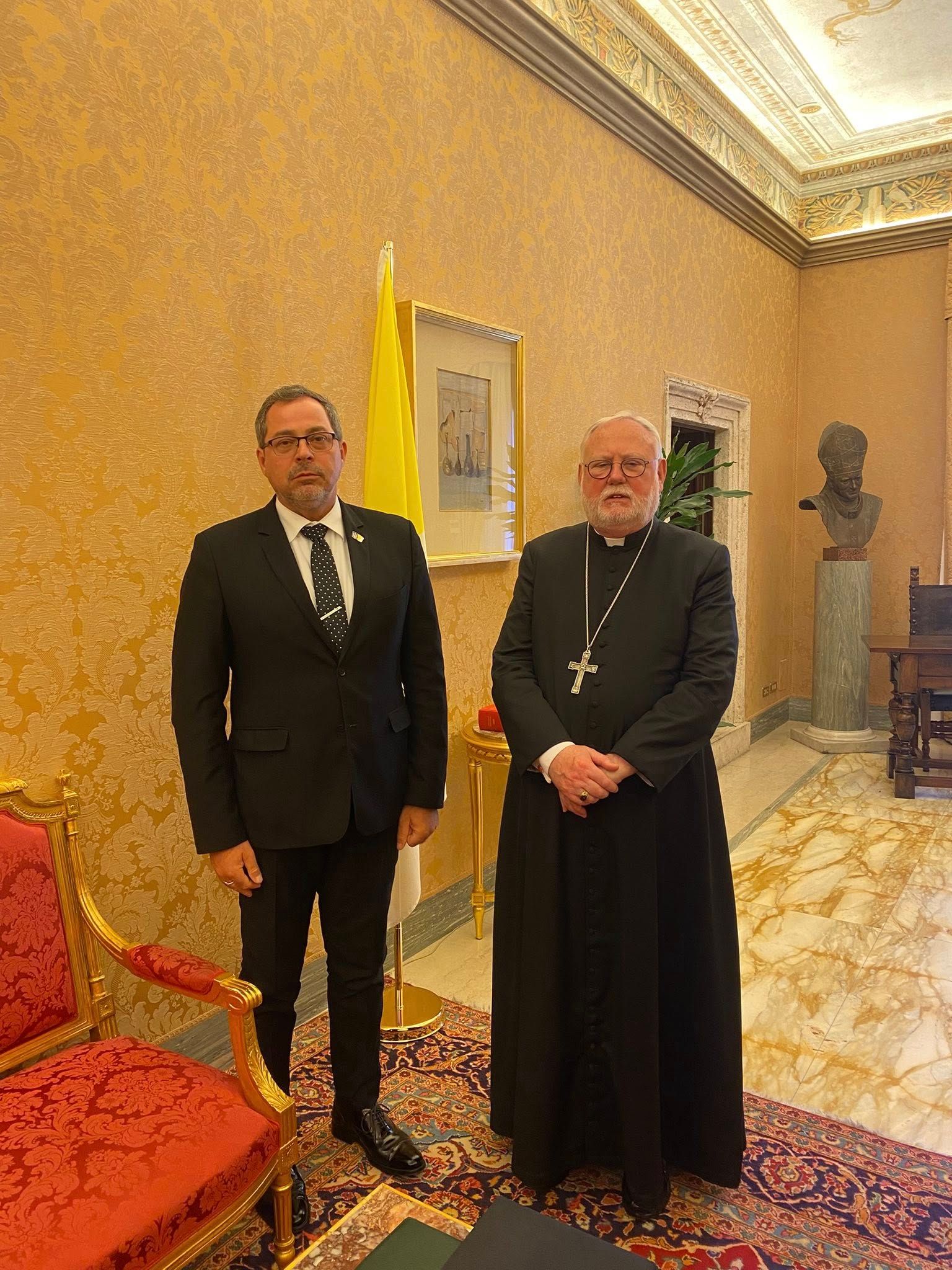
By the way, I would like to note that the prayer services we initiated were led not only by the leadership of the UGCC Exarchate in Italy, for which we are always sincerely grateful, but also by senior officials of the Holy See. Among them were the Secretary of State, Pietro Parolin; cardinals such as the Pope's special envoy for Ukraine, Matteo Zuppi; the Prefect of the Dicastery for the Eastern Churches, Claudio Gugerotti; the newly appointed Papal Vicar for Rome, Baldassare Reina; and the Secretary for Relations with States, essentially the Minister of Foreign Affairs, Archbishop Paul Gallagher. This is not even a complete list of the highest-ranking hierarchs of the Apostolic See who, at our invitation, presided at services marking various occasions, including the ninetieth anniversary of the Holodomor, the first, second, and third anniversaries of the full-scale invasion, and the one-thousandth day of the Great War.
And, of course, I must not fail to mention our interactions with the wide range of representatives from the Holy See, the Secretariat of State, various dicasteries, and other offices and institutions. I can say quite frankly, without naming any names, that among the many officials of the Holy See, there are numerous individuals who understand the situation very well, who sincerely try to help, who seek justice, and who, each in their own way, strive to be of service to Ukraine.
You can surely understand that without such support and understanding, it would have been impossible to accomplish all that we have aimed for and all that we have managed to achieve.
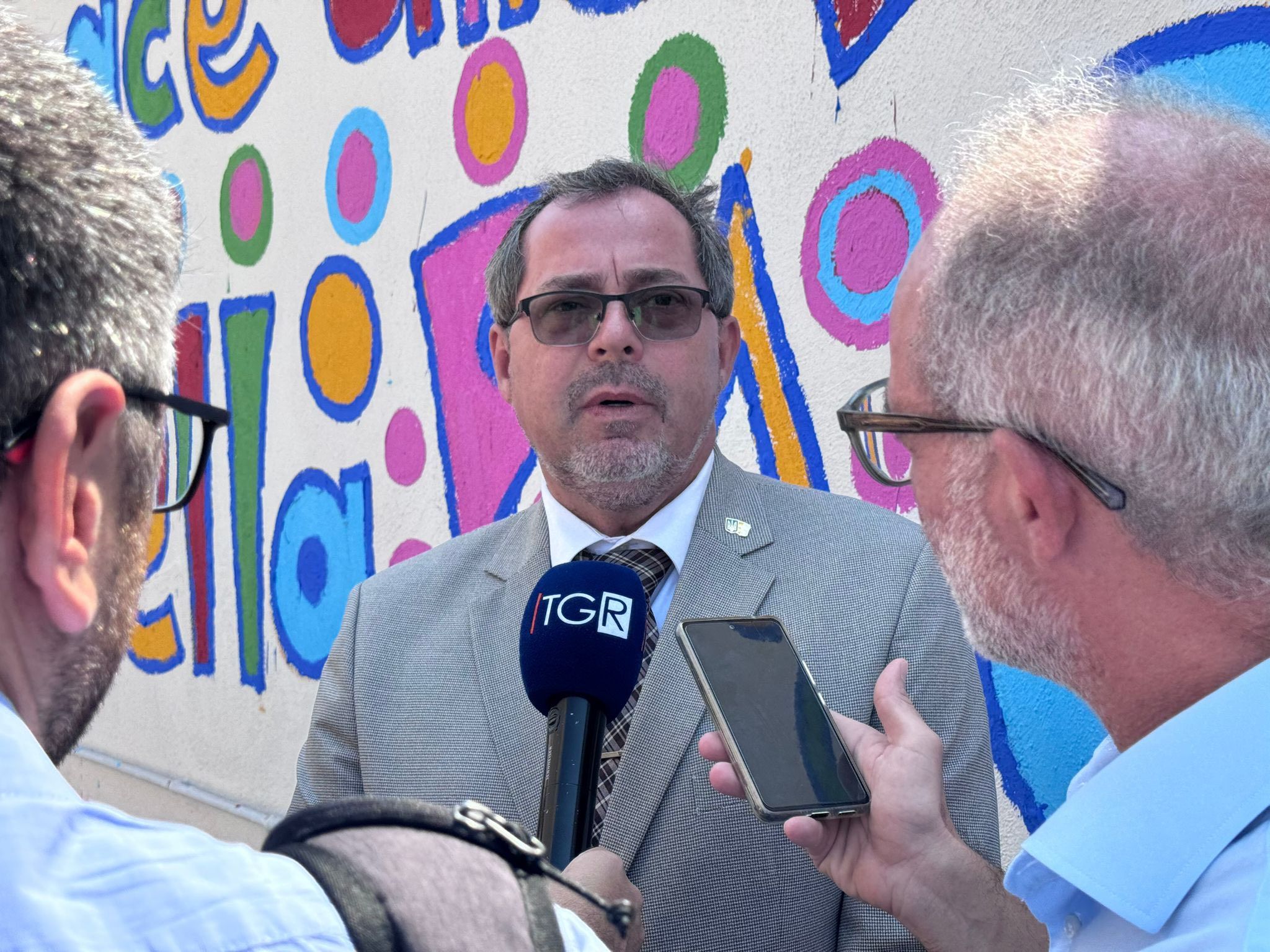
I also never turn away anyone who wishes to talk, share information, or request a meeting. Every day our Embassy receives many visitors, and most of them are not Ukrainians. They include journalists, public figures, clergy, businesspeople, mayors, and cultural figures, all those who wish to help us and to whom I simply cannot refuse a conversation.
I likewise accept almost every invitation to attend various events, primarily cultural, academic, or ecclesial, that take place in Rome or in other cities in Italy. Each such occasion is an opportunity to tell the truth to an even wider audience or to express gratitude for everything that has already been done for Ukraine and for Ukrainians.
— In your opinion, which countries or their missions are currently our strongest allies or most reliable partners at the Holy See?
— This question is both simple and complicated for me. Complicated, because I would have to list at least two or three dozen countries and their missions that sincerely wish to cooperate with us and regularly offer partnership to our Embassy. Fearing I might omit someone, I will simply highlight our close cooperation with the embassies of Poland, Slovenia, Lithuania, Germany, Spain, Portugal, the United Kingdom, Belgium, the United States, Argentina, Chile, Australia, and Turkey. With each of these missions, we have carried out joint initiatives. The proposals have come either from our side or from theirs, but thanks to this cooperation, several dozen highly important ideas and projects have been realized.
And the question is simple because the answer is straightforward: the vast majority of diplomatic missions to the Holy See express in one way or another their closeness to us and their desire to show support. You could count on one hand those with whom we do not have any, or do not have warm relations. It is also worth noting that the political leadership of a country does not always align with the attitudes and positions expressed by that country's diplomatic mission at the Holy See. In this context, we see such differences in the cases of Hungary, Slovakia, Bolivia, and Egypt...
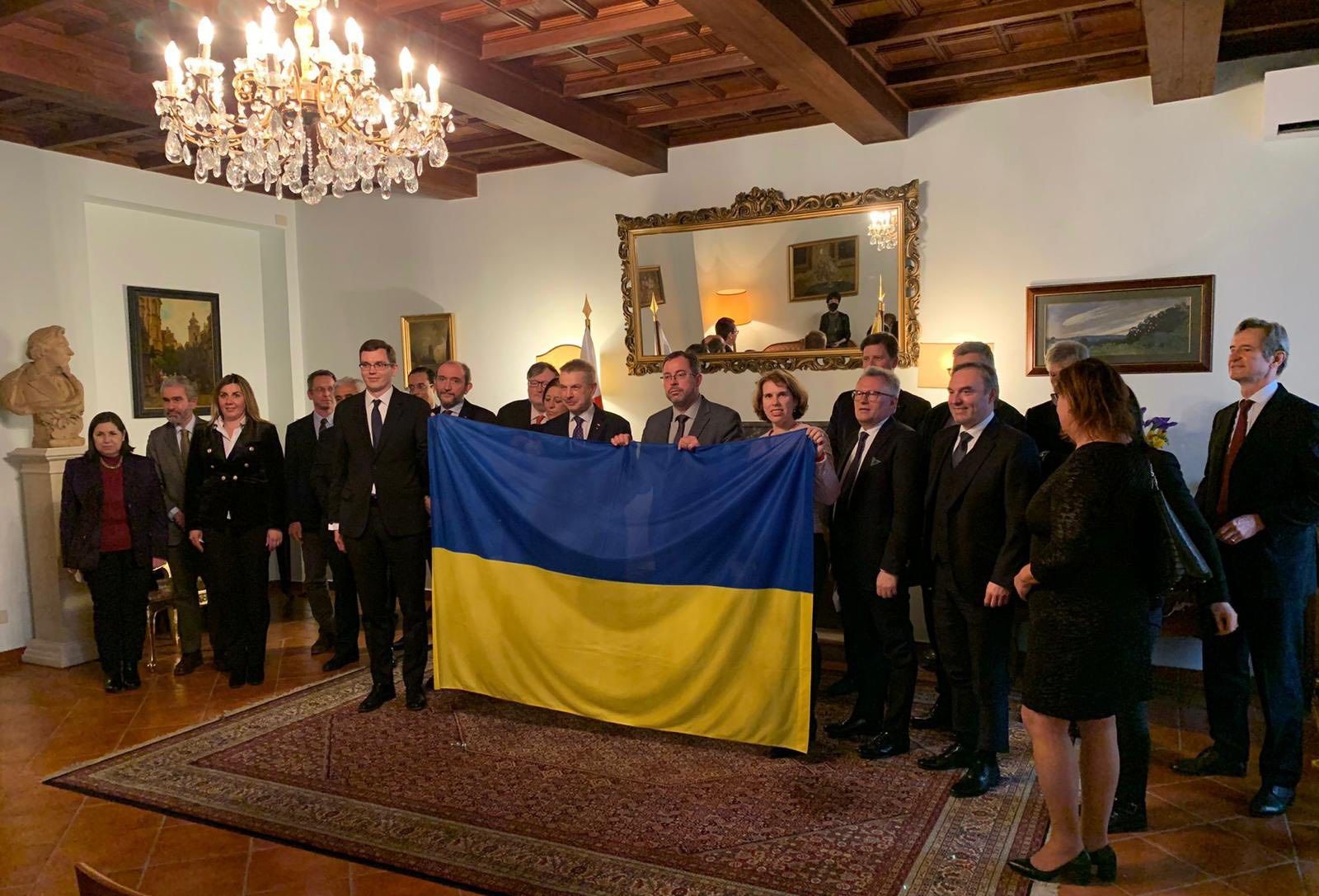
— In recent years, we have seen the growing role of Ukrainian church leaders and figures on the international stage. Often, it is precisely religious leaders who represent our country and can reach not only religious centers but also politicians for whom faith matters. How does this look in Rome, a center that is both political and religious?
— You have described this trend absolutely correctly. And if this has become visible and effective in other countries that are secular, and often highly secularized, then in the context of the Holy See — an absolute theocratic monarchy and the center of the Catholic Church — this dynamic functions even more clearly and with even greater impact.
But it should be understood that for the diplomacy and the external relations system of the Holy See, contacts with religious figures, the kind you mention, are not something new or unexpected. Here, they are part of daily life and a long-standing, centuries-old tradition and practice.
When we speak about Ukraine and how it is perceived by the Holy See, I would emphasize something else — the reverse trend. Over the past few years, both the Pope and the Secretariat of State have gained the opportunity to communicate informally and more actively with Ukrainian political leaders, finally recognizing and seeing the shared or closely aligned positions of Ukrainian secular and ecclesiastical authorities. For several decades before this, the attitude of the Ukrainian political elite toward the Vatican had been purely formal; one could say there was a clear underestimation of its role in global processes. This legacy of past decades has been overcome thanks to the remarkable intensification of contacts we have witnessed since 2022, as I already partly described.
As a result, we now see a reciprocal response: the level of understanding of Ukrainian issues within the Holy See, the prominence of "Ukrainian matters" on the Vatican's agenda, and the level of bilateral contacts and visits are today among the highest and most dynamic of all countries, including even Ukraine's traditional partners.
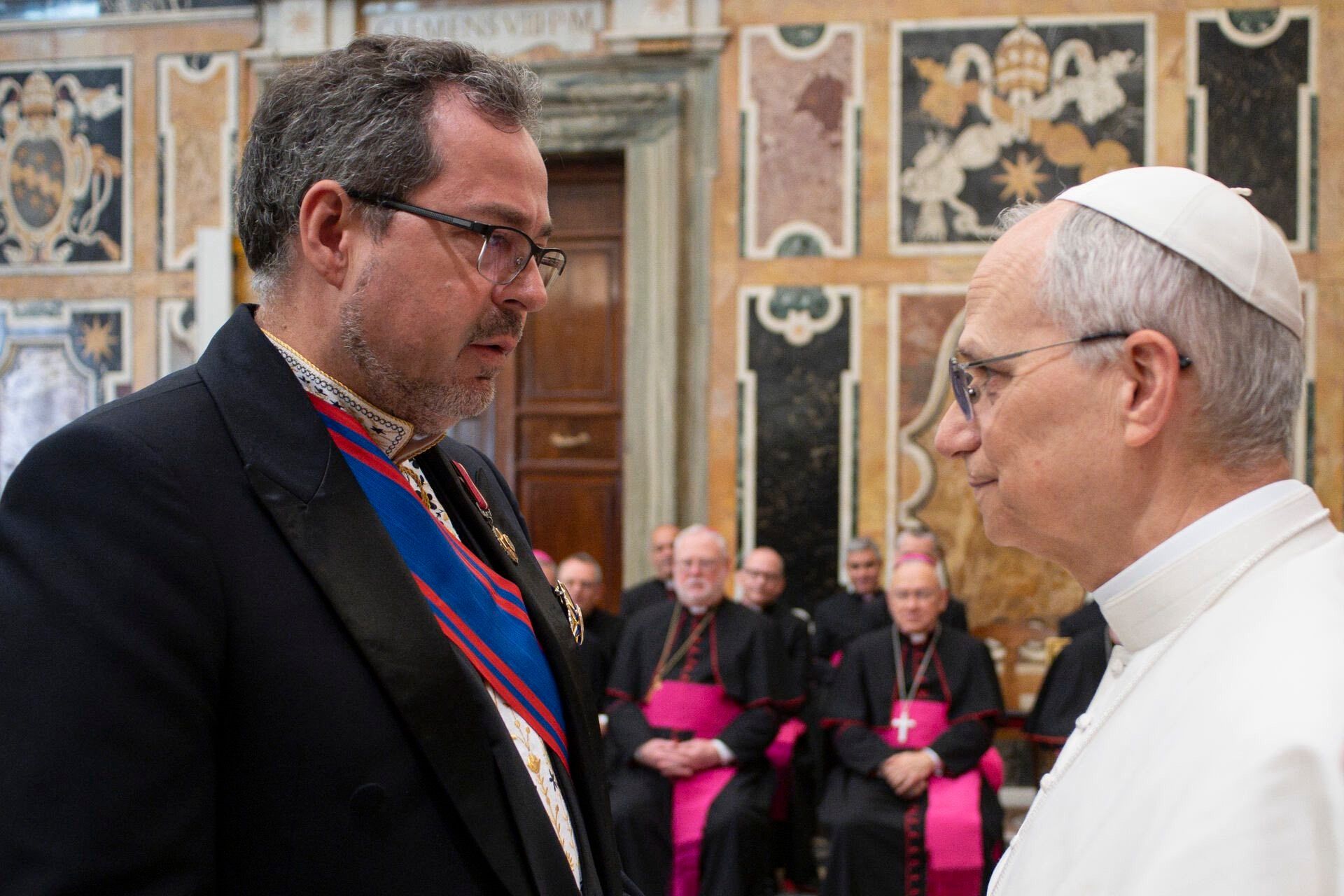
— Sometimes, when communicating with Ukrainian government officials, particularly diplomats, one may notice a somewhat frivolous attitude toward religious issues and the activities of various organizations, churches, and centers. Some even argue that, according to the Constitution, the Church in Ukraine is separate from the state, meaning the state does not interfere in church affairs and often overlooks them. There is a noticeable lack of communication between diplomatic missions, clergy, and Ukrainian citizens living in Europe. In contrast, Russian diplomats not only closely monitor the parishes and dioceses of the Russian Orthodox Church, but they also consider them their wards, along with the clergy and communities of the Ukrainian Orthodox Church of the Moscow Patriarchate.
What is Ukraine doing wrong in this regard, and what should be done?
— I have already partially addressed this question. Every country has specific factors that influence the work and responsibilities of diplomatic missions. While our embassy engages in this work almost daily, I acknowledge that not everyone may be aware of these issues.
I am confident that the situation is now undergoing a fundamental change. Minister Andrii Sybiha places exceptional importance on this aspect of a diplomat's work. He takes every opportunity to exemplify interaction with religious communities. For instance, while in Rome, he willingly accepted my suggestion to visit St. Sophia Cathedral, which is the center of Ukrainian religious life in Rome and Italy. Mr. Sybiha demonstrated this commitment on his visits to many other countries as well.
In conclusion, as we discuss church diplomacy at the Holy See, I would like to highlight some key points to keep in mind.
First, the Ukrainian Greek Catholic Church has an active and fruitful strategy led by His Beatitude Sviatoslav that asserts both our position and Ukraine's overall stance. This approach is yielding significant results.
Second, the relationships between the All-Ukrainian Council of Churches and Religious Organizations (UCCRO) and the Holy See have reached a new level following the UCCRO's visit to the Vatican in January 2023 — the first such visit in history. This idea was proposed 20 years ago, but it has only now taken practical shape.
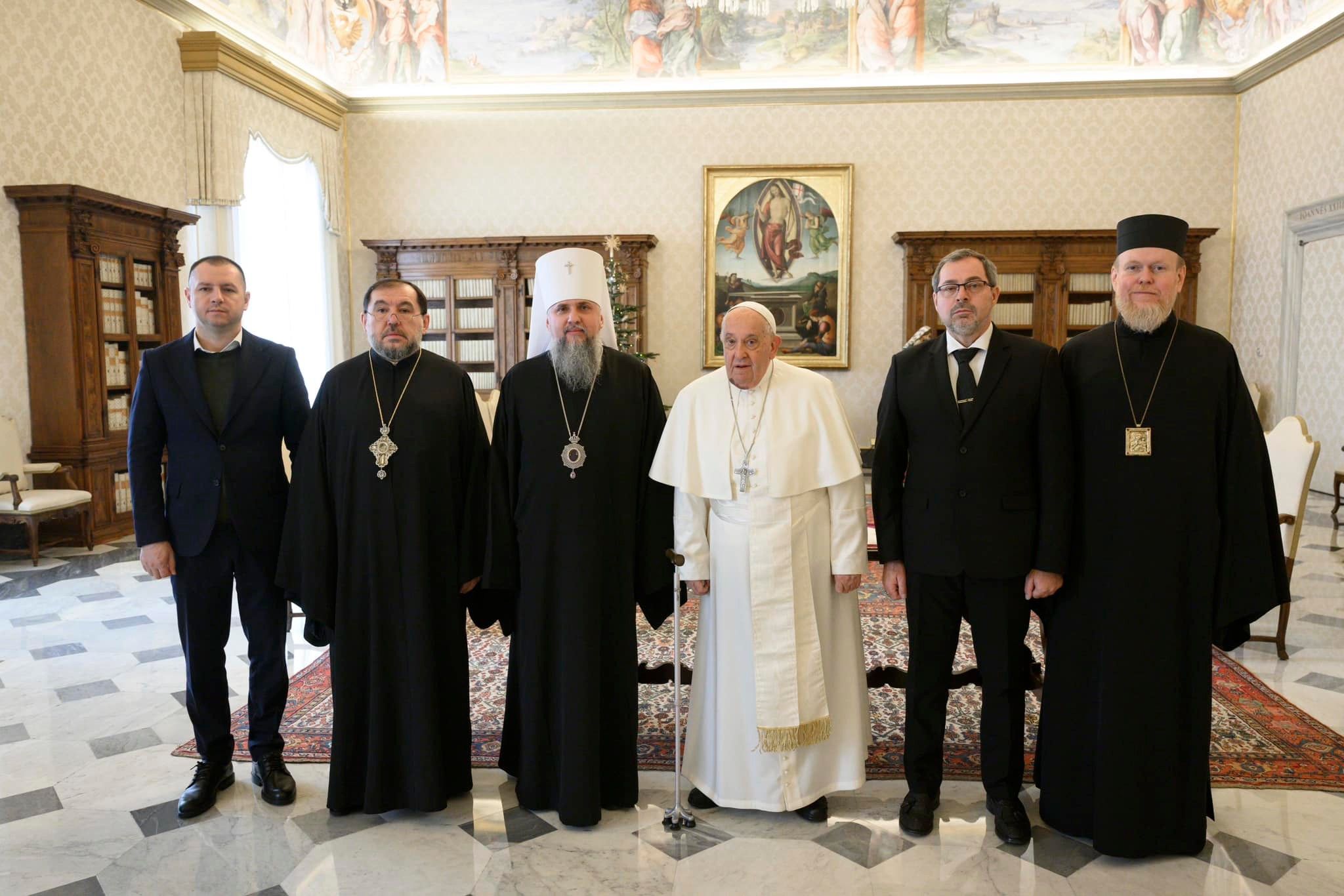
Thirdly, the Holy See has, for the first time, established direct contacts with the Orthodox Church of Ukraine, marking a new and encouraging development in the Vatican's understanding of the unique aspects of religious life in our country. This resulted in a personal meeting between the Pope and the Primate, Metropolitan Epifaniy, at the Apostolic Palace. In December 2024, the Metropolitan will also have the historic opportunity to celebrate the Liturgy at the main altar of the Papal Basilica of St. Nicholas in Bari. Additionally, this opens the door for other clergy of the Orthodox Church of Ukraine to hold services there for the first time as well. This clearly challenges the long-standing monopoly of the Russian Orthodox Church, which has enjoyed exclusive access to this significant Christian shrine for decades.
— Pope Francis's attitude toward Ukraine was, to put it mildly, unusual. On the one hand, he consistently showed love for Ukrainian Christianity, regularly called for prayers for peace in Ukraine, and sent many millions of euros in aid, including, as we now learn, for military needs. But at the same time, he repeatedly made statements that suggested either a misunderstanding of the causes of the war or confusion about how a truly just peace could be achieved, as well as about Russian and Ukrainian relations overall. Some of his comments on Russian culture and spirituality seemed to come from another reality.
Were these his personal views, or the result of trusting advisers, whether ecclesial or political, who held openly pro-Russian attitudes? In your opinion, what or who shaped his worldview the most?
— Pope Francis was a very strong and charismatic personality. Those who knew him and had the opportunity to speak with him almost daily can confirm without hesitation that he made all major decisions himself. He might listen to the advice of those close to him, but the final word was always his.
Much has already been said, by myself and by many analysts and Vatican experts, about the factors that shaped the late Pontiff's positions. I will not repeat all of that now. I will say only this: Pope Francis clearly understood and supported Ukraine, and he was on our side. At the same time, he held a number of convictions and principles that had formed during the most active years of his life, the 1970s and 1980s.
Pope Francis effectively halted contact with the head of the ROC, Kirill, calling him "Putin's altar boy." Yet he did not want to cut off communication with the Russian side completely, hoping not to lose channels of influence or the possibility of persuading Russia of the destructive futility of continuing the war. At the same time, no other world leader mentioned Ukraine as often as he did or called for prayers for her as persistently.
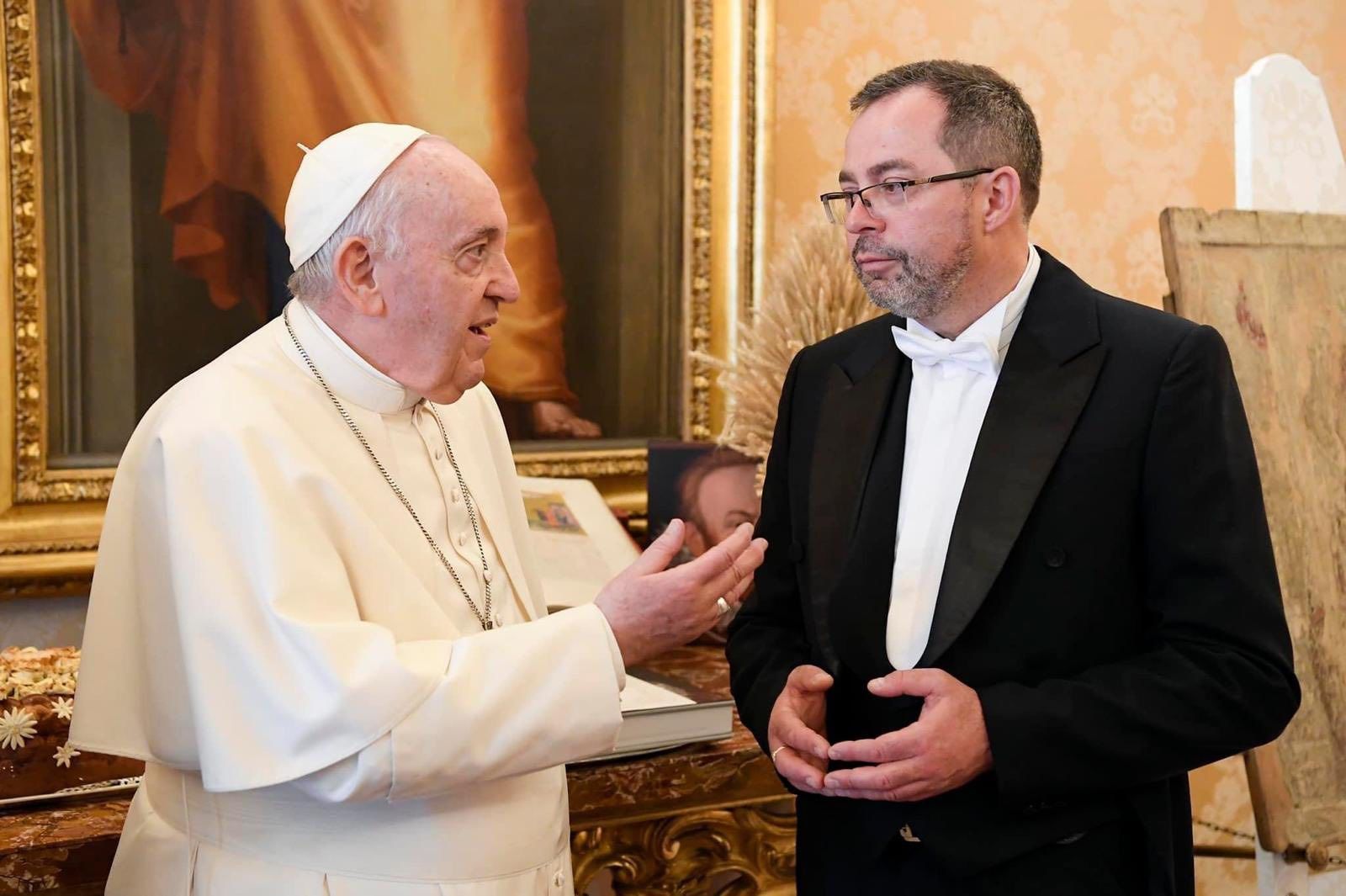
However, for entirely objective and understandable reasons, the few statements of his that did not align with Ukrainian expectations and perspectives became far more widely known among Ukrainians than the hundreds of supportive statements and the Pope's constant practical steps to assist "martyred" Ukraine. It was Pope Francis himself who introduced that term.
— Mr. Yurash, you now have your first experience working under a new pope. What changes do you observe in the Holy See's work or in its individual departments? Do you sense any shift in its attitude toward the Ukrainian cause?
— Both the Holy See and our Embassy experienced a very interesting and truly unique period this spring, connected with the death of Pope Francis and the election of the new Pontiff. It was a time of unprecedented intensity of diplomatic contacts, of expectations of change, and of carrying out traditional functions under the new Pope, Leo XIV.
But it was not only a period of challenges and heavy workload; it was also a period of very significant achievements, both anticipated and spontaneous.
One need only recall, for example, the historic meeting between Presidents Zelensky and Trump in St. Peter's Basilica during the funeral of Pope Francis. Many described this meeting as the first miracle of the late pontiff. During this informal conversation, many issues that had been viewed ambiguously by both sides were unlocked.
From the very first days of his pontificate, the new Pope Leo began demonstrating exceptional gestures of closeness and understanding toward Ukraine. In his first Regina Caeli message, delivered three days after the conclave, the greatest attention and most concrete appeals for support were directed precisely toward Ukraine. The very next day, immediately after this message, the Pope held his first official telephone conversation with a head of state, with the President of Ukraine.
Everyone was also struck by the next extraordinary gesture: breaking with decades of tradition, which prescribes that the new Pope meets heads of state only the day after the inauguration, he met with Volodymyr Zelensky immediately following the inaugural Mass.
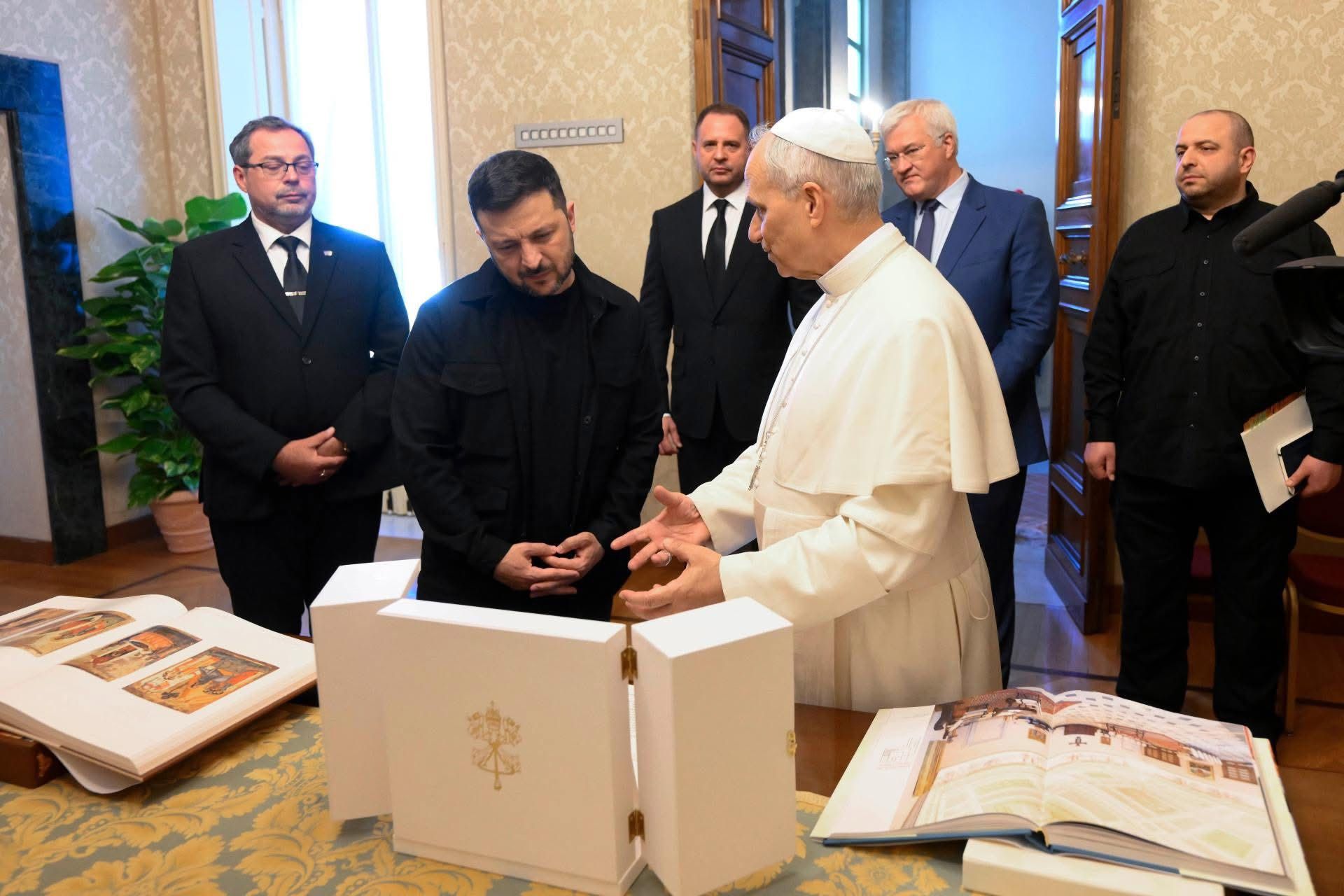
Recently, we witnessed yet another gesture of closeness and understanding from the Pope: having restored the tradition of spending the summer months at the historic papal villa in Castel Gandolfo, the Pope received the President of Ukraine there for the second time in just two months. The last time an official meeting of this kind took place in Castel Gandolfo was 24 years ago, when Pope John Paul II received U.S. President George W. Bush.
I have listed all these facts deliberately. Together, they illustrate a clear trend: Pope Leo understands Ukraine, wishes to demonstrate his closeness, and is committed to doing everything possible to bring the long-awaited peace to our country. He meets with representatives of our state for this reason; he offers all the resources of the Holy See as a platform for dialogue; he strengthens his ties with the Ukrainian Church, primarily with the Ukrainian Greek Catholic Church, in order to help Ukraine in practical and effective ways, and to ensure that this bond becomes tangible for every citizen of our country.
For Pope Leo, this is also a period of deep examination of current realities and future prospects. He is now very attentive to all recommendations and proposals. From a formal perspective, he is placing particular emphasis on preserving stability and continuity in the governing tradition he inherited from Pope Francis. However, I believe that with time, we will witness new steps by Pope Leo that will demonstrate his readiness and ability to shape his own priorities and leadership methods. I am confident that Ukraine will remain one of his fundamental priorities.
We should therefore be prepared for new important actions the Pope may take in support of our state. His visit to Ukraine is among the most anticipated and most desired of these steps. Ukraine awaits the Pope. I am certain that he is aware of this and will do everything possible to stop the war and bring peace, including through his visit to a suffering yet resilient Ukraine.
— The Ukrainian public was alarmed by Pope Leo's recent meeting with representatives of the Russian Orthodox Church. Many said, "Even this pope is entering into dialogue with Moscow." What was being said in Rome about this meeting, and why did it happen at all?
— I fully understand the reaction in Ukraine, and among Ukrainians, to anything connected with contacts with Russians, especially the Moscow Church. However, in this context, it is essential to remember that the Holy See has never fully discontinued its contacts, whether active or inactive, with the Church of Patriarch Kirill. And this is not because of some special affection for Russian Orthodoxy, nor because of the efforts of a mythical "Russian lobby." One must understand that this is part of the Holy See's traditional policy: maintaining communication with all sides, including those in conflict with one another, and even with those who express hostility or rejection of the Vatican's own positions. This is all the truer of partners with whom the Holy See has a long and established history of relations. And the Moscow Church is indeed one of those partners: beginning not only from tsarist times but especially from the early 1960s, when the Apostolic See undertook a major shift in its relations with other Christian communities, the Holy See and the Moscow Patriarchate have maintained one of the longest uninterrupted histories of contact and dialogue.
Thus, the meeting between Pope Leo and Metropolitan Antony, the Moscow Patriarchate's chief representative for external relations, is neither exceptional nor an indication of some new or special trend in Vatican policy. It is simply another instance of the Vatican's traditional approach, an approach that, of course, cannot and will not be viewed positively in the Ukrainian context.
Yet few people remember or appreciate just how much the Holy See has minimized contact with the Russian Church. This is evident not only in Pope Francis's cancellation of his planned June 2022 meeting with Patriarch Kirill, but also in a whole series of sharply negative assessments, both of the current stance and even the theology of Russian Orthodoxy, expressed by important figures of the Roman Curia. For example, Cardinal Kurt Koch stated in June 2022 that the present theological paradigm of Russian Orthodoxy amounted to outright heresy, after which Moscow refused any further contact with this senior Vatican official responsible for relations with Orthodox Churches. Even harsher critiques of the Russian Church and its policies have been repeatedly voiced by another prominent figure in the Roman clergy, Cardinal Ludwig Müller.
By the way, if we are discussing new trends in Vatican policy toward the Orthodox world, then the genuinely new and deeply significant development of the past two years has been the establishment of direct dialogue between the Holy See and the local Orthodox Church of Ukraine. You cannot imagine how much effort the Moscow Patriarchate invested in trying to sabotage the meeting in the Apostolic Palace between Pope Francis and Metropolitan Epifaniy, or in trying to block the Primate of the Ukrainian Church from celebrating the Divine Liturgy at the main altar of one of the most prominent papal basilicas — the Basilica of St. Nicholas in Bari, where the most revered relics of the Eastern Christian world, those of St. Nicholas the Wonderworker, are kept.
Thus, in the context of your question, and in many other examples and assessments, we once again see how essential it is to take a comprehensive and systematic view of everything the Holy See does, rather than isolating certain moments or individual actions, which are often presented, sometimes by particular journalists, in an exaggerated or distorted manner.
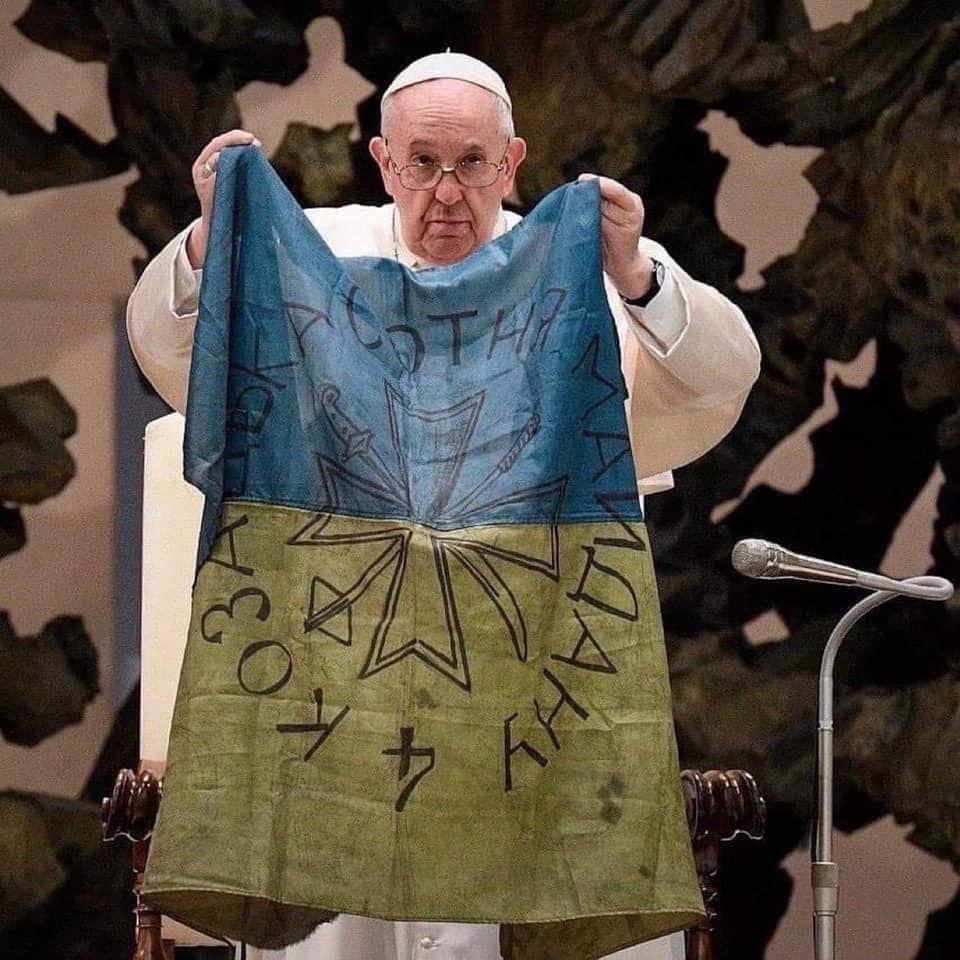
— Today, you are an ambassador, but earlier, you were known primarily as a scholar of religion and a journalism lecturer. In Ukraine, religious topics are represented in a very particular way in the media. At times, in my view, coverage is not only biased but shaped by old stereotypes, including post-Soviet and even anti-Western ones. We saw this especially when ambiguous statements by Pope Francis were selected and circulated in a subjective manner, while many of his other comments simply went unnoticed.
Italian journalism also receives criticism. Even editors who work for Catholic outlets sometimes present the Pope's words in ways that reflect their own preferences. The phrase about "NATO's dogs," for example, was completely taken out of context. Or when Francis made pro-Ukrainian remarks, local media preferred to highlight older, more ambiguous statements instead.
What, in your view, is presented inaccurately or without proper context in our media, or simply misrepresented?
— The problem with Ukrainian media is that they do not devote much attention to systematic, daily analysis of processes, including in the religious sphere, and instead focus mainly on loud and sensational events. Of course, this does not apply to RISU, which works in a continuous analytical mode. But it is true for the vast majority of other media outlets, which never write about the calm sea where tons of fish are caught every day, yet always report on the sea where a few waves have appeared.
A second problem is that Ukraine has a limited number of journalists and even fewer experts who write professionally, deeply, and consistently on religious topics. When a storm breaks out on the religious horizon, suddenly, in most media and on social networks, we hear the voices of hundreds and thousands of newly emerged "experts." Today, they comment on the Holy See, yesterday, they wrote about weapons production, and tomorrow, they will write about the behavior of penguins in the era of global warming. It is obvious that no one can be an expert in every field. What is needed is specialization, immersion in the topic, and an understanding of internal processes and preconditions, rather than a superficial description of events and an evaluation based only on one's own perspective.
By the way, the journalistic community that has formed around the Holy See is a club, a kind of guild, of nearly fifty highly professional experts who are known by a specific term: vaticanisti. Some of these individuals have been writing exclusively about the Vatican for decades. I know several patriarchs of the field who have been covering Vatican affairs for almost forty years. It is extremely rare for anyone who is not deeply immersed in these processes to write or speak about major global issues related to the Vatican. By contrast, in Ukraine, there is a widespread belief that anyone can, and even should, express their thoughts about events and processes related to the Holy See.
An important and regrettable fact is that there are no Ukrainian journalists among the Roman pool of Vaticanisti, whereas almost every other European or Christian country is represented, if not by a dozen, as in the case of the U.S., then at least by several. We clearly have room to grow — particularly in forming and supporting a Ukrainian presence among the Vaticanisti, who could write for both an international audience and Ukrainian readers.
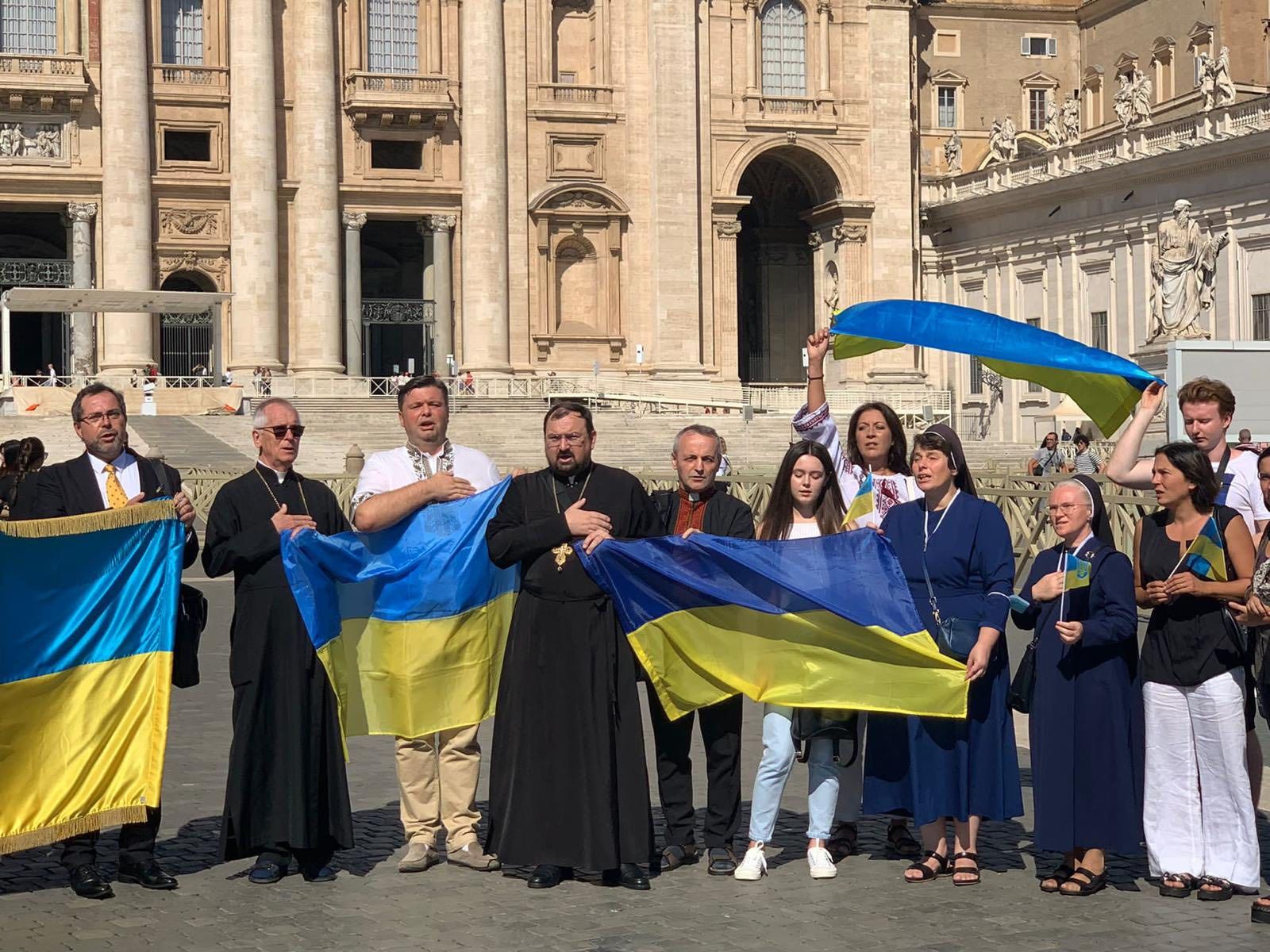
— Mr. Yurash, to conclude. Next year marks the 25th anniversary of the visit of now–Saint Pope John Paul II to Ukraine. What are your memories of that visit? And could this anniversary become a reason — or an opportunity — for a new papal visit?
— My memories are, of course, exceptionally warm. I recall vividly the details of the Pope's visit to Lviv; our entire family participated in the memorable Byzantine-rite Liturgy at the racetrack. It was not only a moment that united the vast majority of the city's residents and Ukrainians in general, but also one that gave everyone motivation, pride, and a clear sense of why it is so important for Ukraine, and for Ukrainian society in particular, to belong to the cultural and intellectual space of a civilization whose spiritual leaders include figures such as Pope John Paul II, who at that time was unquestionably the most authoritative among them.
Incidentally, that personal encounter with the Pope during the Liturgy, and later at the blessing of the cornerstone for the future UCU campus, clearly inspired me to write a book about his life. I began work literally within 30 days of the Pope's death in 2005. The Folio publishing house, which commissioned the biography, allotted two months for its completion and expected a much shorter text. Yet I managed to finish the work and prepare the complete manuscript for printing in just 45 days. I consider this one of the miracles made possible through the prayerful and spiritual intercession of Pope John Paul II, who was so quickly recognized as a saint.
Naturally, the upcoming 25th anniversary should and must become a significant milestone, an occasion to do everything possible so that Ukraine may once again witness a papal visit — that of Pope Leo, whom the overwhelming majority of Ukrainians hope to welcome. Every 25 years, when major anniversaries occur, the Apostolic See proclaims a Holy Year. Perhaps this somewhat irrational logic (I use the oxymoron intentionally) of 25-year cycles will also work in this case and may continue to do so in the future, throughout what we believe and are confident will be the long life of the Ukrainian state.
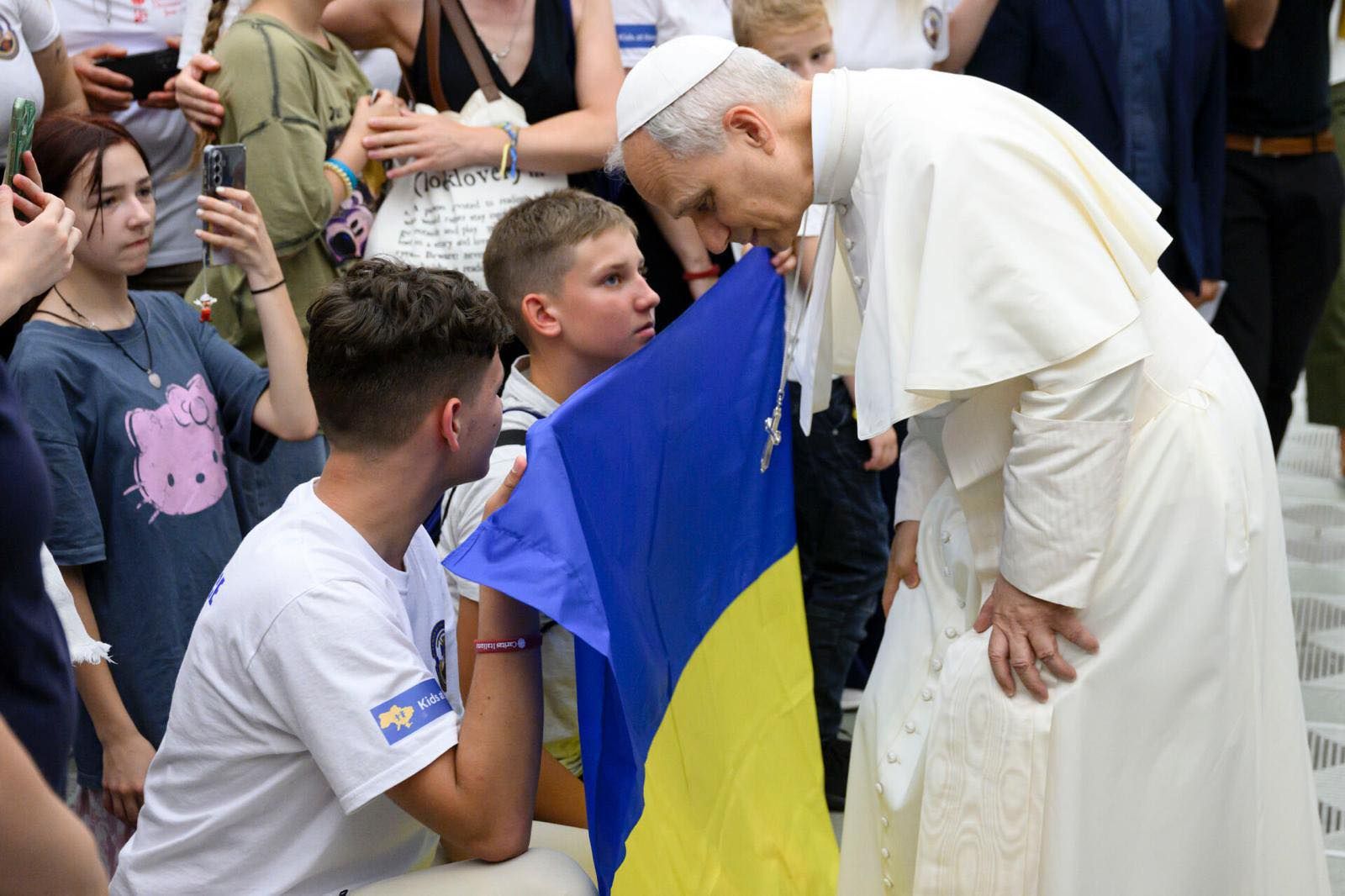
— Let me reiterate: the Pope is the most desired guest for Ukrainians. Pope Leo XIV approaches our country and all Ukrainians with extraordinary warmth, love, and understanding, and he fully reciprocates the sincere feelings expressed by the Ukrainian community. For this reason, there is genuine confidence that such a visit will take place, although the exact timing still needs to be considered and discussed by both sides.
Just as the visit of Pope John Paul II was a sign of unity with the democratic world, giving Ukrainian society new energy and confidence to move more clearly in that direction, the future visit of Pope Leo XIV will become another powerful sign. It will affirm once and for all that Ukraine is an organic part of the Christian, free, and democratic oikoumene, a part that can no longer imagine itself outside this world of democracy and freedom and a part without which that world itself cannot feel complete or whole.
##DONATE_TEXT_BLOCK##