- EN

Wife of a Ukrainian Greek Catholic priest, project manager of the Strilky Village Council, and head of the Strilky Youth Center.


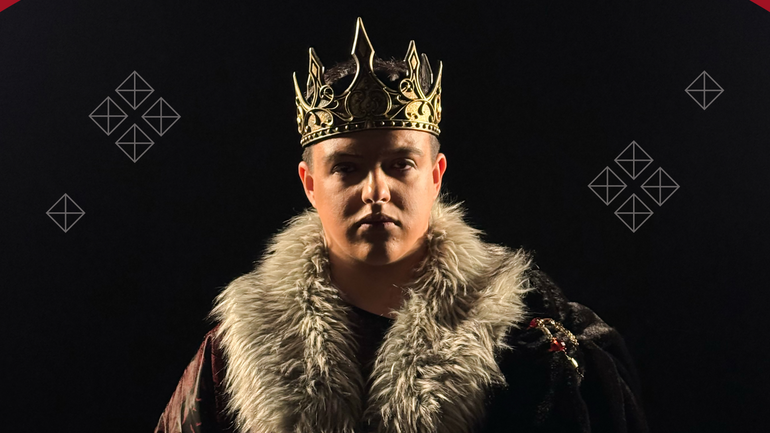
King Herod rode to chase the Child,
In wicked wrath, he raged and riled.
He could not keep his saddle seat,
Was tossed clean off his mare’s swift feet,
And tumbled to the ground.
(Humorous Ukrainian carol)
Herod in the Vertep is one of the central dramatic figures – the antagonist who stands against the newborn Messiah. He embodies the fear of losing power, pride, cruelty, and spiritual blindness. His appearance on stage creates tension, contrasting sharply with the joy of Christmas.
In the Vertep drama, Herod is not only a historical king but also a symbol of evil manifested through human passions. He initiates the tragic chain of events culminating in the Massacre of the Innocents – the most brutal scene in the Vertep. According to some folk versions, Herod even orders the killing of his own son, as his pride and thirst for power know no limits.
“Accursed one,” “insatiable tyrant,” “lawless tormentor of infernal fate,” “blood-drinker,” the one who “tears infants from their mothers’ breasts” – the Ukrainian Vertep spares no epithets for Herod. His image is a caricature of the tyrant, repeatedly reinterpreted by the Ukrainian people, replacing the biblical Herod with contemporary despots – for times change, but tyrants return in new forms.
His confrontation with Death resembles medieval dialogues between soul and body. In some Verteps, the Devil appears as the personification of Herod’s conscience; in others, Death and the Devil fight for his soul – while his body is of no use to anyone.
In Ukrainian Vertep performances, Herod appears in lavish attire, symbolizing earthly wealth and worldly power. He wears a brocade kuntush or a purple felon, garments of rich fabric. On his head – a crown; in his hands – a sword or scepter. In the early 20th century, he also held a “royal orb” (a wooden ball covered in gold, red, and yellow paper) and a “scepter” – popular folk reinterpretations of European royal regalia.
His movements are sharp, his speech commanding and harsh.
The end of his story is a shameful death – which in many Vertep versions is a direct consequence of the slaughter of the children:
“From the pit of hell
You now comprehend
How innocent children
You brought to their end.”
This is not merely revenge, but a mystical restoration of moral balance:
“See how they’re taken, see how they’re dragged —
The mighty of this world.
For before God no word can they speak,
No answer can be heard.”
(Sokyrynskyi Vertep, 17th c.)