
The Lviv Pseudo-Council of 1946: How the Soviets Tried to Liquidate the UGCC — and Failed


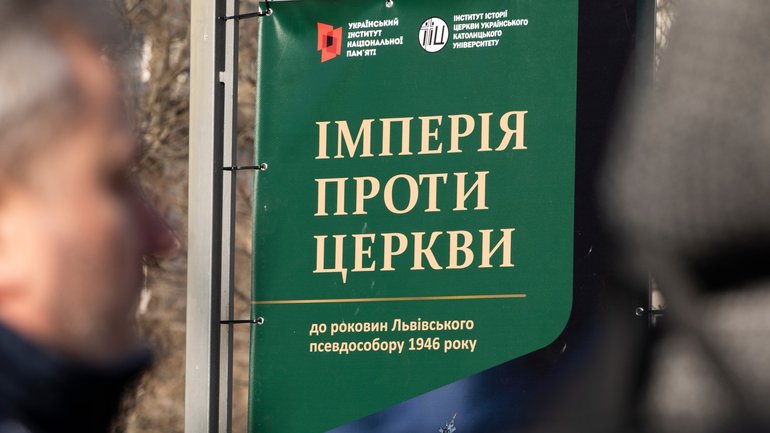
Why, despite the actual ban on the UGCC, did the pseudo-council turn out to be a complete fiasco? What helped the Church's faithful to endure and later become the people who rebuilt an independent Ukraine? What do the history of the UGCC after the Second World War and the current situation of the UGCC in temporarily occupied territories have in common?
These questions were addressed at a discussion titled "The Ukrainian Greek Catholic Church in the Crosshairs of Russian Imperial Policy: From the Lviv Pseudo-Council to Contemporary Bans in Temporarily Occupied Territories," initiated by the Ukrainian Institute of National Memory together with the Institute of Church History at the Ukrainian Catholic University.
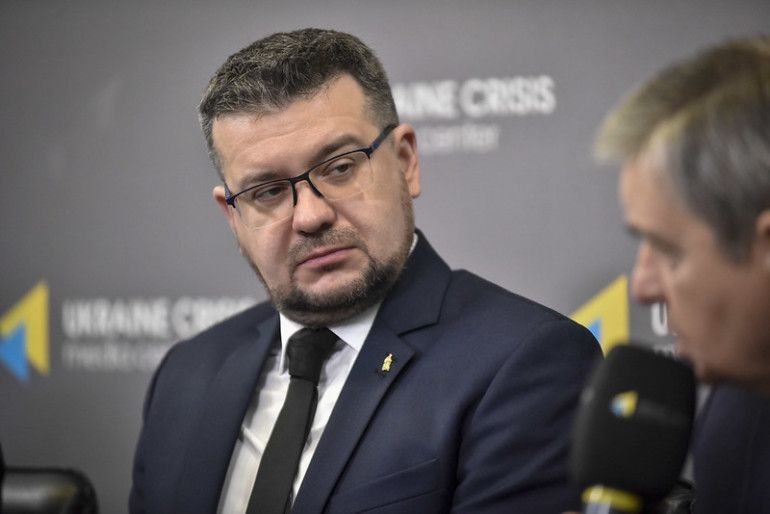
The UGCC is an institution that Moscow has always perceived as a threat — largely because it took shape on Ukrainian lands and has always been a nation-building force. It is a Church that refused to collaborate with Russia and never became another arm of state power. Oleksandr Alfyorov, head of the Ukrainian Institute of National Memory, notes that in the context of the 1946 pseudo-council, several strategic dimensions must be understood. The first is the popular religious revival that followed the German occupation authorities' permission for the Autocephalous Orthodox Church to operate in Ukraine. These conditions forced Stalin to restore Church activity as well. This was the so-called "Sergianist heresy" of the Russian Orthodox Church, which officially became one of the mechanisms meant to guarantee freedom of worship, controlled by two bodies: the Communist Party and the KGB.
— The institution of the Church in Russia, whether imperial or Soviet, has always been the same. It is no coincidence that Peter I did everything possible to create the Holy Synod, headed by a lay Chief Procurator. The Church was always in the service of the state. Even in the Muscovy of that era, there was an awareness that their enemies were Catholics — that is, fellow Christians — and not, for example, the Golden Horde, which was regarded as divine punishment to be endured. While the Ukrainian Orthodox Church lived its own life, Russia used the Church solely as an institution through which power could extend additional influence. It is in this key that Stalin also restored the Church.
Representatives of Orthodox churches, including the Russian one, who were in emigration, referred to the Soviet Church as nothing but "red." They did not recognize it. In Jerusalem, for instance, there was even a prohibition on communicating with representatives of this "red" Church. Simultaneously, the Ukrainian Autocephalous Orthodox Church was being destroyed — an institution that had flourished during the brief period of 1941–1943. The Lviv pseudo-council had one goal: to remove any element that did not conform to state policy. For the global Christian community, this was utterly incomprehensible: a non-canonical "Sergianist heresy" was attempting to swallow the UGCC. It was unheard of. That is why the pseudo-council of 1946 was never recognized as a council anywhere in the world.
— Stalinist Russia attempted to absorb one of the significant elements of the Ukrainian people's struggle and the markers of its identity through incorporation, ostensibly even through a democratic council. The USSR, like today's Russia, emphasized the supremacy of law over force and asserted the constitutionality of its actions. And this was a significant blow to the entire world, which had only just managed to defeat Nazism. From the communists, it was also a provocation against the democratic world.
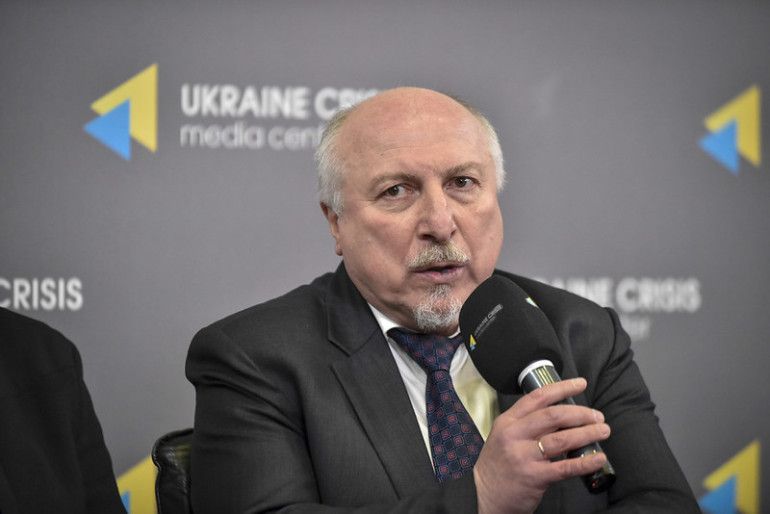
Comparing the attitude of imperial Russia and the USSR toward the UGCC, there was nothing fundamentally new. The methods were the same: destruction, liquidation. Only the means of implementation changed — from direct physical violence to "soft" transfer into an ostensibly different jurisdiction, thereby stripping it of its own essence. According to Oleh Turiy, director of the Institute of Church History at UCU, the UGCC was inconvenient for the empire for three reasons: it was Ukrainian, it was Catholic (that is, universal — connected with the wider world), and it was simply a Church — an institution that unites believers, not a state appendage performing functions of surveillance and control.
The stages of destroying the UGCC are linked to the stages of Russian imperial expansion. When Peter I's forces entered the territory of Right-Bank Ukraine, he personally tortured several Basilian monks in Polotsk and then ordered the imprisonment and exile to Siberia of the Bishop of Lutsk, Dionisiy Zhabokrytsky. All Uniates were considered traitors. Catherine II pursued an analogous policy. Wherever the Uniate Church united practically the entire Ukrainian and Belarusian population, a so-called missionary society was dispatched under the Minsk Archbishop — accompanied, naturally, by military units. Orthodox priests were installed in villages without discussion. Those who resisted faced Siberia. By 1795, only one Uniate diocese remained, and its metropolitan was imprisoned in St. Petersburg.
— This line of destruction was completed by Tsar Nicholas I with the introduction of the policy of so-called "official nationality." According to this doctrine, the Russian Empire rested on three pillars: autocracy, Orthodoxy, and nationality. For all three of these reasons, the UGCC did not fit the system. A plan for its official liquidation was therefore devised through the guise of so-called "reunification." In 1839, the Council of Polotsk was held. Priests were arrested, peasants were tortured for refusing to comply. That is to say, the Stalinist regime had indeed studied history and drawn upon methods already employed under the tsars, the historian explains.
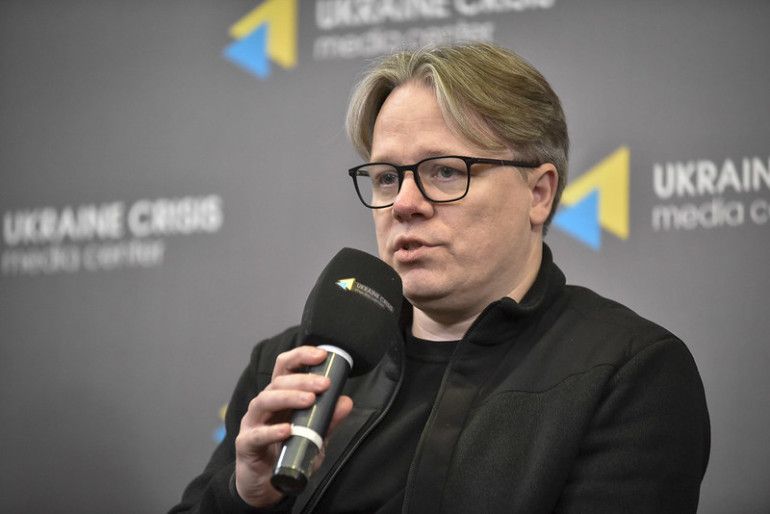
Why is the 1946 council called a pseudo-council? Because no initiative for its convening came from the UGCC laity or clergy. It was a staged production organized by the NKVD and directed from Moscow through Kyiv. Every stage was organized directly by the organs of the secret police. Andrii Kohut, director of the Branch State Archive of the Security Service of Ukraine, notes that the archives contain numerous documents attesting to this. Once classified, they are now available online.
The security bodies insisted that all preparations for the pseudo-council take place in strict secrecy. There was a concrete plan. First: arrest the entire episcopate before the council. Next: organize the initiative group's work and create the appearance of mass popular support. This was achieved with funds and through agents that the NKGB had already recruited on the territory of Western Ukraine, and those brought in from other regions.
— Documents indicate that 400,000 rubles alone were allocated for conducting the council. These funds were to be managed by an agent codenamed Ptitsyn. Who was this? The Exarch of the Russian Orthodox Church in Ukraine, Ioann Sokolov — the highest figure in the Orthodox hierarchy on Ukrainian territory. And he was an agent. The ROC, restored by Stalin near the end of the Second World War, was an entirely state institution. It had nothing in common with what we understand as the Church today.
The next stage: intimidation of those who disagreed with holding the pseudo-council. Threats of prison and Siberia were made. The plan stipulated that at least 60–70% of those present at the council had to be agents. Can one speak here of the free will of UGCC laity or clergy? The question is rhetorical. Ukrainians understood what was happening, but had no choice — any resistance, any speaking of the truth, threatened reprisals.
— Despite all this, the UGCC survived, albeit driven underground. It became known as the catacomb Church. And for me, when we speak of the pseudo-council of 1946, it is important not only to say that it was entirely and completely stage-managed by Soviet security services and had no relation to religion whatsoever. It is also important that the UGCC effectively became a catacomb Christian Church of the early centuries after Christ's birth. Through this, it not only endured but carried Ukrainian identity through its trials, which made possible the revival of both the Church and Ukraine in the 1980s and 1990s, adds Mr. Andrii.
Why did the Soviets fail to destroy the UGCC? Taras Pshenychnyi, acting dean of the Faculty of History at Kyiv National Taras Shevchenko University, identifies several answers. First: in history, there has never been an institution capable of breaking the Church, because the Church is not a political institution, not a structure governed from above. It is people, tradition, transmission — to a certain degree, the foundation of a worldview and mentality. And that is very difficult to break. Second: Metropolitan Andrey Sheptytsky had prepared the Church for difficult times, though he did not know exactly what form they would take. He worked not only with priests but with the entire population of Western Ukraine. Third: the monolithic unity of Church and society. Despite secret agents and police detachments, the Church was with the people. And it later found broad support from the nationalist movement.
— Yes, the Church was decapitated through the arrest of its bishops. For a long time, it was in the hands of priests and laypeople. And that unity, consolidation, and resilience gave the Soviet system quite a blow. The pseudo-council was a fabricated gathering of special agents who conducted "something." But the UGCC's structure remained monolithic and produced entirely different shoots after 1946. Another pillar on which the Church leaned was the Ukrainian diaspora. Although Soviet security services worked seriously with large communities in the United States and Canada, they failed to break the Ukrainian diaspora.
Soviet security services were also present in the Vatican. Yet Ukrainians abroad also made every effort to reach the Catholic world, bearing witness to the dire situation of the UGCC, the terror, and the absence of freedom of conscience.
— Pope Pius XII, in his Christmas message for 1945, condemned the preparations for the pseudo-council. At the time, a so-called message from the Moscow Patriarch was issued calling on Greek Catholics to "return to the mother church." This was interpreted as direct aggression against the Catholic Church. Pope Pius condemned it, along with the imperial intentions of the Stalinist regime in general. At least during the pontificate of Pius XII, the Catholic Church recognized the danger and sought to build a coalition of allies to halt the Sovietization of Europe, Oleh Turiy explains.
The UGCC was in effect what we now call civil society. It was a network that operated everywhere: in kindergartens, schools, sports clubs, fire brigades, choral unions, reading rooms, and so on. It was an alternative society built by people, not by authority. Already during the years of restored independence, new UGCC parishes began appearing in the southern and eastern regions of Ukraine. There, the Church served as a platform for active people and communities to meet. This was the case, for instance, in Melitopol in Zaporizhzhia Oblast — a city that has now been under Russian occupation for some time.
Oleksandr Bohomaz, a UGCC priest and rector of the Church of the Nativity of the Most Holy Theotokos in Melitopol, is one of those forcibly deported by the Russians from occupied territory. The UGCC there has been liquidated. All movable and immovable property passed into the ownership of the occupation administration. Charitable, lay, and civic organizations associated with the Church are also subject to prohibition. Yet the priest says that the life of the UGCC is only visibly on pause. An underground exists today as well, though there is no clergy, and people cannot receive the Holy Sacraments.
The UGCC operated underground in Melitopol as far back as the 1960s and 1970s. The children of those exiled to Siberia grew up and became part of the intelligentsia. They were not permitted to return to Galicia and settled instead in Donetsk, Luhansk, and Zaporizhzhia regions. UGCC priests would arrive in secret to celebrate the Liturgy. Father Oleksandr learned of this only in the early 2000s, when he was a student.
— I was born in Kherson Oblast, and for me, Catholics were something frightening. And then people were telling me that Catholics love Ukraine, that their parents had given their lives for it, and some had endured Siberia and now returned. And everyone said that our priests had been with them there. At first, I didn't understand which priests they meant. I grew up among these people, and that is how my worldview was formed. In 2010, a Greek Catholic priest from Transcarpathia arrived — Father Petro Kranitsky, an ethnic Slovak. Around him, a Ukrainian community formed. I too was curious about this Uniate Church. Older adults who had survived the repressions joined. And gradually we began to be spoken of as the Ukrainian Church.
Why did the occupiers imprison and deport us? Because they saw the nation-building dimension. During interrogations, they spoke with me as if I were a representative of the security services. It simply did not occur to them that I was merely a priest and did not collaborate with intelligence agencies. Greek Catholics, for them, were "Banderites" and a threat.
The policy applied by Russian occupiers toward the UGCC in the temporarily occupied territories does not differ greatly from that pursued by the Soviets. Viktor Voinalovych, first deputy head of the State Service of Ukraine for Ethnopolitics and Freedom of Conscience, reads excerpts from contemporary documents that closely echo the documents relating to the pseudo-council of 1946. The occupiers apply the same practices: banning UGCC activity, accusations of collaboration with foreign intelligence services and terrorist activity, charges of extremism and neo-Nazism. The same rhetoric was used in the 1940s: the UGCC is an agent of the Vatican, it hinders the Sovietization of the region, and it actively supports the Ukrainian nationalist underground movement.
Contemporary occupiers seize all UGCC property, terminate lease agreements on premises and land, and fully liquidate all centers engaged in social service.
— Let us now draw the analogy. Even the Stalinist totalitarian regime considered it necessary to initiate a pseudo-council that would formally ban the UGCC — meaning the priests were to declare a self-imposed ban. Now, even that no longer exists. With regard to other Ukrainian churches and Muslim communities, the policy is different: for continued existence, they are forced to re-register under Russian law. If they refuse, they are effectively subject to a ban: no permission for worship, no use of church buildings, restrictions on the activities of clergy. The UGCC was banned outright.
All UGCC priests have left the newly occupied territory. Approximately 50 communities that had been active Greek Catholic congregations existed there. In 2022, Greek Catholic Redemptorist priests Ivan Levytsky and Bohdan Heleta were arrested for participating in an anti-Russian rally in Berdyansk. They were first held in torture chambers, then in Russian camps, and were only released in 2025 through a prisoner exchange. A few days after their arrest, all UGCC priests were forcibly deported from the territory of Zaporizhzhia Oblast.
— It is no accident that today in Russia, Stalin's achievements and his image are being glorified. In effect, the current neo-Stalinists in the person of Vladimir Putin and his regime are implementing in the occupied territories the same practices as the Stalinist regime: torture chambers, killings even in liturgical vestments, forced displacement, deportations, confiscation of places of worship, confiscation of property, and deprivation of any right to ministry. There can therefore be no talk of freedom of conscience in occupied territories.
The only Church tolerated by the occupiers is the UOC-MP. And approximately half of those priests who effectively submitted have been stripped of their posts, with Russian priests installed in their place, to say nothing of the bishops. Yet there is not a single protest from the UOC regarding this state of affairs.
Information about the situation in occupied territories is becoming scarcer. People who have remained there find it difficult to maintain contact with anyone outside the occupation zone due to the risk of persecution and interrogation.
Viktor Voinalovych notes that according to researchers' estimates, the UGCC was the largest banned religious community in the world. In the 1940s, there were two options: to become a Church that helped consolidate the Soviet regime on the territory of Galicia — on which Stalin's regime placed great hope — or to become an unbroken Church, with full awareness of all the consequences. The UGCC chose the second path. And from 1946 to 1989, when the UGCC was legalized, it accumulated an enormous wealth of experience, preserved its traditions and transmission, ordained priests and bishops who were fully conscious of their prospects — camps, exile, or clandestine activity in the underground. But the success and importance of the path chosen by the UGCC are evident even today.
##DONATE_TEXT_BLOCK##