
- EN



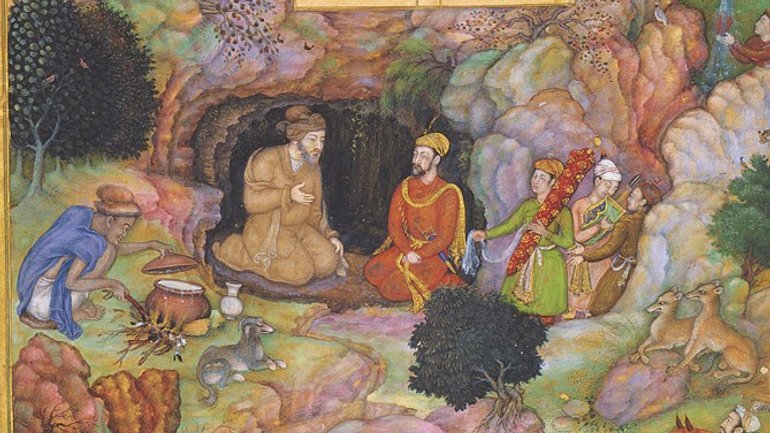
On the 25th day after Easter, Ukrainians traditionally threw eggshells on the running water to inform the ascetics of distant India about the Resurrection of Christ. This is a concise conclusion of my rather extensive research published five years ago in the journal "Practical Philosophy" in Ukraine. Now I decided to summarize this material to make life easier for my readers (the article in Ukrainian is available on academia.edu, link below).
Until the end of the 20th century, people from different regions of Ukraine, from Slobozhanshchyna in the east to Transcarpathia in the west, on Wednesday of the fourth week after Easter would gather to share one dyed egg for the whole family. They would throw the shell of the egg into the water so that it would reach "some people who live beyond the distant seas and are called Rahmans; they don't know when Easter should be celebrated and are waiting for the eggs from Ukraine" (explained the lady from Kyiv district). This rite left ethnographers confused: "It is difficult to say who Rahmans were, but among the Hutsuls this word means the ideal of life in peace and accord."
Seizing on the uncertain assumption of scholars that the “Rahmans” originate from the Kyivan Primary Chronicle (1110s), I engaged in checking the Chronicle itself and its Byzantine sources. It turned out that the developed and consistent narrative, which was reproduced by informants throughout Ukraine, is firmly rooted in Greek and Syrian chronicles, as well as in patristic literature. According to this idea, the Rahmans (or Vrahmans/ Βραχμᾶναι) are a righteous tribe that lives on the edge of the earth and devotes their whole lives to pleasing God, having neither crafts, nor government, nor money (and their family life is very peculiar too).
Where did these characters get into the Byzantine annals from? Here one can rely on the existing and thorough research in Byzantine studies, Slavic studies, and Indology. According to it, "Vrahmans" were present in Greek literature since long before the common era. Stories about them were inspired by the meeting of Alexander the Great with the Indian "Gymnosophists" (“naked sages”) during his Indian campaign in 327-325 BC. The anarchist philosophers, who were not afraid to engage into dispute with the emperor and rejected all his proposals, became heroes of several independent historic accounts, as well as of the novel The History of Alexander – a real bestseller of the ancient world, translated into a good dozen of ancient languages.
Then, following my colleagues from different countries, I tried to understand the tangled controversy over the question of whom exactly Alexander met in India – an exceedingly puzzling issue. The fact is that the descriptions of the ascetics combine features of completely different spiritual currents of ancient India. The Byzantine name of the characters, "Vrahmans", would seem to refer to the Brahmin caste; and our sages do share some characteristics with them: for example, they perform sacrifices and have wives. But overall, they are rather akin to the informal ascetics from various marginal movements – most of all, Jains and Ajivika. They also avoided any ties with society, lived naked, mortified themselves with strict fasting and physical exercises. Having no hierarchy, these esoteric marginals (Nastika) drew a hard line between themselves and the rest of humanity (so they could be perceived as a separate "tribe").
Noteworthy, the Rahmans’ legendary love of freedom is considered a completely historical trait. Greek historians univocally describe the opposition of the Indian "philosophers" to the conquerors, the siege and the powerful resistance of the "Brahmin cities". Modern Indian historians identify these cities with the Brahmanaka country. "Naked sages" are believed to be not just enemies of the Greek occupation, but opponents of the monarchy as such. For the Christian preachers of Byzantium, Kyivan Rus and Muscovy they provided an opportunity to dream aloud freely about a life without any monarchy and hierarchy.
In Byzantine times, Byzantine contacts with India continued, primarily thanks to Syrian travellers. Thus, the stories about the "Gymnosophists" gradually received new details and possibly split into different traditions. These traditions could reach the Slavic lands in different ways. In the surviving written sources – the official church annals – the sages appear as "Vrahmans" and have a more Brahmin image. However, folklore could be more influenced by oral traditions brought by pilgrims and perhaps by religious marginals, where "naked sages" could take on more anarchic Nastika traits.
These oral traditions about Alexander and Indian ascetics have almost completely sunk into oblivion today. Probably, the last oral echoes of this grand literary tradition were preserved in Ukrainian folklore, which ethnographers recorded until 1980s. However, today the customs of the Rahman Easter are being revived in some places of Ukraine, and we all have a chance to hold on to this long thread of memory.