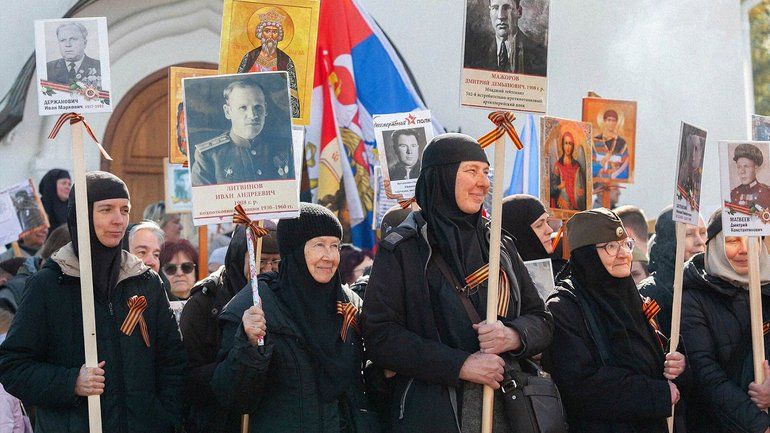

Pro-Putin Nuns Raise Money for War Against Ukraine Across Europe: German Journalists' Investigation


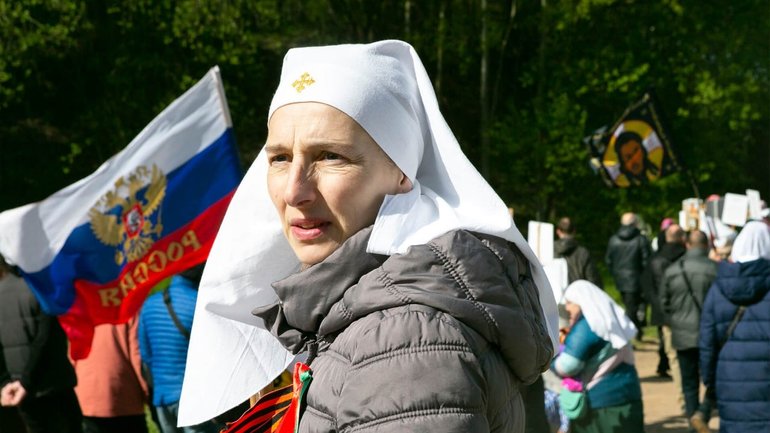
The Berlin media Morgenpost took an interest in their activities in Germany. They noted that the Saint Elisabeth Monastery's website primarily sells religious items — such as priestly vestments and liturgical objects, some costing several thousand euros — but also offers everyday consumer goods, including brightly decorated Easter eggs. Some are intricately adorned with religious symbols, while others are garishly colorful.
"Selling all these goods appears to be profitable for the nuns from Minsk," the German outlet notes, citing the Information Service "Churches in the East," adding that the sums they allegedly earn run into the millions. According to the research, the Orthodox monastery is not merely a religious institution — it also runs media resources and a network of commercial enterprises, with explicit reference to operations in the "shadow economy."
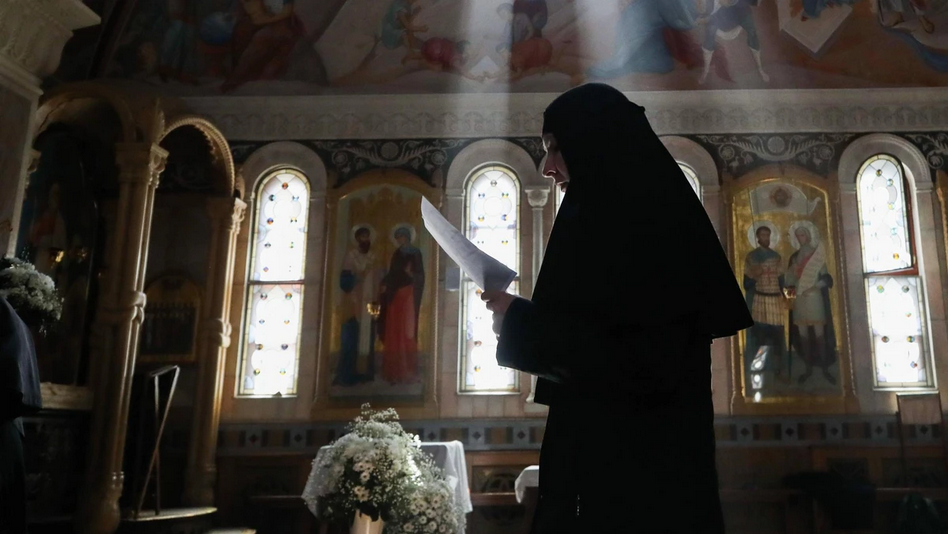
The Belarusian civic initiative "Christian Vision", banned in Belarus itself, has for years been gathering evidence of what it describes as the nuns' covert activities. The organization asserts that with its revenues, the monastery also supports Belarusian dictator Alexander Lukashenko and Russia's aggressive war against Ukraine. "Christian Vision" shares this information to warn the nuns' European partners and alert them to the monastery's activities.
In return for this support, the nuns receive high praise from the Belarusian authorities. Alexander Lukashenko, in a speech during a January 2023 visit to the monastery, noted that the nuns had been collecting donations for Russian soldiers at the front. For this, they are criticized by "paid-off deserters." "They are doing the right thing," Lukashenko insisted. "We are helping our Russian brothers — I have never hidden this."
This assistance is organized in part by the group "Help the Brothers," which in turn maintains close ties with the Saint Elisabeth Monastery. In a conversation published on the monastery's website, a Russian nun who actively participates in the organization's work describes her activities in Russian-occupied territories. According to her, they provide support "both to soldiers and to civilians."
European Business Tours of Belarusian Nuns
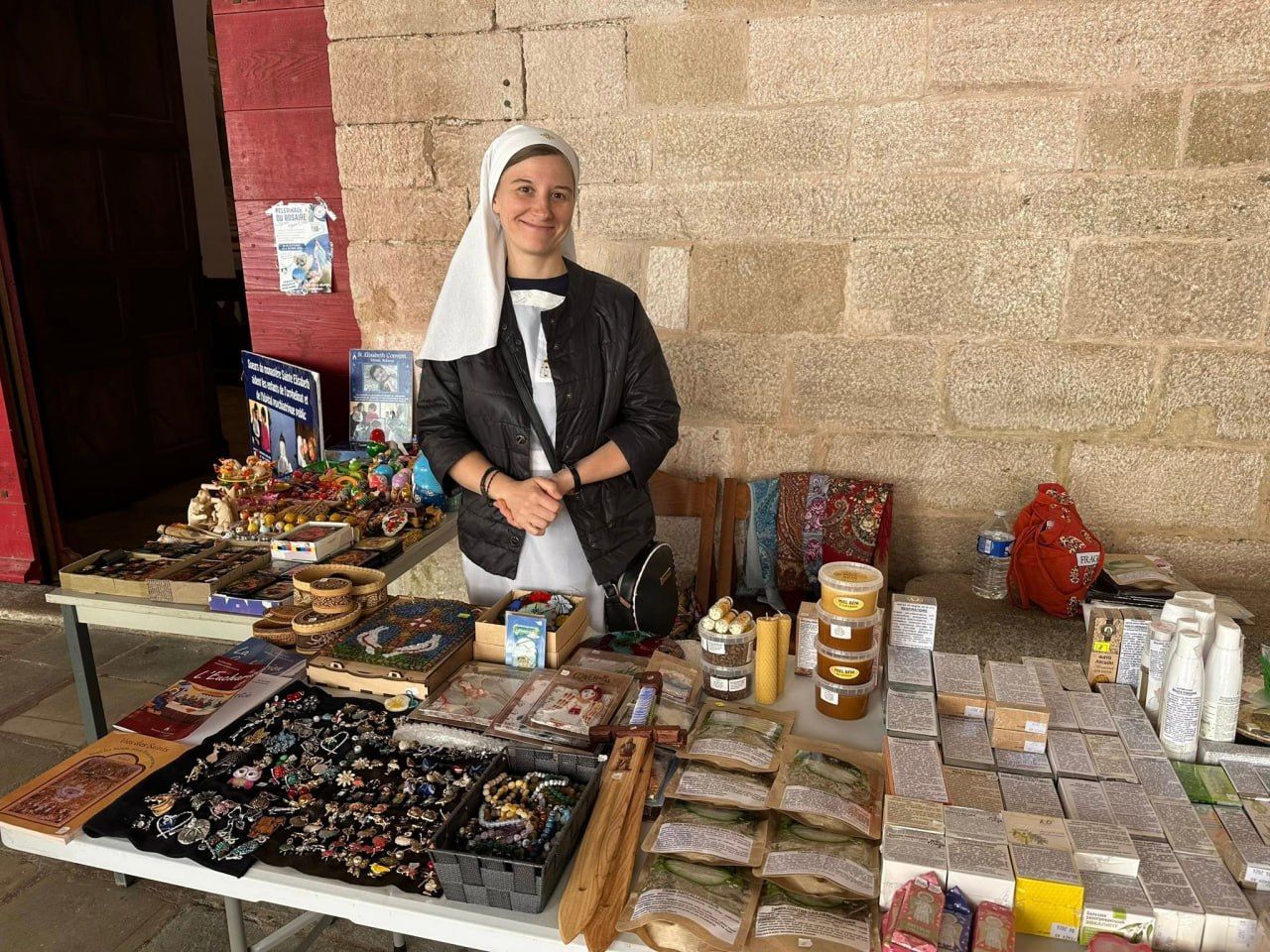
As noted by Morgenpost, there is no shortage of examples of the Belarusian monastery's commercial activities across Europe. One such example is Scandinavia, where in mid-December 2025, the Church of Sweden warned its congregations about the dangers of cooperating with the Minsk nuns. "They indirectly support the Russian regime, and we do not wish to be part of that," said Lisa-Gun Bernstedt, the Church of Sweden's head of civil preparedness, on radio station P4 Stockholm.
The warning states that the monastery's revenues are used to finance Russia's war in Ukraine, and that it allegedly maintains close ties with Russian military intelligence. Swedish Migration Minister Johan Forssell even announced his intention to examine whether the nuns should be deported. "Sweden is not obliged to grant asylum to those who support Russian aggression against Ukraine," he was quoted as saying by "Open Orthodoxy Network".
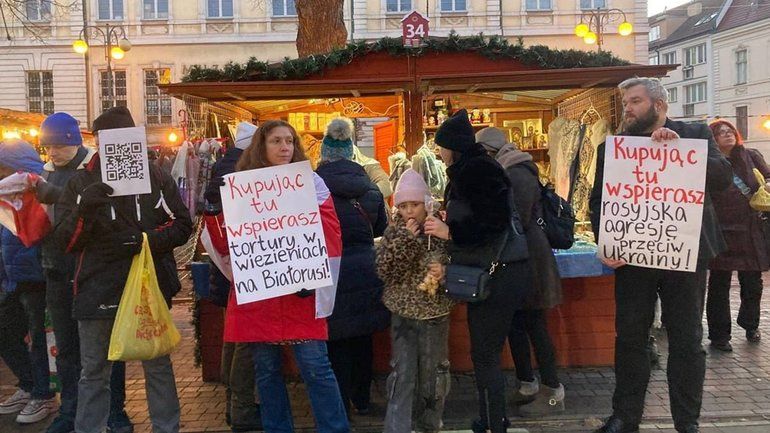
The nuns' activities extend across the whole of Europe. Over the past few years, they have appeared as vendors at Christmas markets in various cities. One such city is the Polish city of Szczecin, where, according to local radio "Szczecin", activists protested against the monastery's stall at the local Christmas market. In response, the organizers terminated their agreement with the nuns. Similarly, in Winchester, England, according to the local media, "Hampshire Chronicle", the relevant stall was banned.
"Christmas markets have always been their focus," explains Natalia Vasilevich, head of "Christian Vision". "There they sell products from the monastery workshops, as well as goods from China passed off as monastic wares." There have been no recent confirmed reports of monastery representatives being active at German Christmas markets. However, in 2025, they were definitely present in Düsseldorf, where they displayed their goods at an event held at the Gerhart Hauptmann House. Winfried Halder, director of the Gerhart Hauptmann House Foundation, dedicated to preserving the cultural heritage of Germans from the former eastern territories, stresses that at the time, nothing was yet known about the allegations against the nuns. Furthermore, it was an external event held on the foundation's premises. The foundation has ruled out any future cooperation with the monastery.
The major German churches take a similar position. According to its own statements, the Evangelical Church in Germany (EKD) is aware of the allegations. However, it maintains no ties with the monastery, representatives confirmed in response to a Morgenpost. The Catholic Bishops' Conference also denies any cooperation.
According to Vasilevich, however, the nuns are firmly focused on the Federal Republic of Germany. "Two of the nuns hold EU citizenship," she says. From Germany, they transport cash to Belarus and also carry various goods across the border. According to "Christian Vision", some of these end up with Russian military personnel.
"The monastery supports the war. It raises money for the army," says Vasilevich. Among other things, funds earned in Europe finance drones and vehicles for Russian soldiers at the front. "Christian Vision", according to its own data, has identified several vehicles that the monastery purchased for Russian military personnel.
German Friends of the Pro-Putin Nuns
The monastery's ties to Germany are confirmed in part by an investigation by the Polish-Belarusian TV channel Belsat. Recordings in the journalists' possession and available online feature a conversation with a woman whom Belsat identifies as a nun. She describes the activities of the Saint Elisabeth Monastery in detail. Among other things, the conversation reveals that "helpers in Germany" were unable to obtain the necessary burn medications. The nun also confirms that they supply the Russian army with "electronic warfare equipment," specifically drone shields and radio sets.
Who exactly these "helpers in Germany" are remains unclear. However, the monastery likely receives funds from Berlin, where the association "Friends of the Saint Elisabeth Monastery" collects donations for the nuns. When Morgenpost contacted the association, it responded with talk of "false allegations (...) that could cause serious damage to the reputation of the Saint Elisabeth Monastery in Europe, an institution recognized in its home country for its valuable social work." The monastery itself takes a similar stance, responding to the inquiry with references to "false allegations" and "defamatory statements."
"Whether the funds collected in Germany by the association will be misused to finance the war remains unclear," the German outlet notes. "The Berlin Office for the Protection of the Constitution declined to comment on the allegations against the association in response to our inquiry. According to its own statement, the Federal Ministry of the Interior has no information on the matter."
However, Bundestag member Robin Wagener, a member of the foreign affairs and defense committees, believes action is necessary. "A religious community cannot serve as cover for supporting war crimes and crimes against humanity," he emphasized in conversation with Morgenpost. "This would not only be a cynical abuse of religion, but also a criminal offense in Germany." German law enforcement authorities must therefore thoroughly investigate the activities of "these people" and take appropriate measures, Wagener believes.
"So, are the consequences for the monastery imminent? Those responsible do not appear to fear them," notes Morgenpost.
Undisguised Love for Putin and Support for Russian Aggression
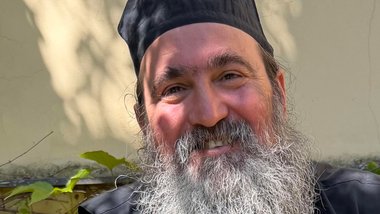
German journalists note that the website of the Minsk Saint Elisabeth Monastery of the Moscow Patriarchate openly expresses a positive attitude toward the Russian regime. It features a quote from a speech by Fr. Andrei Lemeshonok, the monastery's spiritual father, in which he thanks Putin for the "hope" he has given to "the people."
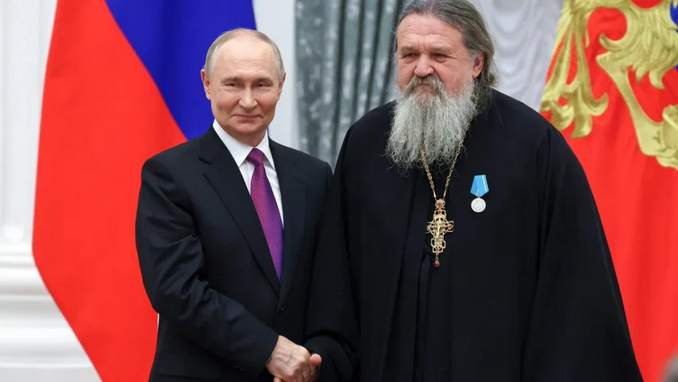
In Russia, the monastery's work is viewed with full approval, and ties with the Kremlin and Russian ruler Vladimir Putin are close. In autumn 2025 alone, Putin awarded Lemeshonok the Pushkin Medal. As German journalists note, the same award was given a year earlier to German blogger Alina Lipp. She lives in Russian-occupied territories in eastern Ukraine and disseminates pro-Russian propaganda and disinformation from there.
* * *
RISU has been monitoring the activities of the Saint Elisabeth Monastery in Minsk for years. As early as 2022, it documented the monastery's assistance to Russian aggressors, and in 2023, the monastery reported such activities on its own. The driver who transported the Moscow Patriarchate nuns abroad turned out to be an employee of the Belarusian KGB.
Their monastery has become not only a center for collecting aid for Russia's so-called "special military operation," but also a mobilization center for men to serve in the war against Ukraine. It is no coincidence that Fr. Andrei Lemeshonok, spiritual father of the Minsk Saint Elisabeth Monastery, called it a "combat unit". Here, among other things, they train nurses for the "special military operation" and teach children how to handle weapons.
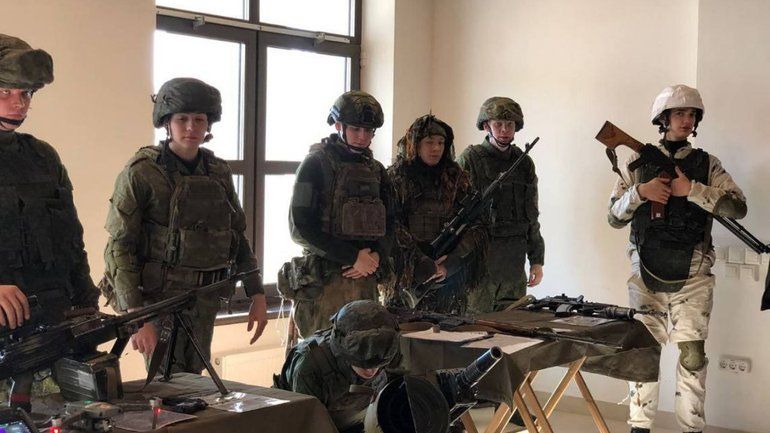
RISU has reported that the monastery has expanded its commercial activities across various European countries, frequently exploiting the poor awareness of local Christian communities. They were recently spotted on the French island of Corsica, where they were selling off their goods. However, these nuns are increasingly being expelled from festive markets and publicly accused of supporting Russian aggression.