
What Is Wrong With Moscow Patriarchate in Estonia


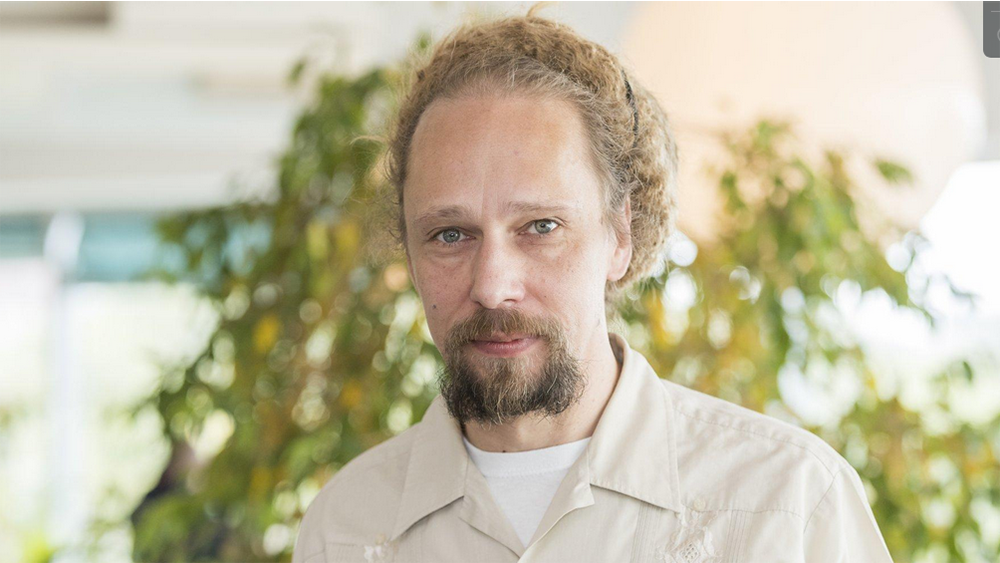
We are talking about the situation of the Orthodox Church of the Moscow Patriarchate in Estonia with Ringo Ringvee, Counselor of the Religious Affairs Department of the Ministry of the Interior of Estonia.
— Why has the Estonian government become so interested in the activities of the Metropolitanate of the Moscow Patriarchate in their country in recent years?
The Russian Regime has been declared a Terrorist Regime by the Estonian Parliament in 2022.
The Moscow Patriarchate has been declared an Institution Sponsoring the Military Aggression of the Russian Federation by the Estonian Parliament in 2024.
Russia is using the ROCMP to expand its influence and achieve political goals in Estonia. This could lead to possible internal conflict and destabilization, which threatens Estonia’s security
The aim of the Kremlin’s secular activities and the spiritual influence of the ROCMP is to shape the sentiment of the Russian people and the Russian-speaking population in the direction necessary for the Kremlin as a whole, both in the secular and the spiritual sphere.
The activities of the ROCMP are aimed at increasing the influence of the “Russian World” (Russkiy Mir) ideology, which in turn creates tensions and divisions in Estonian society and thereby threatens the internal peace and stability of the country.
The attitudes of Russian Orthodox believers and the actions based on it largely depend on the positions promoted by the ROCMP. The attitudes and actions of our residents in a crisis situation are particularly important for Estonia’s security.
The Estonian Orthodox Church of the Moscow Patriarchate has administrative subordination to the Moscow Patriarchate both by their own as well as by ROC statutes. From that perspective, the MP has control over their church in Estonia.
I emphasize that eliminating the direct influence of the Moscow Patriarchate in Estonia will help protect the Estonian Orthodox community from the hostile influence of Moscow and incitement to violate the law in Estonia.
The activities of the Moscow Patriarchate from 24 February 2022:
- Consistent support for and justification of the military aggression initiated by Russia against Ukraine (statements, speeches, meetings; war propaganda).
- Including supporting/justifying the killing of the Ukrainian civilian population and the destruction of civilian objects.
- Hate speech.
- The blessing of the personnel and weapons systems of the Armed Forces of the Russian Federation.
- Church figures acting within the composition of the Armed Forces of the Russian Federation.
Laws in force in Estonia contradict the activities of the Moscow Patriarchate. Although we cannot implement Estonian law in Russia, we must protect the Estonian Orthodox community from the hostile influence of Moscow and incitement to violate the law in Estonia.
The Russian Regime has been declared a Terrorist Regime by the Estonian Parliament in 2022. The Moscow Patriarchate has been declared an Institution Sponsoring the Military Aggression of the Russian Federation by the Estonian Parliament in 2024. This led to changes in the law of churches and congregations.
In the ever-changing security situation, we have to be aware of other foreign actors with hostile intentions who also hide their activities under the guise of religion and religious freedom. To justify killings of civilians on religious rhetoric is not acceptable. To justify these acts on religious grounds is not the realization of freedom of religion or belief, but misuse of religious freedom principles.
— What is the general religious situation in your country? Which churches and religious organizations have the greatest influence on their believers?
Estonia is a rather secular country. According to population censuses (2000, 2011, 2021), 29% of the population older than 15 years of age consider themselves religiously affiliated.
To measure the influence of churches/religious organizations on their believers is a difficult question to answer. There are several factors to take into account. Both religious and non-religious.
— There are two Orthodox denominations in Estonia — the Constantinople and Moscow Patriarchates. What is the relationship between them, and what is the difference between their respective flocks?
The relations between the Estonian Apostolic Orthodox Church (Orthodox Church of Estonia; OCE) and the Estonian Orthodox Church of Moscow Patriarchate have been non-existent on a formal level. However, both of them are members of the ecumenical Estonian Council of Churches. The Orthodox Church of Moscow Patriarchate has been critical of the Ecumenical Patriarchate, the OCE and especially Metropolitan Stefanus in their publications. It has been the trend throughout the years.
The flocks of the EOCMP and OCE consist of different ethnicities. The affiliation either to Moscow or Constantinople, however, seems to be an important factor. While the OCE has numerically more congregations, the number of people affiliated with the MP is larger. There are several reasons for this, including the fact that in North-Eastern Estonia, only the church Affiliated with MP is represented.
— In Ukraine and many other countries, the structure of the Moscow Patriarchate also serves as a tool for spreading Russian propaganda. In Ukraine, we constantly record cases of clergymen or activists of the Moscow Patriarchate disseminating information that is hostile in the context of war, which can be considered a psychological operation (PSYOP). Does anything like that happen in Estonia?
According to the Foundations of Estonia’s Security Policy (2023), the Russian Federation conducts "active informational influence operations against Estonia and democratic countries more broadly. The attitudes shaped by the long-term impact of the Russian Federation’s information space pose a threat to Estonia’s constitutional order. The Russian Federation exploits various groups within Estonian society, including the pro-Russian population, to amplify socially polarizing issues."
The Estonian Orthodox Church of the Moscow Patriarchate (EOCMP) operates as a part of the Moscow Patriarchate (MP) / Russian Orthodox Church (ROC). According to EOCMP’s statutes, it is a self-governing local Church in Estonia under the canonical jurisdiction of the Moscow Patriarchate, through which it maintains doctrinal unity and canonical communication with other local Orthodox Churches. The Patriarch governs EOCMP, including approving its statutes and appointing the local Metropolitan. The decisions of the EOCMP plenary have to be approved by the Patriarch before entering into force.
Although in Estonia, prayers are not publicly conducted according to Patriarch Kirill’s directives for "the Russian authorities and armed forces" or "Russia’s victory in Ukraine," it must be considered that obedience to a religious leader is unquestionable for clergy members. If EOCMP does not denounce the Patriarch’s statements about a holy war as heresy, it must be assumed that they are prepared to act accordingly.
The authority of clergy members (including the Church’s spiritual leader, Patriarch Kirill) and their influence on believers is direct. His words are taken as truth without deep consideration of canonical nuances. For Estonia’s security, the attitudes and actions of our residents are particularly important, especially in a potential crisis situation, where some individuals may experience a conflict of loyalty with the state.
As a religious organization, EOCMP has influence over its members. However, with influence comes responsibility: any legal entity operating in Estonia must act in the interest of Estonian society and people, align with our values, and comply with Estonian laws. Estonia’s values and those of Russia’s "Russkiy Mir" (Russian World) and so-called Holy War are entirely opposing, and the promotion of Russkiy Mir in Estonia is unacceptable.
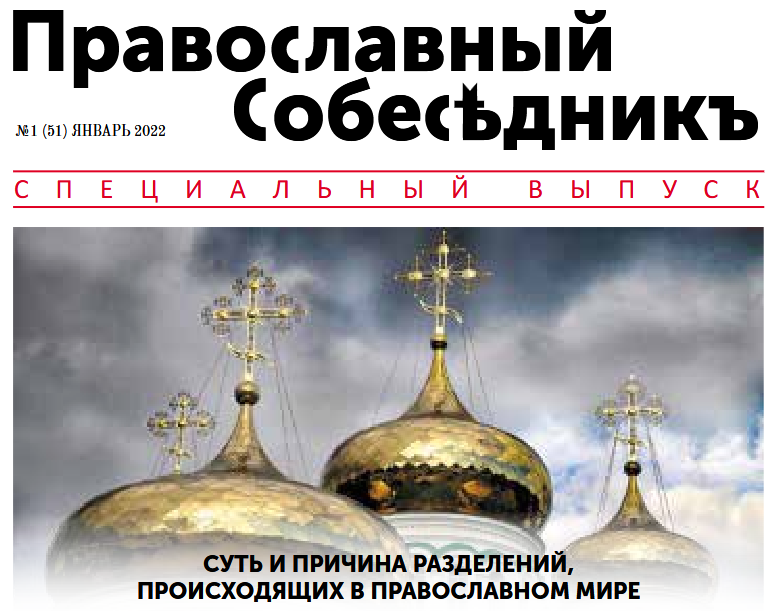
Less than a month before the full-scale aggression against Ukraine, the EOCMP published their monthly magazine’s/journal’s special edition on the Orthodox situation in Ukraine in Russian (as always) and in Estonian (exceptionally). The link to the journal is here: https://et.orthodox.ee/newspaper/pravoslavnyj-sobesednik-yanvar-2022-speczialnyj-vypusk/
— How do the clergy and flock of the MP in Estonia react to these actions of the authorities? Are there any protests?
The situation from the clergy's side since 2022 reminds the situation in Ukraine in 2014 - if I have understood it right - there has been almost complete “radio silence” in social media with few exceptions (actually only one). There have not been any actual protests. The appeal by two MP-related activists to suspend the Churches and Congregations bill in Parliament got 2391 digital signatures.
It should also be recalled that shortly after 24 February 2022, there were also appeals from the flock members of the MPEOC to Kirill to stop the war, and quite a lot of criticism on Metropolitan Yevgeni (Valeri Reshetnikov) in social media, but as these appeals did not get any response, they also faded away.
As the draft of the amendments proceeds in the Parliament, there are - most probably - going to be additional actions. Like it was two weeks ago when the nuns from stavropegic Pykhtitsa (Pühtitsa) nunnery invited themselves (or their lawyers) to the Parliament without informing the Parliament about this. This PSYOP aimed to show “how the nuns were not received by the Parliament” was not too successful.
— A similar law banning the ROC-MP in Ukraine provoked a negative reaction from various international institutions and some human rights activists. Does Estonia take the Ukrainian experience into account, and what is it doing to avoid being accused of violating the believers’ rights?
Estonia is aware of these reactions and takes the Ukrainian experience into account. We also have the experience of Russia’s and MP’s propaganda campaigns from the 1990s and early 2000s.
— In your opinion, if the MP Church in Estonia changes its name and severs canonical relations with the Russian Orthodox Church, will this somehow affect the worldview and attitudes of its believers, or will they remain loyal to the Kremlin regardless?
This is a good and right question. The name change does not change anything. However, we should look at it on a wider scale. In fact, we do not speak from the State’s perspective on “canonical relation” but “administrative subordination” that the MPEOC (as well as the stavropegic nunnery) has with the MP/ROC and which should end. Especially as the Estonian Parliament has declared the MP to be an “aggression-supporting institution”.
These changes give at least a possibility for the change. We should also look at this from a longer perspective - this may open an opportunity for the younger generation of the Russian/Slavic Orthodox tradition to live their religious/spiritual life in “Russki Mir”-free Orthodox tradition. The problem is that there are still people in Estonia who arrived in Estonia during the Soviet times and who still have the Soviet-propaganda perception of the World that history in Estonia started with the Soviet regime. Maybe the younger generations who have been or who are raised in such a context can get rid of this understanding. Just as a reflection of the particular understanding and representation of history is evident in Pukhitsa nunnery’s website and their history chapter - there’s history until Estonia’s independence in 1918, and it continues with the reference to patriarch Alexy II. No mention of the independence period between 1918-1940 when the nunnery was part of the OCE. The problem is, that it is easy to manipulate people who have little or no knowledge of actual history.
— In many European countries, scandals break over the espionage activities of the clergy and laity of the MP. Have there been any such cases in Estonia?
There have not been espionage cases. On the other hand, Metropolitan Yevgeny’s residence permit was not extended on national security grounds. MPEOC appealed the Police and Border Guard’s decision. The court of the first instance gave the right to the PBG, and the MPEOC appealed this decision as well. On Metropolitan Yevgeny (Eugene), the Estonian Internal Security Service has written in their last year's annual review (in English).
Full text of Review:
Metropolitan Eugene
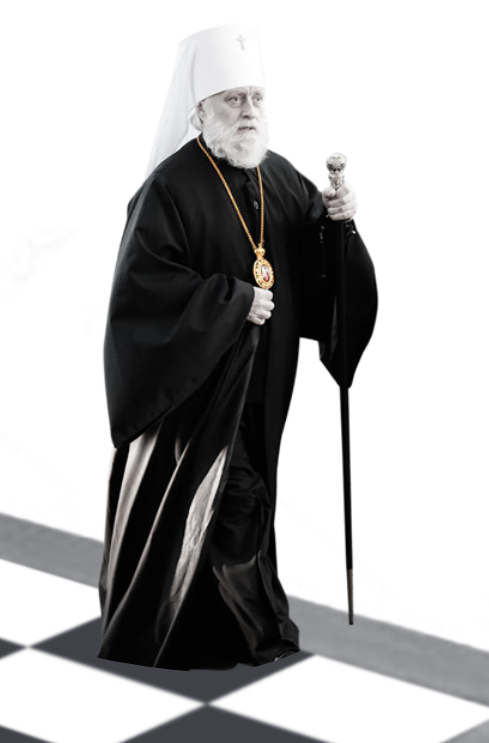
- Valery Reshetnikov (born on 9 October 1957, ecclesiastically known as Eugene) began visiting Estonia regularly with a visa in 2016. He settled more permanently in Estonia in 2018, after the death of Metropolitan Cornelius (Vyacheslav Yakobs) of the Estonian Orthodox Church of the Moscow Patriarchate.
- Before succeeding Cornelius as the metropolitan, Reshetnikov served as rector of the Moscow Theological Academy (from 1995), vicar of the Moscow Patriarch, archbishop of Vereya (from 2000) and a member of the Presidential Council for Cooperation with Religious Associations.
- He graduated from the Moscow Theological Academy and Seminary.
- From 2005 to 2007, he was a member of the committee responsible for the reunification of the Russian Orthodox Church Outside of Russia (Русская Православная Церковь Заграницей) with the Moscow Patriarchate. He has also been the head of several committees of the Moscow Patriarchate and religious educational institutions.
- Reshetnikov regularly participated in the annual 9 May commemorations at the Bronze Soldier monument at the Defence Forces Cemetery in Tallinn, where he delivered speeches supporting the Kremlin’s interpretation of history based on propaganda narratives.
- Leading up to the Estonian parliamentary election in 2023, Reshetnikov collaborated with a political association with several members who promoted the interests of the Kremlin regime. In his capacity as a representative of the Moscow Patriarchate, he intervened in Estonian domestic politics.
Metropolitan Eugene’s activities in Estonia
In 2018, at the age of 93, Metropolitan Cornelius,5 the longtime leader of the Estonian Orthodox Church of the Moscow Patriarchate, passed away. He had held the position of church leader in Estonia for nearly 30 years. His funeral was attended by Valery Reshetnikov, an archbishop who served as the rector of Moscow Theological Academy and the vicar of Patriarch Kirill,6 alongside senior clergy of the Russian Orthodox Church. After Metropolitan Cornelius’s funeral in Tallinn, the local bishops travelled to attend a meeting at the Moscow Patriarchate.
While the majority of the local clergy of the Estonian Orthodox Church of the Moscow Patriarchate expected the new leader to be the Narva bishop, who had been active in Estonia since 2009, was familiar with local circumstances and had temporarily taken on leadership responsibilities after Cornelius’s passing, the Russian side stipulated that the candidate proposed by Moscow, the academy rector Reshetnikov (ecclesiastically known as Eugene), must be elected by the church council.
Considerable effort was devoted to executing this directive, particularly in persuading the clergy to support Reshetnikov’s candidacy. The primary responsibility of the Narva bishop during the election process was to act as a rival candidate. While there appeared to be two candidates in the election, the covert aspect of the deal, which involved the transfer of congregational assets after the election, did not materialise.
Throughout its history, the Moscow Patriarchate has been uneasy with the fact that Constantinople, rather than Moscow, is regarded as the centre of Orthodoxy. Reshetnikov’s tenure as the new head of the Estonian Orthodox Church of the Moscow Patriarchate marked the beginning of aligning with Moscow’s interests, reigniting tensions between churches. For example, in autumn 2018, under the metropolitan’s guidance, the local church synod issued a statement criticising the Patriarch of Constantinople for recognising the independence of the Ukrainian Orthodox Church.
The Orthodox landscape in Ukraine now mirrored the situation in Estonia, with both Moscow Patriarchate and Constantinople Patriarchate churches operating in the country. This diluted the influence of the Moscow Patriarchate, which is closely tied to the Kremlin regime.
Various sources indicate that Reshetnikov did not demonstrate the same autonomy in his decisionmaking and activities as his predecessor, Metropolitan Cornelius. While Cornelius’s extensive experience, authority among believers, and familiarity with and consideration of local circumstances in Estonia enabled him to express views different from those of the Moscow Patriarchate, the church functionary Reshetnikov represented Moscow’s interests and views.
Cooperation between Christian churches was also hindered by Reshetnikov’s decision not to meet with the pope during his visit to Estonia in 2018. Moreover, a school with an Orthodox background in Tallinn was also advised to refrain from meeting with the pope as well.
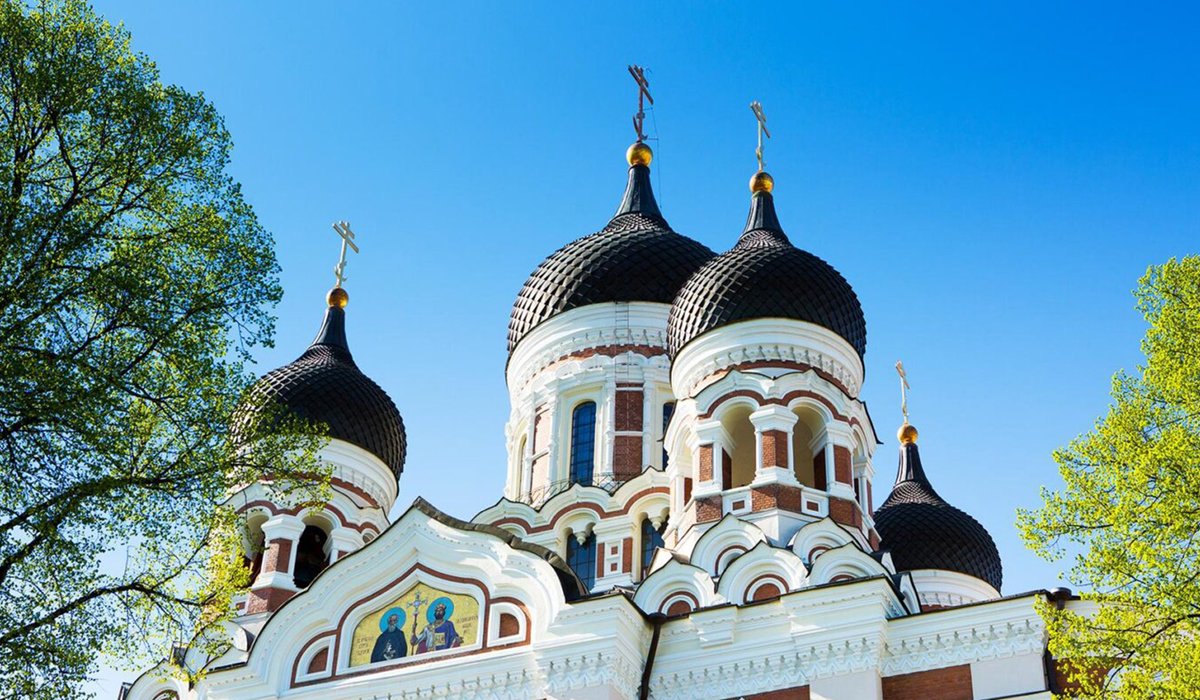
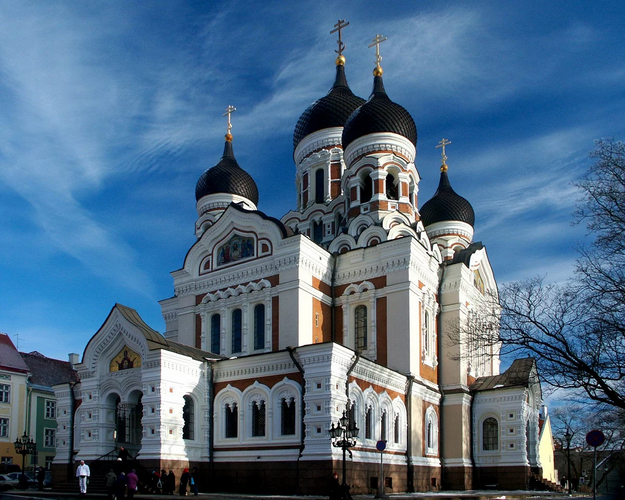
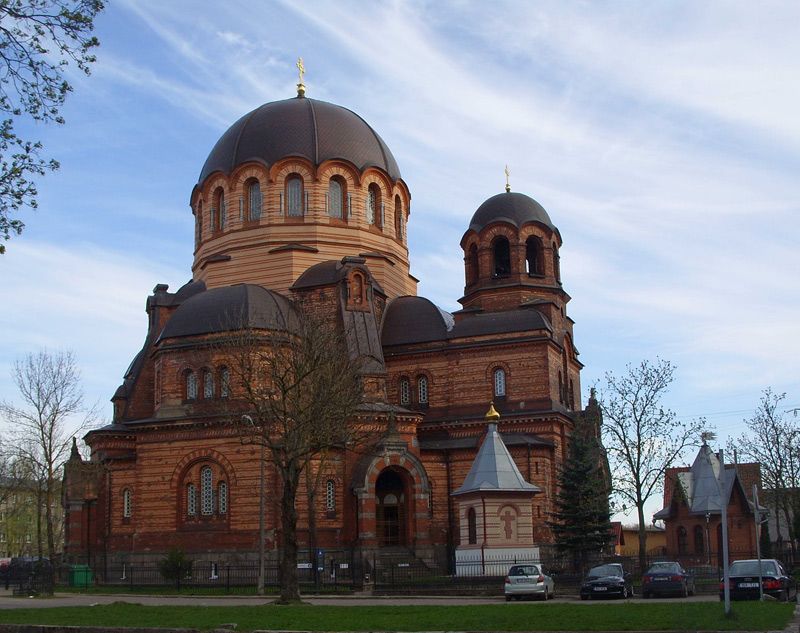
Upon assuming office in Estonia, Reshetnikov immediately raised the issue of church property.7 In 2001, the Tallinn City Centre Administration granted the Estonian Orthodox Church of the Moscow Patriarchate free use of the Nevsky Cathedral at Toompea for 36 years. A few years later, the City of Tallinn granted a 99-year lease for a church in the Lasnamäe district.
With the entry of Reshetnikov, however, the Estonian Orthodox Church of the Moscow Patriarchate wanted the church buildings it used to be transferred to its ownership. Alongside the Estonian Orthodox Church of the Moscow Patriarchate, which is steered by the Moscow Patriarchate, the Russian Embassy in Tallinn also advocates for the transfer of church property.
Additionally, Reshetnikov has repeatedly expressed refusal to recognise the Estonian Apostolic Orthodox Church as the lawful successor of the Orthodox Church that operated in Estonia before the Soviet occupation. From Russia’s perspective, it is crucial to maintain the entities associated with the Russian Orthodox Church abroad, along with their influence and assets, because the church is one of the few remaining levers for Russian influence operations that are not yet directly affected by international sanctions.
* * *
Considering Reshetnikov’s position as the highest representative of the Moscow Patriarchate in Estonia and his close ties with the Russian Orthodox Church, which aligns with the Russian regime responsible for the conflict in Ukraine, the Estonian government decided not to renew his residence permit. Despite Russia’s direct military aggression against Ukraine, Reshetnikov remained loyal to Patriarch Kirill and, consequently, to the views of the Russian Orthodox Church, which justify the war in Ukraine. Reshetnikov showed no inclination to integrate into Estonian society, spending approximately a third of his time in Russia over the years despite holding a valid residence permit in Estonia. The decision not to renew Reshetnikov’s temporary residence permit was based on a threat assessment of his individual behaviour and does not extend to the Estonian Orthodox Church of the Moscow Patriarchate or its believers in general. Valery Reshetnikov left Estonia on 6 February 2024.